Germany Grapples with Calls to Reshape its Federal Landscape
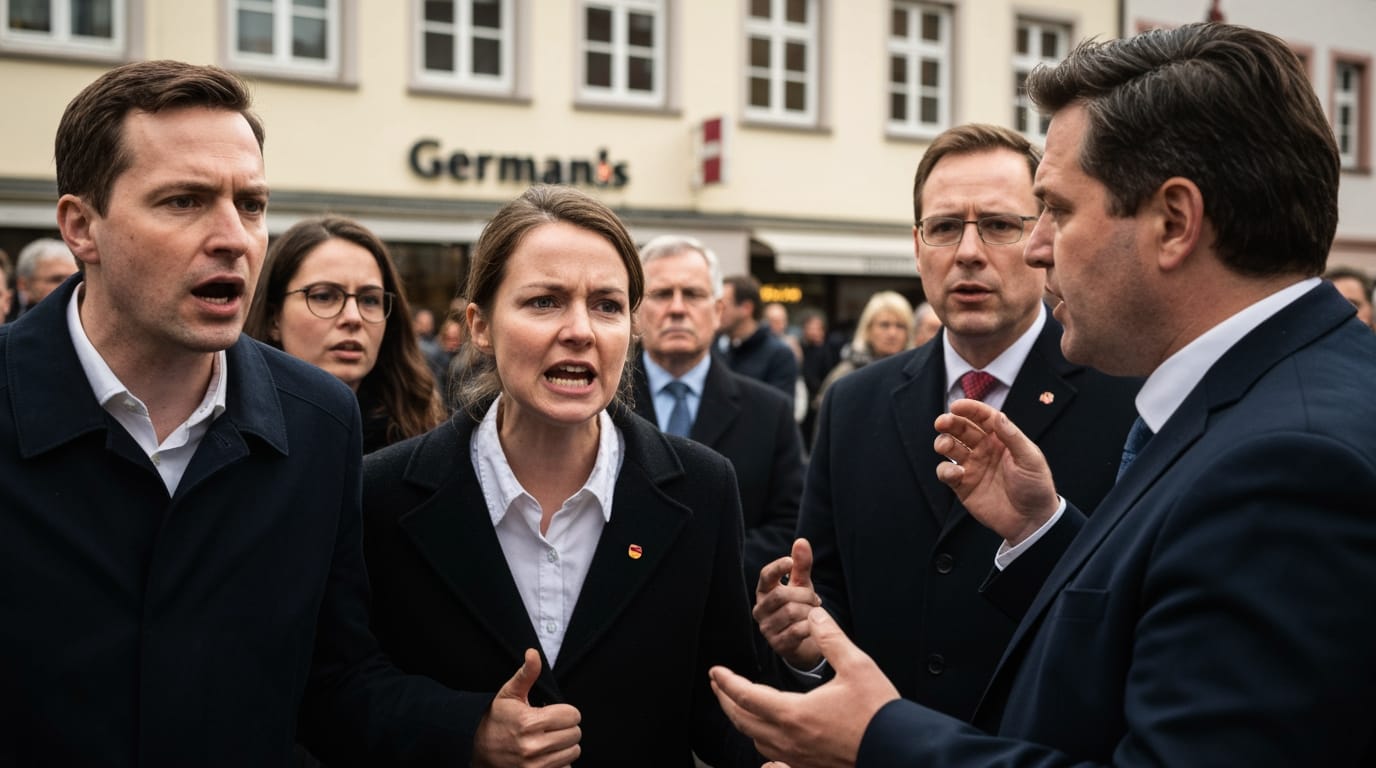
Berlin, Germany – A long-simmering debate over the fundamental structure of Germany's federal system has recently intensified, fueled by renewed calls from prominent political figures to reduce the number of its 16 constituent states. Proponents argue that consolidating smaller states into larger administrative units could enhance efficiency, streamline governance, and bolster the nation's economic power, particularly in light of ongoing financial equalization challenges. However, such proposals inevitably collide with deeply entrenched regional identities, historical legacies, and formidable constitutional obstacles that underscore the complexity of any potential redrawing of Germany's political map.
Bavarian Premier Markus Söder reignited the discussion earlier this month, advocating for fewer, larger federal states to improve efficiency. Speaking at a Christian Social Union (CSU) parliamentary group meeting, Söder asserted that "larger administrative units are more successful than smaller ones," though he refrained from specifying which states he believes should merge, beyond suggesting his own Bavaria would remain untouched. He explicitly linked the push for consolidation to strengthening economic power, highlighting concerns over the current financial equalization system. This system sees economically robust states, such as Bavaria, Baden-Württemberg, Hesse, and Hamburg, contribute billions of euros to support less prosperous states. Bavaria alone contributed approximately 6.7 billion euros in the first half of the previous year, prompting the state to file a complaint against the current financial model with the Federal Constitutional Court in 2023.
The Deep Roots of German Federalism
Germany's federal structure is not a modern invention but a system with historical roots tracing back to the Holy Roman Empire. Following the end of World War II, the federal nature of Germany was deliberately restored, serving as a safeguard against the centralization of power that characterized the Nazi era. The country's Basic Law, adopted in 1949, explicitly protects Germany's federal character through an "eternity clause," making fundamental changes to this principle exceedingly difficult.
The reunification of Germany in 1990 further solidified this federal arrangement, incorporating five new states from the former East Germany—Brandenburg, Mecklenburg-Vorpommern, Saxony, Saxony-Anhalt, and Thuringia—into the Federal Republic, bringing the total to sixteen. These newly joined states adopted administrative, judicial, educational, and social structures parallel to those in the states of former West Germany. This historical evolution means that Germany's current states often reflect regional differences, old kingdoms, and historical circumstances rather than purely modern administrative logic.
Efficiency Versus Identity: The Core of the Debate
Advocates for reducing the number of states frequently cite economic efficiency and administrative streamlining as primary motivators. They argue that a smaller number of larger states could lead to significant cost savings by reducing redundant administrative structures and optimizing public services. The disparities in financial strength among the current states also fuel this argument, with wealthier "donor" states expressing frustration over the ongoing financial equalization transfers. The aspiration for larger entities to be more successful economically and to alleviate the burden on financially contributing states forms a central pillar of the consolidation argument.
However, opposition to state mergers is equally robust, often grounded in strong regional identities and historical allegiances. Many Germans identify deeply with their specific state or region, a sentiment rooted in centuries of diverse local histories and cultures. Constitutional hurdles also present a significant barrier: merging federal states requires referendums in the affected states, with a majority of residents needing to vote in favor. A prominent example of this resistance occurred in 1996 when a proposed merger between Berlin and its surrounding state of Brandenburg failed. While Berlin residents narrowly supported the merger, a significant 62.7 percent of Brandenburg voters rejected the plan, effectively halting the initiative. Leaders of smaller states, such as Saarland, have openly expressed a "Söder-resistant pride" in their independence, underscoring the political and cultural challenges involved in any involuntary consolidation. Furthermore, the German federal system is structured with a complex division of powers, where states play a crucial role in executing federal laws and have a say in national legislation through the Bundesrat, complicating any simple reallocation of responsibilities.
The Financial Undercurrent: Equalization and Investment Reforms
The financial relationship between Germany's federal government and its states is a perpetual point of discussion, often intertwining with the debate over state numbers. The system of financial equalization aims to ensure relatively equal living conditions across the country by transferring funds from financially strong states to weaker ones. This system, while constitutionally mandated, remains a source of contention, particularly for the major net contributors like Bavaria.
Beyond the equalization debate, Germany has recently undertaken significant constitutional fiscal reforms, though these do not directly involve merging states. In March 2025, President Frank-Walter Steinmeier signed off on landmark changes to Germany's debt brake and the establishment of a €500 billion fund aimed at revitalizing infrastructure and energy sectors. This package allows federal states more leeway for their own borrowing, collectively permitting loans up to 0.35 percent of GDP annually, which amounts to approximately €15 billion for all states combined. The fund intends to boost investments in critical sectors like transport, hospitals, energy, education, and digital infrastructure, with €100 billion specifically allocated to federal states. While these reforms are primarily focused on national investment and fiscal stability, they highlight the ongoing need to balance federal objectives with the financial realities and capacities of the individual states.
Navigating a Complex Future
The push to reduce the number of German federal states is a multifaceted issue, deeply embedded in the nation's history, constitutional framework, and regional identities. While calls for greater efficiency and economic strength through consolidation are voiced by some, they are met with strong resistance rooted in local pride and the practical complexities of constitutional change. The failed Berlin-Brandenburg merger serves as a potent reminder of the difficulties involved in such reforms, requiring broad consensus across regions. As Germany continues to navigate economic challenges and strives for administrative optimization, the debate over its federal structure will undoubtedly persist, embodying the perennial tension between national unity, regional diversity, and pragmatic governance in one of Europe's leading nations.


