Germany Grapples with Soaring Conscientious Objections Amid Renewed Military Focus
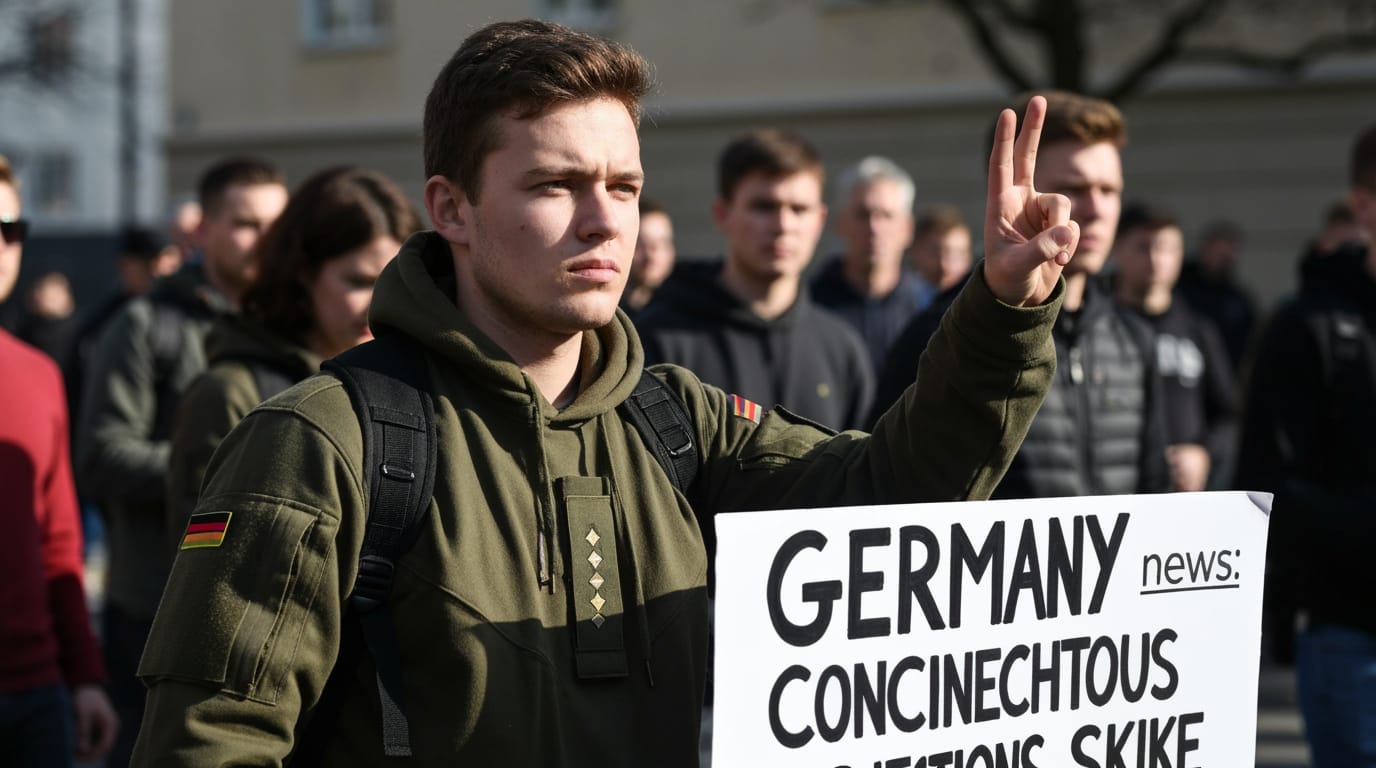
Germany is witnessing an unprecedented surge in applications for conscientious objection to military service, a development that complicates the nation's efforts to bolster its armed forces in a rapidly shifting geopolitical landscape. Driven by the conflict in Ukraine and recent changes to military service regulations, thousands of Germans, including active soldiers and reservists, are formally declaring their refusal to bear arms, raising questions about individual conscience, national defense, and the future trajectory of the Bundeswehr.
A Stark Increase in Refusal
The numbers paint a clear picture of a growing trend. Applications for conscientious objection have escalated dramatically in recent years. In 2021, the Federal Office for Family and Civil Society Tasks (BAFzA) recorded 201 applications. This figure surged to 951 in 2022, marking a 373% increase. The upward trajectory continued, with 1,079 applications in 2023 and a further rise to 2,241 in 2024. The trend shows no signs of abatement in the current year, with nearly 2,000 applications submitted in the first two months of 2026 alone, and a total of approximately 5,900 requests filed in the first half of the year. This far surpasses the 3,879 applications received for the entirety of 2025.
The applicants represent a broad spectrum of the German populace. While a significant portion comes from civilians who have not yet served, a notable number of active soldiers and reservists are also seeking conscientious objector status. From June to December 2024, 79 active soldiers, 720 reservists, and 625 civilians applied. In the first two months of 2025, these figures included 29 active soldiers, 241 reservists, and 163 civilians. The motivations behind these applications are varied but coalesce around a profound re-evaluation of military engagement in a world increasingly marked by conflict.
The Shadow of Ukraine and the "Zeitenwende"
The most significant catalyst for this spike is widely attributed to Russia's full-scale invasion of Ukraine in February 2022. This event triggered a fundamental shift in Germany's defense policy, famously dubbed the "Zeitenwende" or "turning point" by Chancellor Olaf Scholz. The announcement of a €100 billion special fund to modernize the Bundeswehr and a departure from a previously restrained defense stance underscored a new era of military readiness.
For many, particularly those who grew up in an era without active conscription and with a prevailing sense of peace in Europe, the war in Ukraine brought the realities of military conflict uncomfortably close. Applicants frequently cite an "unexpected escalation in military conflict" and a realization that they "did not expect war" as primary reasons for their objections. The German Peace Society (Deutsche Friedensgesellschaft) has noted that this increase reflects a heightened public anxiety regarding military engagement, leading some soldiers to conclude they no longer wish to participate in potential combat operations.
Prior to the suspension of compulsory military service in 2011, many who entered the Bundeswehr did so under different geopolitical assumptions. Peace organizations suggest that some active soldiers were "lured" by recruitment promises that now seem disconnected from the current volatile security environment. This dissonance between expectations and reality appears to be driving a segment of the military personnel to re-evaluate their commitment to armed service.
Reintroducing Military Service and the Constitutional Right to Object
Adding another layer of complexity, Germany introduced a new military service model in January 2026. While general conscription remains suspended, the new system includes mandatory questionnaires for all 18-year-old men residing in Germany, with voluntary participation for women. These questionnaires, which gather personal data and assess willingness for service, aim to identify potential recruits for the Bundeswehr. This "expanded outreach" and the mandatory nature of the initial contact for young men are seen as significant factors contributing to the rise in conscientious objection applications. The process compels individuals to consciously confront their stance on military service, many for the first time.
Germany's Basic Law (Article 4, paragraph 3) guarantees the fundamental right to refuse military service for reasons of conscience, stating that "No person shall be compelled against his conscience to render military service involving the use of arms." This constitutional protection, born from the historical experience of Nazi Germany where conscientious objection was punishable by death, ensures that individuals cannot be forced into armed service against their deeply held beliefs.
The application process for conscientious objector status generally requires individuals to submit a personal letter outlining their moral objections, which must be directed against war and military service in general. Unlike in previous decades, oral examinations before a board are no longer common, and plausible objections are typically accepted without further hurdles. Those granted conscientious objector status are then committed to performing an alternative civilian service, known as Zivildienst.
Implications for the Bundeswehr and Broader Societal Debate
The increasing number of conscientious objections poses a significant challenge for the Bundeswehr, which is simultaneously striving to expand its personnel. The military aims to recruit at least 60,000 additional troops in the coming years, with a long-term goal of reaching 460,000 soldiers, including reservists, by 2035. The spike in objections, alongside a general struggle to attract and retain personnel, complicates these ambitious recruitment targets.
Peace organizations, such as the German Peace Society, have noted a significant increase in inquiries and expanded their advisory services to support those considering conscientious objection. This development underscores a broader societal debate about the role of Germany's military, the ethics of warfare, and the balance between individual freedom of conscience and national security imperatives. Discussions are also emerging about the relationship between civilian and military service, and how best to reconcile historical restraint with new security policy requirements.
The German situation contrasts sharply with the challenges faced by conscientious objectors in Ukraine. While Germany upholds the constitutional right to object, the Ukrainian Supreme Court has ruled that alternative service is applicable only in peacetime, effectively eroding the right to conscientious objection during the ongoing war. This disparity has been highlighted by a ruling from the German Federal Court of Justice, which determined that Ukrainian conscientious objectors may be extradited, even if they face conscription upon return to Ukraine.
As Germany navigates its reinvigorated commitment to defense, the rising tide of conscientious objections serves as a powerful reminder of the deep-seated pacifist traditions within German society and the complex ethical considerations inherent in military service during a time of global instability. The balance between national security needs and fundamental individual rights will continue to be a defining feature of this evolving landscape.


