Germany Implements New Rules to Combat Soaring Gasoline Prices
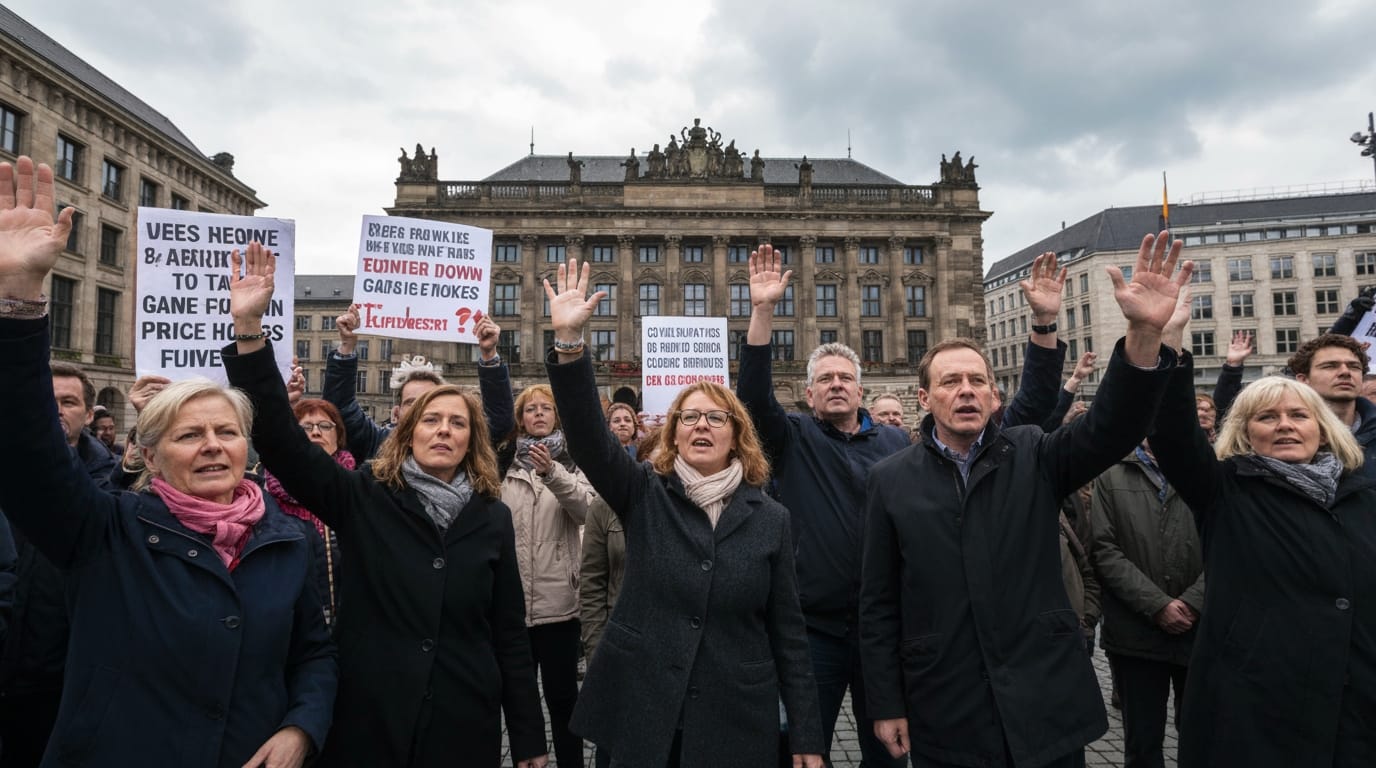
BERLIN – In a significant move aimed at curbing volatile fuel costs for consumers, Germany has introduced new legislation effective April 1, 2026, restricting petrol stations to a single price increase per day. The measures, which follow an "Austrian model," come amidst a period of escalating energy prices, primarily driven by geopolitical tensions in the Middle East and the "Iran war," which have sent fuel costs spiraling across the nation. This regulatory shift represents the government's latest effort to bring greater transparency and stability to a market frequently criticized for its rapid price adjustments.
A New Era for Fuel Pricing
Under the newly enacted law, fuel stations across Germany are now permitted to raise prices for gasoline and diesel only once a day, specifically at 12:00 PM (noon). In stark contrast, price reductions can occur with unlimited frequency throughout the day. This system is designed to prevent the short-term price spikes that have historically left consumers feeling exploited, often seeing prices fluctuate dramatically within a single 24-hour period. Any violation of these new regulations can lead to substantial financial penalties, with fines reaching up to 100,000 euros. The German Economy Ministry confirmed the law's effective date of April 1, 2026, following its swift passage through both the Bundestag and Bundesrat.
The inspiration for this "once-a-day" increase model comes directly from Austria, a neighboring country that has successfully implemented a similar system. While proponents argue it will instill greater consumer confidence and foster healthier competition among fuel retailers, some critics caution that the measure alone may not be a panacea for persistently high energy costs.
The Driving Force Behind the Change
The impetus for Germany's decisive action stems from a sharp and sustained rise in fuel prices, particularly over recent months. Diesel prices, for instance, have seen significant hikes, increasing by as much as 40 cents per liter since the onset of the "Iran war." This conflict, described in various reports as a "US and Israeli war on Iran" or broader "military conflicts in the Middle East," has triggered widespread disruptions in global crude oil and petroleum product markets. Petrol prices at the pump surpassed two euros per liter in Germany after the conflict began, reaching levels not seen since the 2022 energy crisis fueled by Russia's invasion of Ukraine.
The Federal Monopolies Commission has observed that Germany appears to be affected more rapidly and severely by fuel price increases compared to other European Union nations, often with prices at the pump rising disproportionately faster than crude oil prices. This trend has fueled long-standing public criticism that mineral oil companies are quick to pass on market price increases but slow to reflect decreases. The government's swift legislative response reflects a growing concern over the impact of these price surges on inflation and the broader economic recovery.
Beyond the Pump: Broader Regulatory Efforts
The restriction on daily price increases is just one component of a more extensive "Fuel Policy Package" (Kraftstoffmaßnahmenpaket) enacted by the German government. The package includes significant enhancements to antitrust provisions, aiming to address what lawmakers perceive as structural issues within the fuel market. A key element of these reforms is the introduction of a new form of exploitative abuse specifically targeting the wholesale and refining sectors of the fuel market.
Crucially, the legislation also reverses the burden of proof in favor of competition authorities. This means that fuel suppliers will now be required to demonstrate and justify their pricing structures and cost levels, rather than regulators having to prove market abuse. This shift is intended to empower the Federal Cartel Office (Bundeskartellamt) to intervene more effectively and efficiently where anti-competitive practices are suspected. The procedural framework for competition inquiries has also been streamlined, reducing a previous three-stage process to two, thereby facilitating quicker remedial actions.
Industry Response and Public Debate
While the government aims to foster stronger consumer confidence and competition with these new rules, the reception from various sectors has been mixed. Economic State Secretary Gitta Connemann of the CDU emphasized that while the package helps to dampen the pass-through of prices to consumers, it does not alter the realities of global energy markets. Economy Minister Katherina Reiche similarly warned that these measures "may not be enough" if high energy prices persist.
The road haulage industry, heavily reliant on diesel, has voiced considerable skepticism. Germany's road hauliers view the new daily price cap as merely a "sticking plaster" on a deeper wound. They point to substantial increases in diesel costs, such as a 28% rise in March alone, and are advocating for more comprehensive relief measures. These include demands for cuts to road tolls, relief from CO2 levies, and emergency liquidity support to maintain economic viability for transport firms.
Furthermore, critics from consumer groups and industry experts have raised concerns that the "once-a-day" increase rule might inadvertently prompt fuel stations to set higher initial prices at noon, anticipating potential market fluctuations, which could potentially lead to an overall increase in average fuel costs for consumers. Politically, the issue remains a hot topic, with the far-right Alternative for Germany (AfD) party capitalizing on public discontent over energy costs to renew calls for resuming Russian energy imports.
Conclusion
Germany's new fuel pricing regulations mark a significant attempt by the federal government to address public frustration and economic strain caused by volatile energy markets. By limiting daily price increases and strengthening antitrust oversight, authorities hope to inject greater transparency and fairness into the fuel sector. However, as the initial impact of these measures unfolds, the ongoing debate among industry, consumers, and political factions underscores the complex challenge of balancing market dynamics with consumer protection. The effectiveness of these new rules in providing long-term relief and shaping a more competitive landscape will be closely monitored, as Germany continues to grapple with the broader implications of global energy prices.


