Germany Races to Close Critical Medium-Range Air Defense Gaps
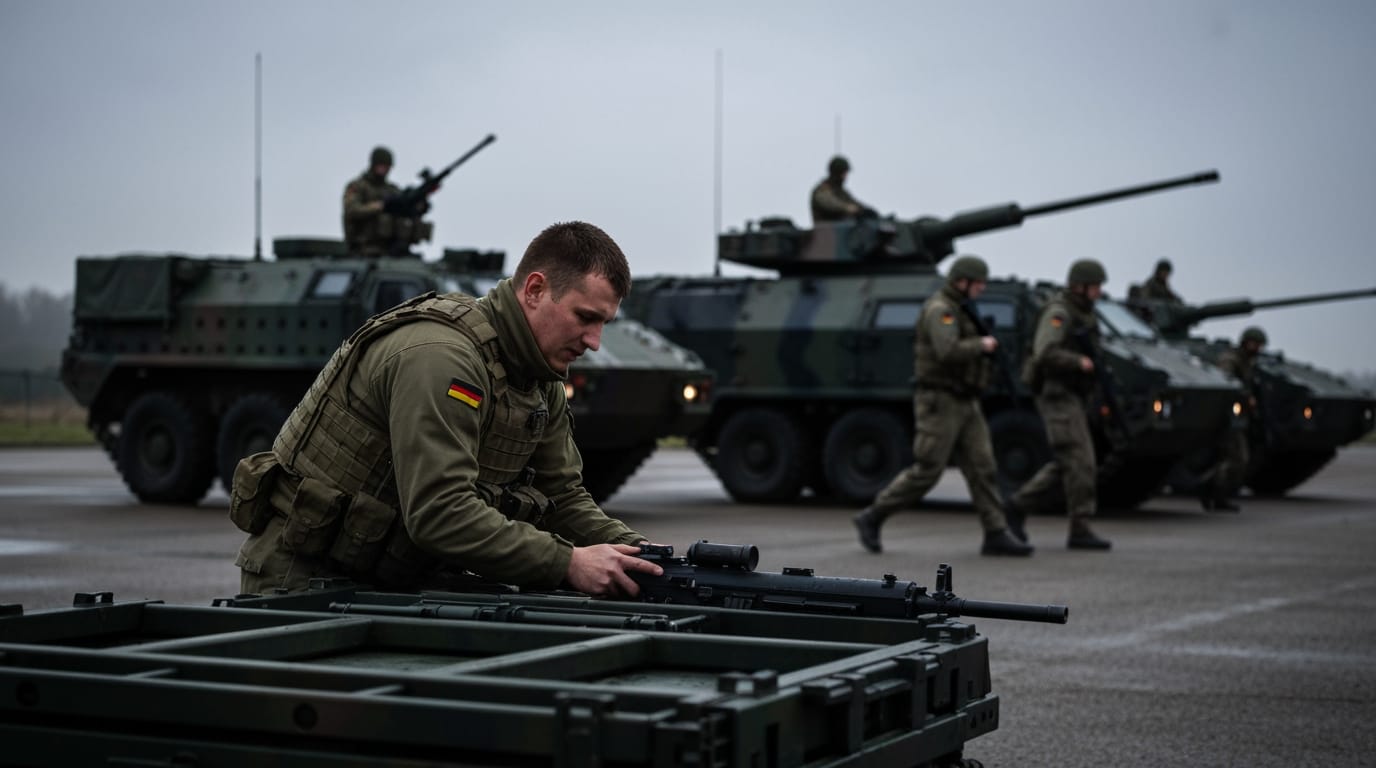
Berlin, Germany – Years of underinvestment and a post-Cold War "peace dividend" mindset have left Germany with significant shortfalls in its medium-range air defense capabilities, a vulnerability starkly exposed by the ongoing conflict in Ukraine. The nation, once a formidable land power, is now urgently moving to rearm and rebuild its defenses, spearheaded by a massive financial commitment and a pan-European initiative aimed at creating an integrated "Sky Shield." This strategic pivot, dubbed "Zeitenwende" by Chancellor Olaf Scholz, marks a profound shift in Germany's defense posture and its commitment to European security.
The Decades-Long Erosion of Air Defense
For decades following the Cold War, Germany, like many European nations, significantly scaled back its military investments, particularly in costly air defense systems. A prevailing assumption that large-scale interstate conflict in Europe was improbable led to a substantial reduction in defense readiness. Ground-based air defense (GBAD) was deprioritized, and older systems were decommissioned without adequate replacements. For instance, the Roland short-range system was withdrawn in 2005, followed by the Gepard in 2010. This left Germany's armed forces, the Bundeswehr, with minimal short and very short-range air defense capabilities.
The country's medium-range air defense relied predominantly on US-made MIM-104 Patriot systems. While Germany initially possessed 36 Patriot fire units in 1990, this number had dwindled to just 12 by early 2022. These remaining units, alongside a few Ozelot mobile platforms with Stinger missiles, constituted the core of Germany's ground-based protection against aerial threats. However, the transfer of Patriot systems to Ukraine, coupled with deployments to protect NATO's eastern flank, has severely depleted Germany's own stocks, leaving the nation "poorly protected" against potential air or missile attacks. Foreign Minister Johann Wadephul confirmed in early 2026 that Germany had "practically exhausted" its own stockpiles of air defense missiles for transfer to Ukraine.
The Zeitenwende: A New Era of Defense Spending
Russia's full-scale invasion of Ukraine in February 2022 served as a dramatic wake-up call, prompting Chancellor Scholz to declare a "Zeitenwende" (historical turning point). This declaration ushered in an unprecedented commitment to military modernization, highlighted by a €100 billion special fund for the Bundeswehr. The fund was established to address years of underinvestment, which had resulted in a cumulative gap of €618 billion in defense spending since 1989.
This financial injection allowed Germany to meet NATO's 2% GDP defense spending target in 2024 for the first time since 1991, with projections indicating a rise to 3.5% of GDP by 2029. A significant portion of this special fund has been allocated to air and missile defense, reflecting its heightened priority in the new security landscape. The focus has shifted from limited expeditionary missions to national and collective defense, with an emphasis on improving operational readiness and deterrence capabilities.
Forging a European Shield: The European Sky Shield Initiative
Beyond national efforts, Germany has taken a leading role in bolstering continental air defense through the European Sky Shield Initiative (ESSI). Proposed by Chancellor Scholz in August 2022, the ESSI aims to create an integrated, ground-based air and missile defense system across Europe through joint procurement and strategic positioning of assets. As of 2025, 24 European states participate in this initiative, which seeks to enhance anti-ballistic missile capabilities and fortify the continent's defenses against a wide range of aerial threats, including drones, cruise missiles, and ballistic missiles.
The ESSI plans a layered defense strategy, incorporating existing and future systems. The US-made Patriot remains a benchmark for ballistic missile defense. For shorter and medium ranges, Germany is promoting its domestic IRIS-T SLM/X system. The IRIS-T SLM, with a combat-proven track record in Ukraine, is highly effective against aircraft, helicopters, cruise missiles, and drones, offering a range of up to 40 km. A newer variant, the IRIS-T SLX, aims to extend this interception capability to 80 km. For the critical long-range, exoatmospheric defense layer, Germany is procuring the Israeli Arrow 3 system, with initial operational capability expected by 2025 and full capability by 2030. The coordinated acquisition and integration of these systems are designed to provide a more robust and cost-effective defense against evolving threats.
Challenges and the Road Ahead
Despite the substantial financial commitments and ambitious initiatives, Germany faces significant challenges in rapidly rebuilding its air defense capabilities. The depletion of existing Patriot stocks due to transfers to Ukraine underscores the vulnerability and the immediate need for replenishment and expansion. The production of advanced missile systems is slow and costly, with global demand often outstripping supply. European defense planners are grappling with the reality that their supply chains are often not their own, highlighting the need for greater strategic autonomy.
Moreover, while Germany's overall defense spending has surged, analyses indicate that the share of procurement dedicated to modern, disruptive technologies like networked air defense has actually declined as a percentage of total orders. This raises questions about whether Germany is sufficiently investing in the capabilities needed for future warfare, rather than simply replacing older equipment. The Bundeswehr's goal to become the "strongest conventional army in Europe" by 2039 requires not only significant investment but also a strategic focus on integrating advanced technologies and maintaining an agile procurement process. Efforts are underway to supplement systems like IRIS-T and Skyranger with additional options, emphasizing cooperation with industry for quicker operationalization in areas like counter-UAS.
A Long-Term Commitment to European Security
Germany's determined efforts to address its medium-range defense shortfalls represent a fundamental reassessment of its role in European security. The "Zeitenwende" is transforming the Bundeswehr from a force shaped by austerity and caution into one that aligns its security posture with its economic and geopolitical weight. The ESSI exemplifies a multilateral approach to shared security challenges, fostering interoperability and burden-sharing among European allies.
The journey to a fully reconstituted and modern air defense capability will be a long one, requiring sustained political will, continuous investment, and robust industrial capacity. However, the recognition of these critical gaps, coupled with concrete steps towards addressing them, signals a strong commitment from Germany to enhance its own defense and contribute more effectively to the collective security of NATO and Europe. The stakes are higher than ever, and Germany's actions are poised to redefine the continent's defensive landscape for decades to come.


