Germany Sheds Fiscal Restraint in Historic Policy Overhaul
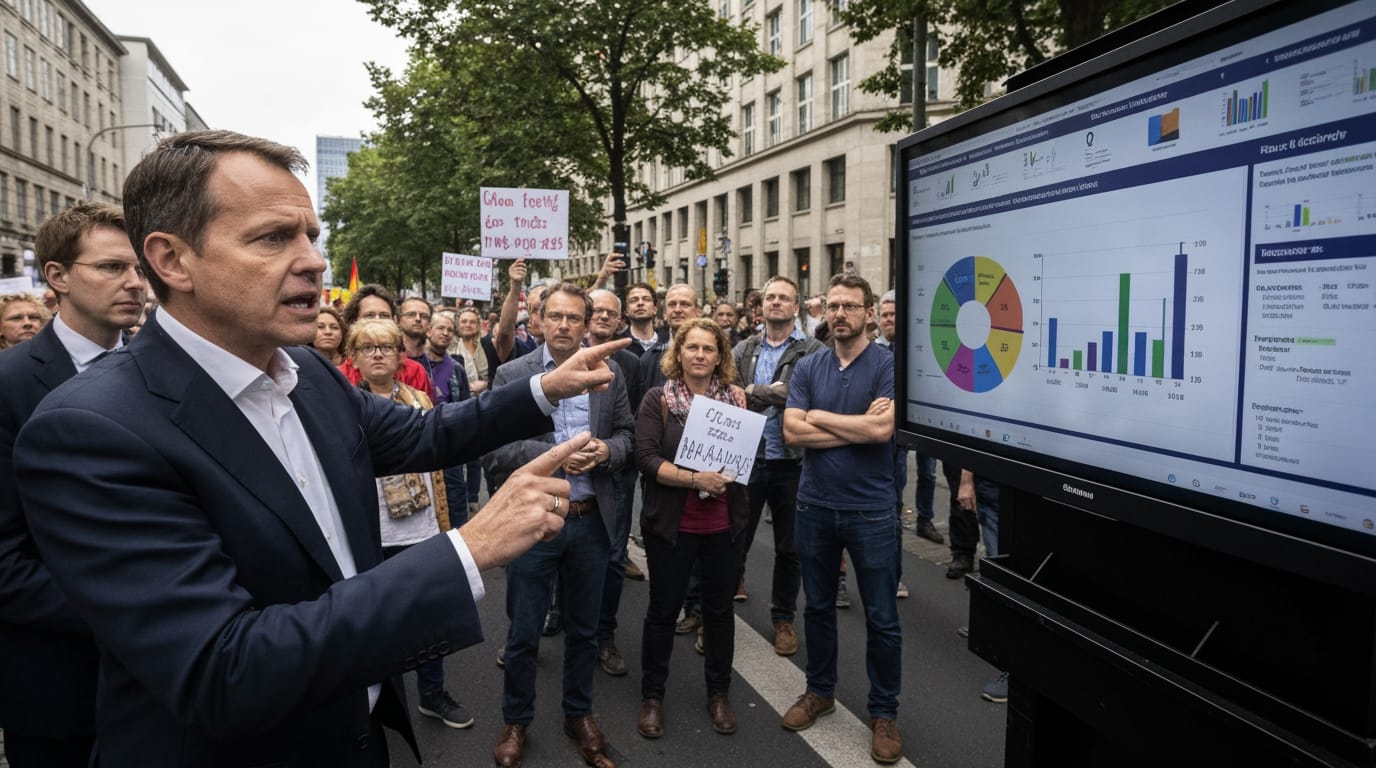
Germany, long the bastion of European fiscal conservatism, is embarking on an unprecedented policy shift, ushering in an era of substantial debt-financed investment aimed at bolstering its defense capabilities, modernizing infrastructure, and accelerating climate action. This seismic change, driven by evolving geopolitical realities and pressing domestic needs, marks a profound departure from decades of budgetary prudence and is set to redefine Germany's economic trajectory and its role within Europe and on the global stage.
The End of Austerity: Germany's Fiscal Turning Point
For years, Germany's constitutional "debt brake," introduced in 2009 following the global financial crisis, served as a steadfast guardian against excessive borrowing, limiting the federal structural deficit to 0.35% of GDP and state deficits to zero. The measure aimed to reduce public debt-to-GDP ratios and reinforce fiscal discipline. This deep-seated commitment to balanced budgets, often referred to as the "black zero," was temporarily suspended during the extraordinary circumstances of the COVID-19 pandemic and the initial phase of the war in Ukraine, allowing for necessary emergency spending.
However, by March 2025, the German Bundestag approved a series of historic constitutional amendments that fundamentally recalibrate the nation's fiscal landscape. These changes signal a clear break from the past, enabling the federal and state governments to incur hundreds of billions of euros in new debt. While Germany's official public debt currently stands at approximately 62% of GDP, analyses by institutions like the Stiftung Marktwirtschaft and the University of Freiburg's Research Center on Generational Contracts indicate a much larger "sustainability gap" due to implicit liabilities from future pension commitments, civil servant retirement entitlements, and healthcare, reaching an estimated 19.5 trillion euros by 2025, or 454% of GDP. This underlying fiscal pressure, coupled with a period of economic stagnation and weak productivity, has underscored the need for bold action.
'Zeitenwende': A Geopolitical Imperative Ignites Change
The catalyst for this profound policy redirection is largely attributed to Chancellor Olaf Scholz's "Zeitenwende" (turning point) speech in February 2022, delivered shortly after Russia's full-scale invasion of Ukraine. This declaration recognized a dramatically altered security landscape and signaled Germany's intent to shed decades of military underinvestment and assume greater responsibility for European security. The evolving geopolitical environment, marked by ongoing Russian aggression and increasing uncertainty regarding the reliability of traditional security guarantees, particularly from the United States, has solidified Berlin's resolve.
Initially, the "Zeitenwende" focused primarily on defense, exemplified by the creation of a €100 billion special fund for the Bundeswehr (German armed forces). However, the scope of this policy shift has rapidly expanded to encompass a broader national revitalization strategy. Beyond military modernization, the new agenda now includes ambitious plans for substantial investments in critical infrastructure and robust measures for climate protection and the green transformation of the economy. This integrated approach acknowledges that national resilience in the 21st century extends beyond military strength to include economic robustness, technological leadership, and environmental sustainability.
Reshaping the Rulebook: Funding a New National Vision
To finance this ambitious agenda, Germany has meticulously re-engineered its fiscal rules. The constitutional amendments passed in March 2025 are central to this strategy. A key reform exempts defense spending above 1% of GDP from the strictures of the debt brake, effectively allowing for significantly increased borrowing to strengthen military capabilities. This reform is poised to enable Germany to meet, and potentially exceed, NATO's target of spending 2% of GDP on defense, with projections even suggesting a rise to 3.5% by 2029. The core defense budget is slated for dramatic increases, from approximately €82.7 billion in 2026 to €109.7 billion in 2027, with total defense outlays potentially reaching €183.7 billion by 2030 and overall defense and security spending surpassing €200 billion annually by 2029.
Complementing the defense initiatives is the establishment of a new €500 billion infrastructure fund, intended for deployment over a 12-year period. A substantial €100 billion of this fund is specifically earmarked for climate-related investments. Crucially, this fund operates as a special purpose vehicle (SPV), allowing it to be financed through borrowing outside the direct constraints of the regular federal budget, thereby circumventing the conventional application of the debt brake. Further enhancing fiscal flexibility, the reforms also permit federal states to run small deficits, raising their net borrowing caps from 0% to 0.35% of GDP. This comprehensive package points to a planned net borrowing of €143 billion, or 3.3% of GDP, in 2025, with record federal debt sales projected to reach €512 billion in 2026.
Wide-Ranging Implications and Lingering Challenges
The implications of Germany's fiscal overhaul are far-reaching, both domestically and across Europe. Economically, analysts anticipate a significant boost to German GDP, with projections from Goldman Sachs suggesting an annual rise of 0.2 to 0.6 percentage points between 2025 and 2027. Other investment banks forecast a 0.5% to 1.0% increase in German GDP growth for 2026 and 2027, attributing this acceleration to the fiscal stimulus. This heightened borrowing is, however, expected to elevate Germany's debt-to-GDP ratio, potentially approaching 100% of GDP if long-term military spending reaches 3-3.5% of GDP.
Financial markets have reacted positively to the prospect of renewed economic activity, with European equities, particularly German stocks, experiencing rallies, and the euro strengthening. Conversely, the prospect of increased government bond issuance has led to a sell-off in bond markets and a rise in yields. The sheer scale of this fiscal expansion also introduces inflationary pressures, a factor that could complicate the European Central Bank's efforts towards rate normalization.
Beyond its borders, Germany's policy shift is seen as a potential "game-changer" for European economic growth and financial markets. It could foster greater European solidarity and potentially redirect capital flows towards European investments. However, the unilateral nature of some of these changes also raises complex questions regarding EU fiscal rules and the potential for fragmentation within the European defense industry if Germany prioritizes domestic suppliers.
Domestically, while the influx of funds is welcomed, some economists caution that fiscal expansion alone may not resolve deeper structural issues, such as weak manufacturing performance and stagnant productivity that have plagued the German economy. Concerns also persist regarding the allocation of new debt, with some critiques suggesting that a portion may cover welfare and tax cuts rather than purely productive capital investments. The long-term effectiveness of these reforms will ultimately hinge on robust implementation and the broader economic environment.
Conclusion: A New Era for a European Giant
Germany's decisive pivot away from rigid fiscal austerity towards a more expansionary, debt-financed strategy marks a transformative moment. Driven by the stark realities of a challenging geopolitical landscape and a recognition of critical domestic investment needs, Berlin is charting a new course that embraces significant borrowing to secure its future. This "Zeitenwende" in fiscal policy not only signifies Germany's renewed commitment to its own defense and economic modernization but also portends a shift in its leadership role within the European Union.
The coming years will test Germany's ability to balance ambitious spending targets with sustained fiscal responsibility, navigate potential inflationary pressures, and ensure that these massive investments translate into tangible economic growth and enhanced security. As Europe's largest economy redefines its financial and strategic parameters, the ripple effects will undoubtedly resonate across the continent and beyond, reshaping economic dynamics and geopolitical alliances for a generation.


