Germany Steps Up: Nation Embraces Enhanced NATO Leadership Role Amid Shifting Global Dynamics
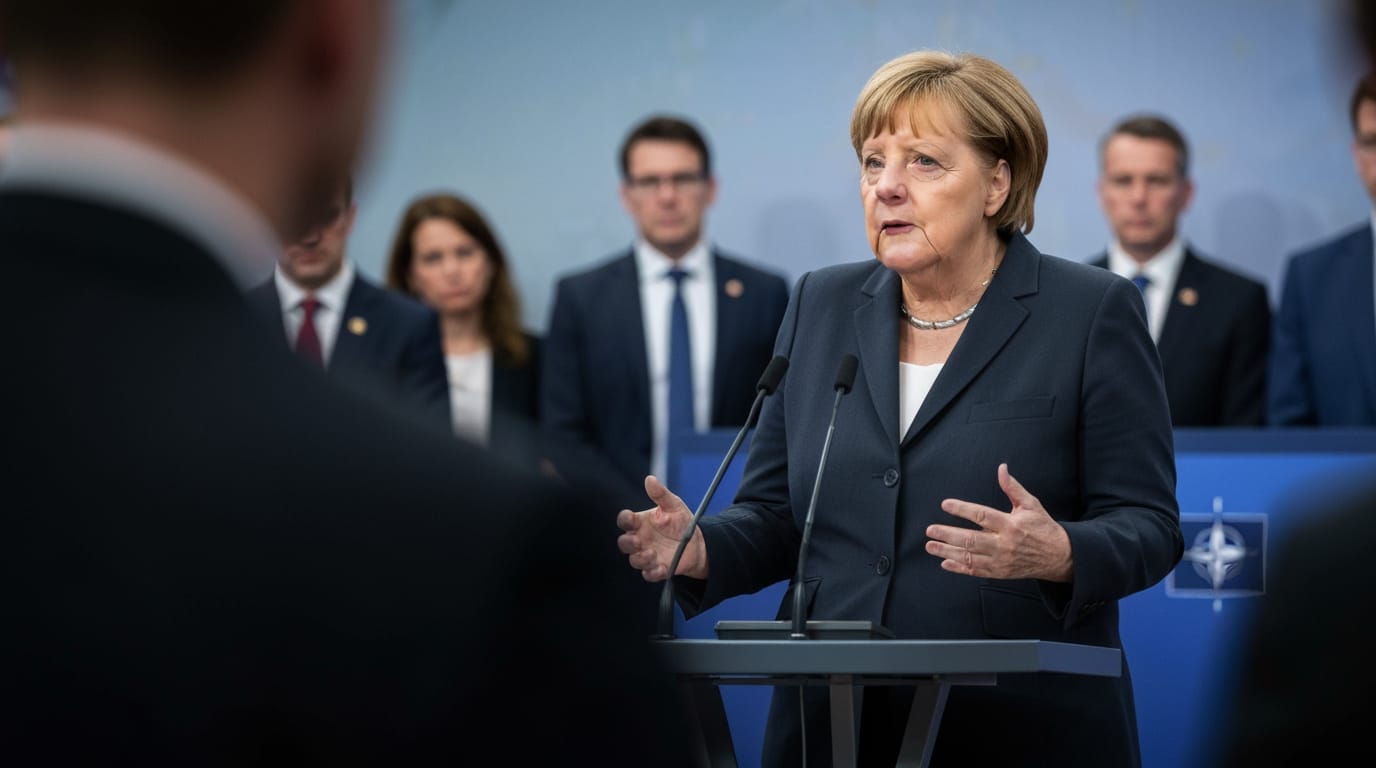
Berlin, Germany – After decades characterized by strategic restraint and a relatively understated military posture, Germany is now decisively stepping into an expanded leadership role within the North Atlantic Treaty Organization (NATO). This profound shift, largely spurred by a dramatically altered European security landscape, marks a historic turning point, committing the continent's economic powerhouse to significantly bolster its defense capabilities and assume greater strategic responsibility within the alliance.
For years, Germany's defense spending lagged behind NATO targets, a reflection of its post-World War II strategic culture focused on economic strength and diplomatic solutions. However, the comprehensive reevaluation of security priorities, encapsulated by Chancellor Olaf Scholz's "Zeitenwende" (turning point) initiative, has set the nation on an unprecedented course toward military revitalization and a more assertive role in collective defense. The implications of this transformation are far-reaching, promising to reshape not only Germany's standing but also the overall strength and cohesion of NATO's European pillar.
The Zeitenwende: A New Strategic Imperative
Germany's strategic reorientation is rooted in the stark realities presented by ongoing conflicts in Eastern Europe, which underscored Europe's — and particularly Germany's — vulnerabilities and reliance on external security guarantees. The direct aggression against Ukraine in 2022 served as the unequivocal catalyst, prompting a fundamental rethinking of German defense policy. This pivotal moment saw Chancellor Scholz announce a monumental €100 billion special fund dedicated to modernizing the Bundeswehr, the German armed forces, and a firm commitment to meet and subsequently exceed NATO's defense spending targets.
This financial injection is not merely about rearmament; it signifies a deeper, more comprehensive shift in Germany's strategic outlook. The nation has since unveiled its first formal military strategy, a doctrine that explicitly prioritizes European defense autonomy and robust deterrence against potential adversaries. This strategy outlines an ambition to forge the "strongest conventional army in Europe," reflecting a renewed determination to secure its own borders and contribute substantially to allied defense efforts. The emphasis is on enhancing readiness, facilitating rapid deployment capabilities, and developing deep strike capacities, all in alignment with broader NATO requirements.
Financial Commitments and Capability Development
Germany's commitment to its enhanced role is tangibly demonstrated through substantial increases in its defense budget and ambitious capability development plans. In 2025, Germany emerged as the largest military spender among European NATO members, allocating approximately $114 billion to defense. This represented a significant 24% year-on-year increase and marked the first time since German reunification that the nation surpassed NATO's benchmark of dedicating 2% of its Gross Domestic Product (GDP) to defense. This rapid escalation in spending contrasts sharply with previous decades, during which Germany's defense expenditure averaged around 1.2% of GDP.
Looking ahead, Germany has openly welcomed NATO's new investment pledge agreed upon in 2025. This ambitious target calls for member states to mobilize 5% of their GDP for defense and security-related purposes by 2035, with 3.5% earmarked for core military spending and an additional 1.5% for broader security investments such as resilience and cybersecurity. This commitment underscores Germany's long-term vision for a robust and self-reliant European defense.
The modernization of the Bundeswehr is now well underway, with significant investments directed toward acquiring state-of-the-art military hardware. Procurement programs include advanced platforms such as F-35 fighter jets, Eurofighter aircraft, Leopard 2A8 tanks, IRIS-T air defense systems, P-8 Poseidon maritime patrol aircraft, and HIMARS rocket artillery systems. Concurrently, there are plans to expand the Bundeswehr's personnel strength, aiming to reach approximately 203,000 active soldiers by 2031. Furthermore, Germany has pledged to contribute 35,000 troops, alongside substantial air and naval assets, within 30 days under NATO's updated force model. Its central geographical location also positions Germany as a critical transit corridor for allied reinforcements moving into Poland and the Baltic states, highlighting its indispensable logistical importance within the alliance.
Reshaping NATO's Command Structure
Germany's burgeoning influence is also manifesting in the very command structure of NATO. A new distribution of responsibilities within the alliance will see Germany occupying more top posts in the military command structure than the United States, signifying a conscious effort toward a fairer sharing of burdens and leadership roles among member states. This strategic recalibration is partly driven by a broader vision for "NATO 3.0," a concept advanced by figures like former U.S. Under Secretary for War Policy Elbridge Colby, who suggests that European nations, with Germany at the forefront, should increasingly assume primary responsibility for the conventional defense of the continent.
Germany's foreign policy leadership has actively endorsed this trajectory. German Foreign Minister Annalena Baerbock has reiterated Berlin's readiness to take on a more prominent leadership role within NATO structures, emphasizing that as European capabilities grow, a readjustment of tasks within the alliance is necessary. Beyond its military contributions, Germany already serves as a vital host nation for several critical NATO facilities, including the Headquarters Allied Air Command in Ramstein and the prestigious NATO School in Oberammergau, which trains thousands of allied personnel annually. These existing foundations provide a strong base for an even greater leadership presence.
Navigating Challenges on the Path to Leadership
Despite the clear political will and significant financial investment, Germany's path to assuming a broader leadership role is not without its challenges. Decades of strategic restraint have ingrained a cautious strategic culture, leading to some internal hesitation within the Bundeswehr about fully embracing a more assertive posture. Overcoming these institutional habits and fostering a widespread sense of confidence in leadership will be crucial.
Logistical hurdles also persist across Europe. While Germany is positioned as a key transit hub, existing gaps in military mobility, including legal, infrastructural, and interoperability barriers, still need to be addressed. Issues such as the condition of German rail and signaling infrastructure, identified as being in poor state in a 2022 assessment, highlight the need for continued investment beyond direct military hardware to ensure smooth and rapid force deployment across the continent.
Sustaining the current momentum also demands enduring domestic political consensus and fiscal sustainability. The long-term impact of Germany's defense transformation will hinge on the government's ability to navigate potential budget constraints, competing social and economic priorities, and historical procurement and recruitment challenges that have plagued the Bundeswehr in the past.
Moreover, Germany's ascendance as a leading military power in Europe has not gone unnoticed by Moscow. Russian narratives increasingly portray a militarily stronger Germany as a long-term structural challenge to its strategic calculations in Europe. Disinformation campaigns are actively attempting to frame German rearmament not as a defensive necessity but as a revival of historical militarism, aiming to undermine European defense unity and create internal divisions within the alliance.
A More Resilient European Future
Germany's decisive pivot toward a greater leadership role within NATO represents a significant evolution in European security. Fuelled by a renewed sense of urgency and a commitment to burden-sharing, the nation is rapidly transforming its military capabilities and embracing a more proactive stance in collective defense. While inherent challenges from historical legacies, logistical complexities, and geopolitical rivalries remain, the trajectory is clear.
By substantially increasing its defense spending, modernizing its armed forces, and actively seeking more prominent positions within NATO's command structure, Germany is solidifying its position as a central military actor in Europe. This shift promises a more resilient European pillar within NATO, enhancing deterrence against aggression and fostering greater strategic autonomy for the continent. The ongoing transformation will require sustained commitment, but it signals a new era where Germany, once a quiet economic giant, is now also a formidable force for security and stability in the transatlantic alliance.


