Turkish Court Ousts Main Opposition Leader, Deepening Political Turmoil Ahead of Crucial Elections
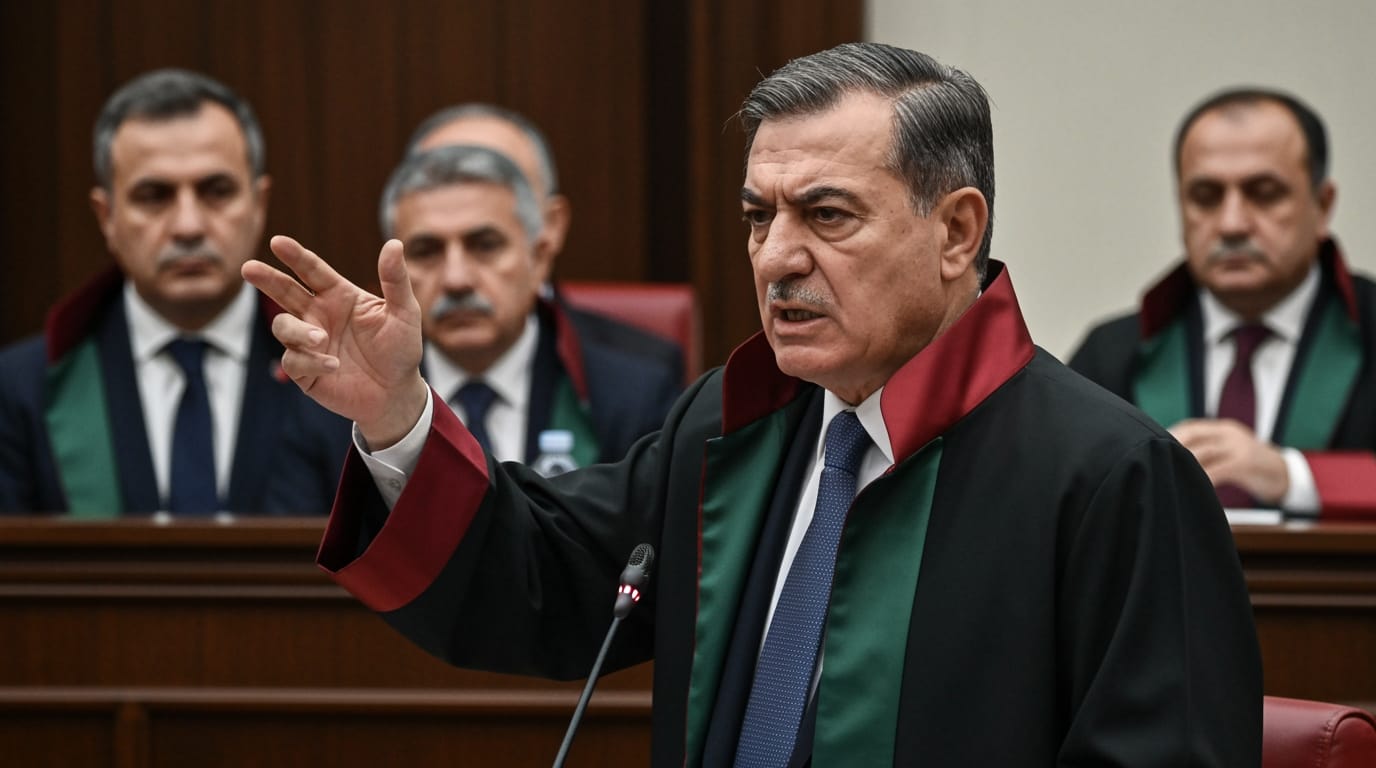
ANKARA – In a significant escalation of judicial interventions in Turkish politics, an Ankara appeals court on Thursday effectively removed Özgür Özel, the chairman of Turkey's main opposition Republican People's Party (CHP), by annulling the 2023 party congress that had elected him. This controversial ruling, which reinstates former leader Kemal Kılıçdaroğlu, has sent shockwaves through the country's political landscape, further destabilizing the opposition and widely being perceived as a substantial boost to President Recep Tayyip Erdoğan's long-standing rule.
The decision comes amid an intensifying judicial crackdown on the CHP, casting a shadow over the integrity of democratic processes and raising serious questions about the independence of Turkey's judiciary. With critical elections on the horizon, the court's intervention is poised to reshape the dynamics of opposition unity and challenge the very foundations of multi-party democracy in the NATO member state.
The Controversial Ruling and Its Immediate Impact
The Ankara appeals court's decision centered on alleged "irregularities" in the 2023 CHP party congress, which saw Özgür Özel triumph over Kemal Kılıçdaroğlu for the party chairmanship. The ruling not only voids Özel's leadership but also dictates the return of Kılıçdaroğlu to the helm, a figure who had previously led the CHP for 13 years and lost to President Erdoğan in the 2023 presidential election. The CHP has vehemently denounced the ruling as an "attempted coup carried out through the judiciary," asserting that it delivers a severe blow against the will of the people.
This judicial maneuver immediately triggered a sharp downturn in financial markets, with Turkey's main Borsa Istanbul plummeting by 6% and government bonds sliding, prompting a circuit breaker and central bank intervention to ease the fallout. The market reaction underscores investor apprehension regarding heightened political instability and its potential to disrupt Turkey's economic stabilization efforts, particularly following similar market jitters after the detention of Istanbul Mayor Ekrem İmamoğlu last year.
A Pattern of Judicial Pressure on the Opposition
The ousting of Özgür Özel is not an isolated incident but rather the latest in a series of legal actions that critics contend are politically motivated and designed to weaken the opposition. Since 2024, the CHP has faced an "unprecedented judicial crackdown," including hundreds of members and elected officials being detained on corruption charges that the party denies.
A prominent target of this broader campaign has been Istanbul Mayor Ekrem İmamoğlu, widely considered President Erdoğan's most formidable political rival and a potential presidential candidate for 2028. İmamoğlu was initially sentenced in December 2022 to two years, seven months, and 15 days in prison, along with a political ban, for allegedly insulting public officials. This charge stemmed from a remark in 2019 where he called those who annulled the initial Istanbul mayoral election "fools"—an election he ultimately won in a rerun by a significant margin after his first victory was controversially canceled. While İmamoğlu's political ban remains subject to appeal, effectively allowing him to continue his mayoral duties for now, he was subsequently arrested in March 2025 and has been imprisoned for over a year on charges that human rights groups describe as part of an effort to "weaponize the criminal justice system against the CHP." His university degree was also annulled, potentially barring him from a presidential race.
This extensive crackdown has extended beyond İmamoğlu, encompassing investigations, detentions, arrests, and removals from office targeting numerous CHP-run municipalities across Turkey. Opposition figures describe these actions as an attempt to reverse the significant gains made by the CHP in the 2024 local elections, where it emerged as the top-voted party nationwide for the first time in decades.
Political Ramifications and Erdogan's Strategic Advantage
The latest court decision plunging the CHP into internal disarray is seen as a considerable advantage for President Erdoğan and his ruling Justice and Development Party (AKP). The sudden change in leadership could create instability within the opposition bloc, particularly hindering their ability to present a united front in future presidential and parliamentary elections, which are constitutionally scheduled for no later than 2028 but could potentially occur earlier. The CHP, a secular and centrist party, has historically been the main challenger to Erdoğan's Islamic-rooted AKP.
The reinstallation of Kemal Kılıçdaroğlu, who already faced a significant defeat against Erdoğan in the 2023 general elections, could further fragment opposition supporters who had rallied behind Özgür Özel as a more combative and promising figure. Critics of the government suggest that this move is aimed at fostering internal discord within the CHP, making it less effective in challenging the ruling party.
President Erdoğan himself has denied any influence on judicial decisions, insisting on the judiciary's independence. However, the systematic nature of these legal challenges against the opposition, especially after electoral setbacks for the AKP, leads many to believe that the judiciary is increasingly being used as a tool for political control.
Erosion of Judicial Independence and International Scrutiny
Concerns over the independence of Turkey's judiciary have been voiced repeatedly by both domestic opposition leaders and international observers, including the European Union. Critics argue that the government has systematically transformed the judiciary into an instrument to stifle dissent and target political rivals, especially over the past decade. This transformation has involved extensive purges of independent judges and prosecutors and the appointment of new jurists perceived to be aligned with the ruling party's ideology.
Justice Minister Akin Gurlek stated that the ruling regarding Özel could be appealed, maintaining the government's stance that the judiciary operates independently. However, the European Greens, among other international bodies, have unequivocally stated that these actions are part of a "broader pattern of political instrumentalisation of the justice system," warning that "Erdoğan is pushing the country further toward autocracy." Human Rights Watch has also characterized the conviction of Mayor İmamoğlu as a "travesty of justice" and an "attack on the democratic process."
The ongoing judicial disputes, including conflicts between the Constitutional Court and the Court of Cassation, further highlight the fragility of the rule of law in Turkey and underscore the challenges faced by any institution that attempts to assert independence from the executive.
Conclusion
The ousting of Özgür Özel from the leadership of Turkey's main opposition party through a court ruling marks a critical juncture in the nation's political evolution. Coupled with the continued legal challenges and imprisonment of figures like Ekrem İmamoğlu, these events paint a concerning picture of a shrinking democratic space and an increasingly politicized judicial system. While the government insists on the rule of law, the opposition and international community fear that these actions are designed to consolidate power and eliminate effective political competition, potentially leading to further instability. The ramifications for Turkey's democratic future, its economy, and its standing on the global stage are likely to be profound and far-reaching as the country navigates an uncertain path toward future elections.