Mount Everest Witnesses Record-Breaking Single-Day Summit Surge From Nepal Side
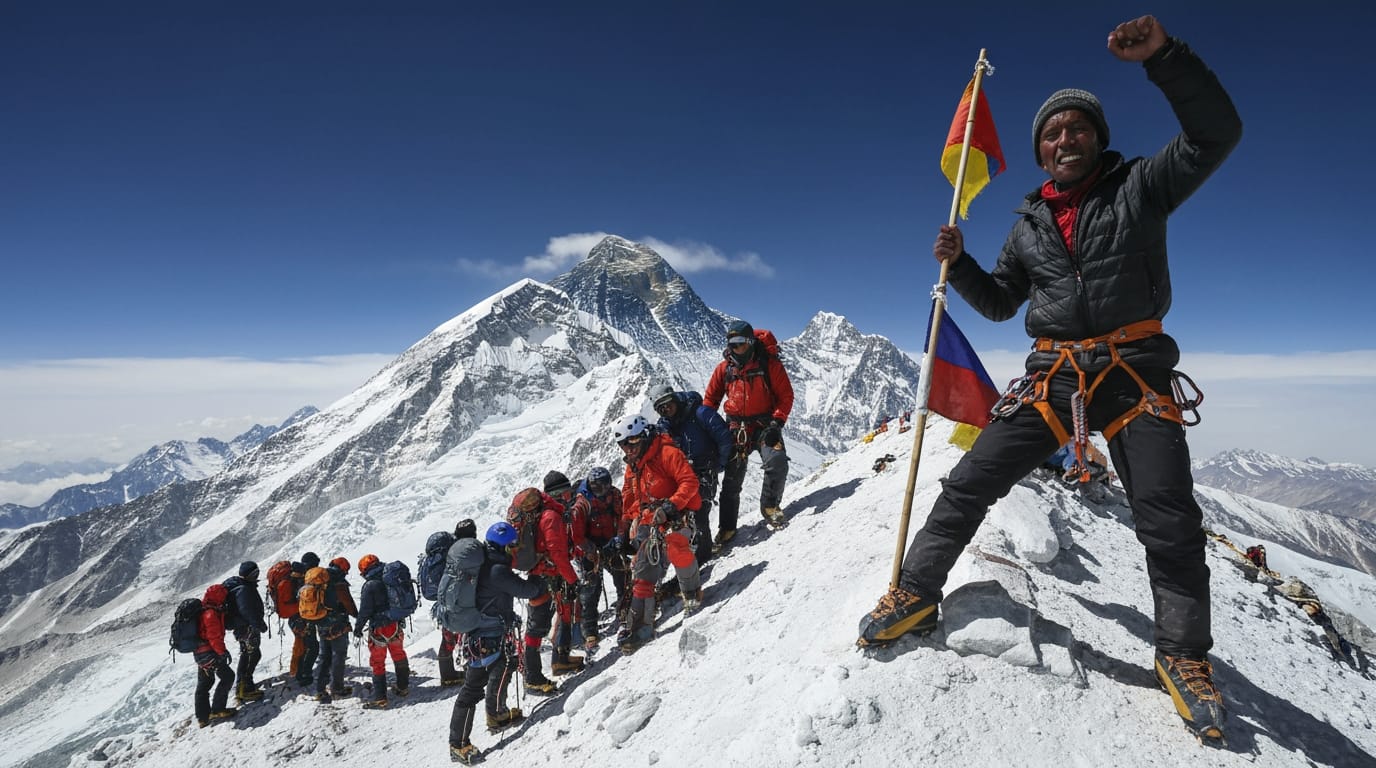
KATHMANDU, NEPAL – Mount Everest, the world's highest peak, experienced an unprecedented surge in ascents from its Nepalese flank this past Wednesday, May 20, 2026, as 274 climbers successfully reached the summit in a single day. This record-shattering event underscores the enduring allure of Everest, while simultaneously bringing into sharp focus the growing concerns surrounding overcrowding, environmental strain, and the inherent risks of high-altitude mountaineering.
The remarkable feat eclipsed the previous record for single-day summits from the Nepalese side, which stood at 223 climbers on May 22, 2019. Expedition operators attributed the concentrated push to a narrow window of favorable weather following a delayed start to the spring climbing season. Adding to the bottleneck, Chinese authorities had closed the northern route from Tibet this year, funneling nearly all expedition traffic through Nepal.
The Ascent to History
The morning of Wednesday, May 20, saw a continuous procession of climbers making their final push to the 8,849-meter (29,032-foot) summit. Rishi Ram Bhandari, Secretary General of the Expedition Operators Association Nepal, confirmed the record numbers, noting that the tally could potentially rise as more climbers reported their success from higher camps. The sheer volume of ascents created scenes of both triumph and trepidation, as individuals from around the globe realized their lifelong dreams atop the world.
Among the celebrated figures of this season were several Sherpa mountaineers who further cemented their legendary status. Kami Rita Sherpa extended his own world record, achieving his 32nd summit of Everest. Pasang Dawa Sherpa also made headlines with his 30th ascent, while Lhakpa Sherpa, a pioneering female climber, reached the summit for the 11th time, topping her own record for women. These remarkable achievements by Sherpa guides highlight their unparalleled experience and critical role in commercial expeditions.
The Crowding Conundrum
The record number of summits intensifies long-standing discussions about overcrowding on Everest. The delayed start to the season, primarily due to the threat of icefall on the conventional route, meant a condensed period for summit attempts. This compressed schedule, combined with the closure of the Tibetan route, funneled an extraordinary number of climbers onto the Nepalese side, particularly during the brief periods of clear weather.
Mountaineering experts have frequently cautioned against allowing such large numbers on the mountain. The phenomenon can lead to dangerous "traffic jams" or lengthy queues, particularly in the perilous "death zone" above 8,000 meters (26,000 feet), where oxygen levels are critically low. Such delays not only waste precious bottled oxygen but also increase the risk of exhaustion, frostbite, and altitude sickness among climbers. A photograph from a previous season in 2019, showing a lengthy queue of climbers on an exposed ridge near the summit, served as a stark reminder of these dangers.
Environmental and Safety Under Scrutiny
The influx of climbers poses significant environmental challenges to Everest's fragile ecosystem. Overcrowding leads to increased waste accumulation, including discarded oxygen cylinders, abandoned camping equipment, food packaging, and human waste. This problem is exacerbated by the extreme conditions, where temperatures remain below freezing for much of the year, preventing natural decomposition. Critics contend that Everest is rapidly transforming into "the world's highest garbage dump."
Compounding the issue, melting glaciers due to climate change are increasingly revealing decades of accumulated waste that was once buried under snow and ice. This not only mars the pristine landscape but also contaminates water sources downstream, affecting local communities and potentially millions who rely on Himalayan glacial meltwater.
Safety also remains a paramount concern. While the 2026 season saw a record number of summits, previous years, such as 2023, were marked by being the deadliest on record, with 17 confirmed fatalities. The sheer volume of individuals on the mountain strains rescue operations and increases the burden and risks for the Sherpa community, who often undertake dangerous recovery missions.
Economic Lifeline and the Sherpa Backbone
Despite the challenges, the mountaineering industry represents a crucial economic lifeline for Nepal. The government issues hundreds of climbing permits each season, with foreign climbers paying approximately $11,000 per permit. These fees generate millions in revenue for the national economy, contributing to infrastructure and conservation efforts. The broader tourism sector, heavily reliant on Himalayan expeditions, accounts for a significant portion of Nepal's GDP.
The local communities, particularly the indigenous Sherpa people, are integral to this industry. Sherpas serve as the backbone of nearly every Everest expedition, performing essential roles such as guiding, carrying heavy loads of equipment and supplies, establishing high-altitude camps, fixing ropes, and making critical safety decisions. Their innate adaptation to high altitudes and profound knowledge of the mountain terrain are indispensable for the success and safety of foreign climbers. While they earn significantly more than the average Nepali income, they also face immense risks, navigating treacherous landscapes and managing the logistics in the most extreme conditions on Earth.
Looking Ahead
The recent record-setting day on Mount Everest exemplifies the complex interplay of human ambition, economic necessity, and environmental responsibility. As more individuals seek to conquer the world's highest peak, the Nepalese government and the international mountaineering community face the ongoing challenge of balancing accessibility with preservation. Solutions such as limiting permits, enhancing waste management systems, and promoting stricter environmental practices are increasingly discussed to safeguard Everest's majesty for future generations. The unprecedented number of ascents in a single day serves as both a testament to human endeavor and a critical call to action for sustainable mountaineering practices on the roof of the world.


