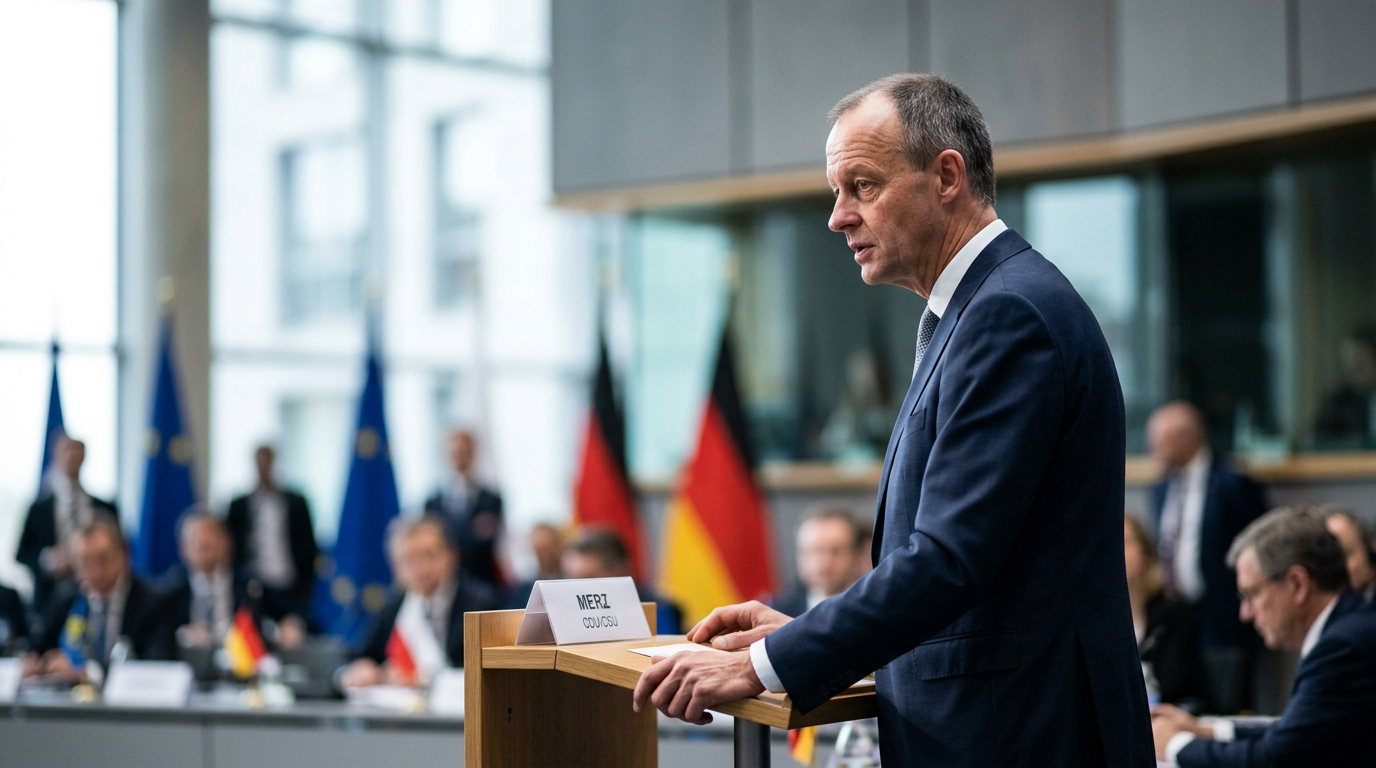
Germany to Dispatch Troops to Fortify Polish Eastern Border Amid Rising Regional Tensions
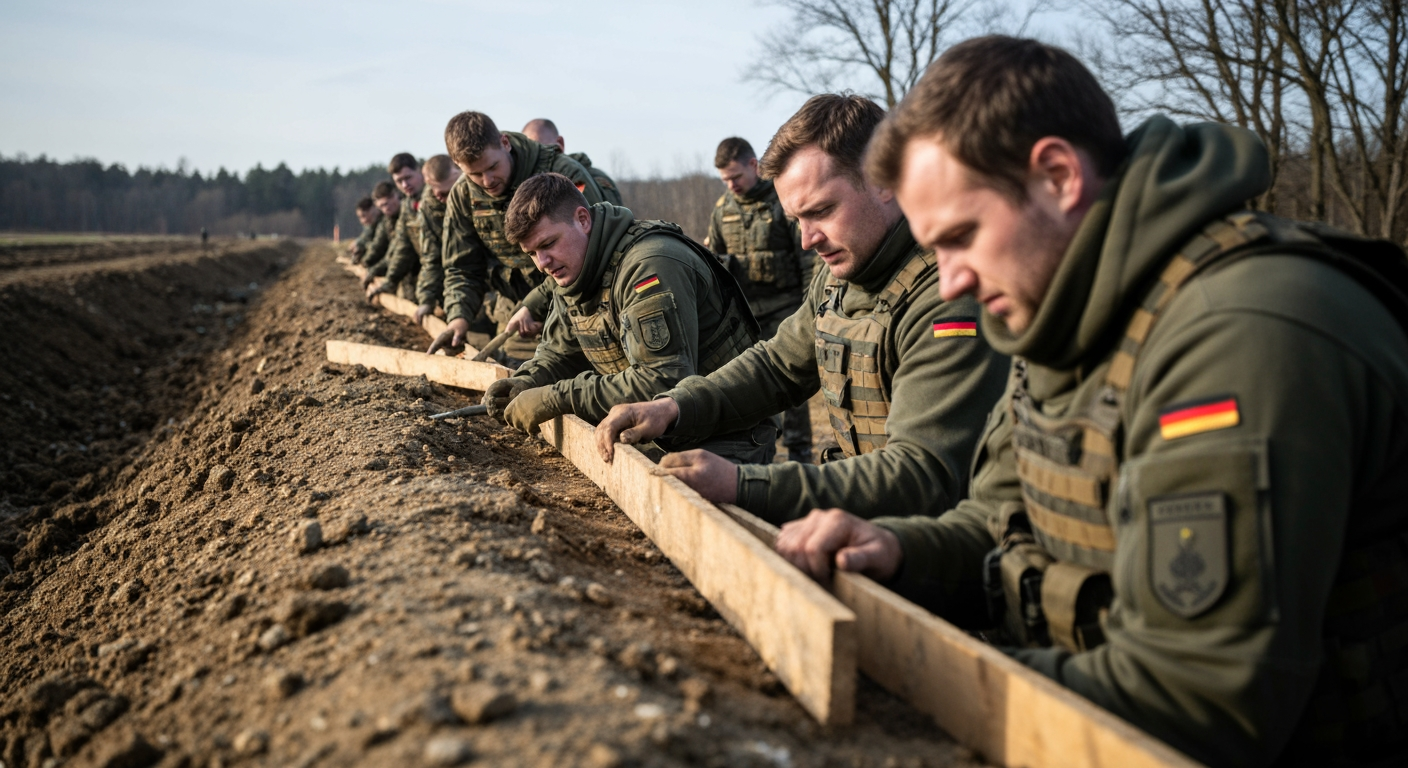
BERLIN – Germany has announced it will send a contingent of military personnel to Poland, marking a significant step in reinforcing the European Union's eastern frontier. This deployment, focused on extensive engineering activities, comes amidst escalating concerns over Russia's assertive posture and persistent hybrid threats emanating from Belarus. The decision underscores a growing collaborative effort among NATO allies to bolster defenses along the alliance’s vulnerable eastern flank.
The move, confirmed by Berlin on Friday, December 12, signifies Germany's direct contribution to Poland's ongoing efforts to secure its borders with Belarus and the Russian exclave of Kaliningrad. The deployment is slated to begin in the second quarter of 2026 and continue until the end of 2027. A spokesman for the German Ministry of Defense indicated the support would be limited to engineering tasks, including "constructing fortifications, digging trenches, laying barbed wire, or erecting tank barriers." The number of troops involved is described as a "mid-range two-digit number," and parliamentary approval is not required, as the deployment is categorized as not posing an immediate danger of military conflict.
Eastern Flank Under Pressure: A Multifaceted Threat Landscape
The decision by Germany to assist in fortifying Poland's eastern border reflects a broader regional response to an increasingly complex security environment. Since Russia's full-scale invasion of Ukraine in February 2022, Poland, a staunch supporter of Kyiv, has served as a critical transit route for Western military aid and has significantly ramped up its own defense capabilities. The Russian aggression has fundamentally reshaped European security perceptions, prompting NATO to reinforce its eastern flank with additional troops, aircraft, and naval assets.
Beyond conventional military concerns, Poland has also grappled with a severe migrant crisis along its border with Belarus since 2021. Polish authorities contend that this influx is a "hybrid attack" orchestrated by Minsk and Moscow, designed to destabilize the EU. Germany, recognizing the shared challenge, has previously urged the European Union to provide financial support to Poland for securing this external border. This crisis has led Poland to deploy its own military and gendarmerie units to its borders with Germany and Lithuania to manage migrant flows, with these controls recently extended until April 2026. Tensions have also emerged between Warsaw and Berlin over Germany's policy of returning migrants who have entered Germany unlawfully via Poland. In response to these multifaceted challenges, the European Commission has launched initiatives like the "Eastern Regions Pact" to bolster security and economic development along its eastern borders.
Germany's Expanding Role in Regional Security
This latest deployment is consistent with Germany's evolving and increasingly assertive role in bolstering security across NATO's eastern flank. Berlin has undertaken several significant military commitments in the region since the escalation of hostilities in Ukraine. In January 2023, Germany deployed Patriot air defense systems and approximately 300 soldiers to Zamosc, Poland, following a stray missile incident in November 2022 that resulted in two fatalities. While that specific Patriot deployment concluded at the end of 2023, Germany continues to contribute to regional air defense, deploying Eurofighter jets to Poland in August 2025 ahead of the large-scale Russian-Belarusian "Zapad-2025" military exercises.
Perhaps the most significant long-term commitment is Germany's establishment of its first permanent military base outside its borders since World War II, with a brigade of 4,800 soldiers slated for full operational capacity in Lithuania by 2027, inaugurated in May 2025. Furthermore, Germany is being prepared as NATO's central logistical hub for rapid deployments to the alliance's eastern front, highlighting its critical strategic importance. These actions collectively demonstrate a decisive shift in German defense policy, moving towards a more proactive stance in collective security.
Implications for European Stability and Alliance Dynamics
The forthcoming German military deployment to Poland's eastern border serves multiple critical functions. It is a tangible manifestation of allied solidarity, providing practical assistance to a frontline state facing direct and indirect pressures. It reinforces NATO's deterrence posture by physically strengthening defenses in a strategically vital area, sending a clear signal to potential aggressors in Moscow and Minsk.
The cooperation also highlights the complex interplay between military defense and managing humanitarian challenges like irregular migration. By assisting with border fortifications, Germany is helping Poland to better control its external border, thereby addressing a source of internal EU tension while simultaneously enhancing overall security. The initiative is a testament to the deepened security cooperation between two key European powers, acknowledging their shared responsibility in safeguarding regional stability in a volatile geopolitical landscape. This collaboration is set to become an integral part of the European Union's broader strategy to build resilience and deter aggression on its eastern frontiers for years to come.
Sources
- thelocal.de
- nagariknetwork.com
- rbc.ua
- kew.org.pl
- nato.int
- militarytimes.com
- ewfrf.org
- notesfrompoland.com
- straitstimes.com
- aa.com.tr
- militarnyi.com
- liga.net
- milmag.pl
- notesfrompoland.com
- notesfrompoland.com
- chinadaily.com.cn
- notesfrompoland.com
- aa.com.tr
- europa.eu
- complexdiscovery.com
- eucrim.eu
- pap.pl
- chinadaily.com.cn
- breakingdefense.com
- pravda.com.ua
- united24media.com
- theguardian.com
- theowp.org
- theguardian.com
Related Articles

Ratko Mladić, "Butcher of Bosnia" and Convicted War Criminal, Dies at 84
THE HAGUE, Netherlands – Ratko Mladić, the former Bosnian Serb military commander known as the "Butcher of Bosnia" and convicted of genocide, war crimes, and crimes against humanity, has died at the age of 84. Serbian...


Long-Awaited 9/11 Mastermind Trial Set for 2028, Decades After Attacks
GUANTANAMO BAY, Cuba – Nearly a quarter-century after the devastating terror attacks of September 11, 2001, a military judge has finally set a trial date for Khalid Sheikh Mohammed, the alleged mastermind behind the...