Germany's CDU Charts Ambitious Course for Renewal at Pivotal Party Conference
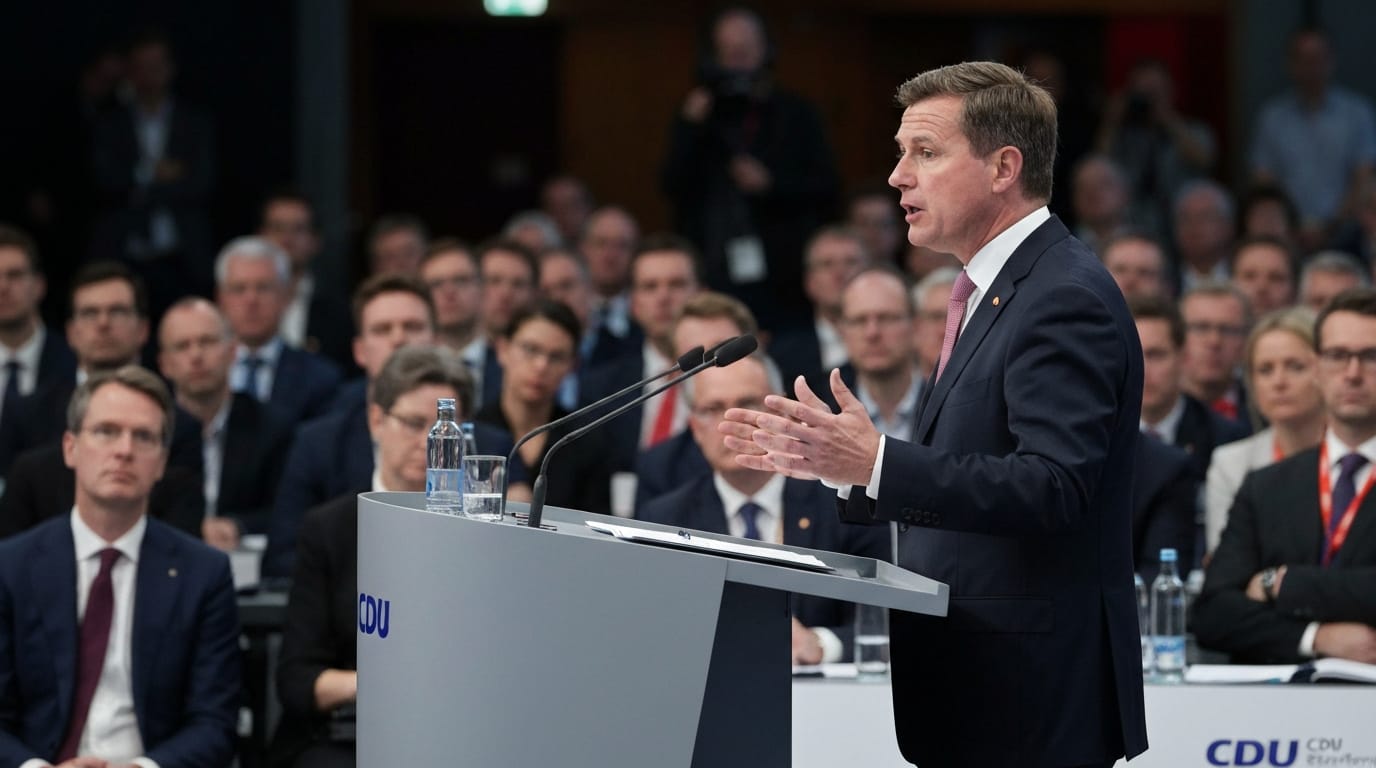
BERLIN – Germany's Christian Democratic Union (CDU), the nation's leading opposition party, is poised to embark on a significant strategic realignment at its upcoming party conference. Facing persistent electoral challenges and a volatile political landscape, the CDU is set to debate and adopt a sweeping program of reforms aimed at revitalizing its platform, strengthening its internal structures, and ultimately charting a course back to federal power. The stakes are profoundly high for a party that has historically anchored German politics, as it confronts declining voter confidence and the rise of populist alternatives.
The CDU, a political heavyweight that led Germany for much of its post-war history, including 16 years under Angela Merkel, found itself in opposition following the 2021 federal election. This shift underscored a pressing need for introspection and adaptation. The upcoming conference arrives at a critical juncture, with national polls indicating public dissatisfaction with the current "traffic light" coalition government, yet without a decisive rebound in support for the CDU. The party's leadership recognizes that a simple waiting game for the government to stumble is insufficient; a proactive and bold vision for Germany's future is imperative to regain the trust of a broad electorate and counter the growing influence of fringe parties, particularly the far-right Alternative for Germany (AfD).
Navigating a Shifting Political Landscape
The decision to pursue extensive reforms is a direct response to a complex confluence of internal and external pressures. Since the departure of Angela Merkel, the CDU has grappled with defining its ideological core in a post-Merkel era, balancing its traditionally conservative base with the need to appeal to centrist and younger voters. The 2021 election saw the party achieve its worst federal result, signaling a significant disconnect with a segment of the electorate. This electoral setback, coupled with the continued fragmentation of the German party system and the AfD's ascent in regional and national polling, has created an urgent imperative for the CDU to clarify its identity and policy positions.
Internally, the party has acknowledged the need for greater member engagement and more transparent decision-making processes. Debates over leadership, policy direction, and the party's overall public image have been ongoing since its electoral defeat. The reforms under consideration are intended to address these structural and ideological questions, fostering internal cohesion while projecting a renewed sense of purpose externally. The party aims to present itself as a stable, competent alternative to the current government, capable of addressing Germany's multifaceted challenges, from economic competitiveness to social integration and national security.
Core Pillars of Proposed Reforms
The reform agenda encompasses a wide array of policy areas, reflecting the CDU's ambition to offer comprehensive solutions across the political spectrum. A central focus is expected to be on economic policy, where the CDU seeks to reaffirm its commitment to a strong social market economy. Discussions are anticipated to center on boosting industrial competitiveness, particularly in the face of global challenges and the energy transition. This includes proposals for reducing bureaucracy, fostering innovation, supporting small and medium-sized enterprises, and ensuring a reliable and affordable energy supply amidst the phase-out of nuclear power and the push for renewables. The party aims to position Germany as a leader in future technologies while safeguarding its traditional industrial strengths.
Another significant area of reform pertains to social and immigration policy. The CDU is expected to advocate for a stricter, yet fair, approach to immigration, emphasizing integration, effective border control, and a clear distinction between asylum and skilled migration. This stance aims to address public concerns about migration management while also acknowledging Germany's need for skilled labor. Furthermore, the party is likely to outline policies on family support, education, and healthcare, seeking to strengthen the social fabric and ensure equitable opportunities for all citizens. Debates will also touch upon the future of the welfare state and the demographic challenges facing Germany.
Beyond specific policies, the party is also looking at internal structural reforms. This could involve changes to how candidates are selected, how policy positions are developed, and how the party communicates with its members and the wider public. The goal is to make the CDU more agile, transparent, and responsive to the concerns of everyday Germans, ensuring that its grassroots feel heard and represented in the party's decision-making processes. There is a strong emphasis on modernizing communication strategies to better reach younger voters and utilize digital platforms effectively.
Implications for Germany's Political Future
The outcome of the CDU's reform efforts holds profound implications not only for the party itself but for the broader German political landscape and potentially for Europe. A successfully revitalized CDU could offer a more robust and coherent opposition, providing a clear policy alternative to the current government and shaping future political debates. Should the reforms resonate with voters, they could pave the way for the CDU's return to federal power, potentially in coalition with other parties, thereby shifting Germany's political trajectory.
Conversely, a failure to convincingly implement reforms or to unite diverse internal factions could further deepen the party's crisis, potentially leading to continued electoral struggles and a weakening of the traditional center-right in Germany. This scenario could further empower smaller parties and contribute to continued political fragmentation, making coalition-building more challenging in future elections. Given Germany's central role in the European Union, the stability and direction of its political parties have significant ripple effects across the continent, influencing everything from economic policy to foreign relations. The CDU's ability to articulate a compelling vision for Germany's role in a changing world is therefore under close scrutiny, both domestically and internationally.
Forging a Path Forward
As the CDU prepares for its pivotal conference, the overarching objective is clear: to emerge with a unified vision and a refreshed mandate that can propel the party back into a leadership position. The discussions will go beyond mere policy adjustments, touching upon the fundamental identity and values of the party in the 21st century. By addressing past electoral setbacks head-on, engaging in robust internal debate, and committing to substantive change, the CDU hopes to rebuild trust and demonstrate its readiness to govern again. The path ahead is challenging, requiring a delicate balance between tradition and innovation, but for a party accustomed to leadership, the pursuit of renewal is not merely an option, but a political imperative for Germany's future stability and prosperity.


