Germany's Climate Ambitions Clouded by Stagnant Emissions Progress
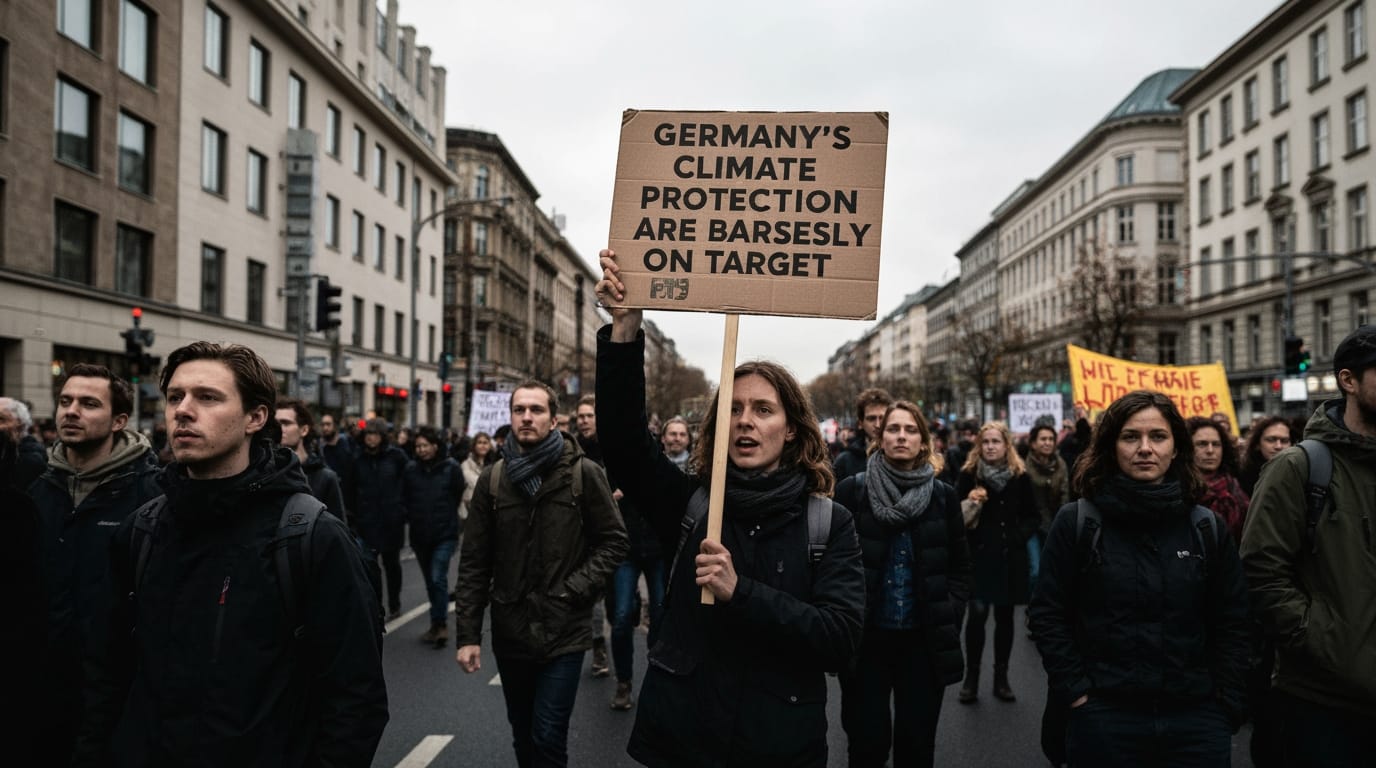
BERLIN – Germany, a nation long lauded for its ambitious climate targets and commitment to a green transition, faces a critical juncture as recent data reveals a stark discrepancy between its environmental aspirations and the reality of its greenhouse gas emissions reductions. Despite legally binding goals to achieve climate neutrality by 2045 and a 65% reduction in emissions by 2030 compared to 1990 levels, the country's progress has stalled significantly, prompting urgent calls for intensified action and raising concerns about its ability to meet future commitments.
The Widening Climate Gap
New figures from the German Environment Agency (UBA) indicate that Germany's greenhouse gas emissions in 2025 saw a negligible decrease of just 0.1% from the previous year, amounting to 649 million tonnes of CO2 equivalent. This minimal reduction falls far short of the 1.5% drop forecast by the expert group Agora Energiewende and pales in comparison to the more substantial 3.4% decrease recorded in 2024. While Germany technically met its specific 2025 target under the Climate Action Law – a 48% cut below 1990 levels – the current trajectory suggests the nation is significantly off track for its more ambitious 2030 goal.
The challenge ahead is immense: to achieve the 65% reduction target by 2030, Germany must reduce its emissions by an average of 42 million tonnes of CO2 equivalent annually from 2026 onwards. This figure represents more than 40 times the reduction achieved in 2025, underscoring the formidable task confronting policymakers and industries. The Climate Action Tracker, an independent scientific analysis, continues to rate Germany's climate action as "Insufficient," reflecting the growing gap between policy and practice.
Stubborn Sectors Hinder Progress
The primary culprits behind Germany's faltering emissions performance are consistently identified as the transport and building sectors. Both areas registered an increase in emissions in 2025, directly counteracting reductions made elsewhere.
The transport sector saw a 1.5% rise in emissions last year, largely due to increasing traffic volume. This sector has historically been a laggard in decarbonization efforts, with improvements in engine efficiency often offset by larger and more fuel-intensive vehicles.
Similarly, emissions from the building sector climbed by 3.5% in 2025. This increase is attributed to colder winter temperatures and a persistent reliance on fossil fuels for heating. A significant proportion of Germany's 43 million apartments still depend on gas (56%) and oil (17%) for heating, and the uptake of electric vehicles has been slower than necessary to make a meaningful impact.
While the industrial sector recorded a 3.8% decline in emissions, experts caution that this reduction is largely a byproduct of a stagnating economy and lower output, rather than a robust shift towards genuine decarbonization. Meanwhile, the energy sector experienced only a 0.3% fall in emissions, partly due to lower wind speeds necessitating increased gas-fired generation. However, it remains a beacon of progress with renewables now accounting for 60% of the electricity supply.
Policy Shifts and Mounting Criticism
The political landscape has undergone significant changes that observers suggest are further complicating Germany's climate protection efforts. The new CDU/SPD coalition government, which took office in May 2025 under Chancellor Friedrich Merz, has signaled a shift that critics argue "deprioritizes and undermines" existing climate policies. The coalition agreement notably lacks additional ambitious measures to close the widening emissions gap.
Among the concerning developments are plans to introduce 20 gigawatts of new gas-fired power capacity by 2030. Climate analysts warn that this initiative risks "carbon lock-in," potentially hindering long-term decarbonization goals. Furthermore, a 2024 revision to the Climate Change Act replaced binding sectoral emissions reduction targets with an overall economy-wide target. While intended to offer flexibility, critics contend that this change "conceals" the underperformance of sectors like transport and buildings, removing an important mechanism for accountability.
Environment Minister Carsten Schneider acknowledged the "too slow" pace of progress in a recent conference, emphasizing the urgent need for intervention in the transport and building sectors. He highlighted the importance of accelerating the adoption of renewable power sources for both environmental benefits and national security.
The Price of Inaction: Economic and Credibility Risks
Germany's failure to meet its emission reduction targets carries significant consequences, both financial and reputational. The country faces the prospect of costly purchases of carbon allowances from other EU member states under the Effort Sharing Regulation (ESR) to offset its domestic shortfalls. Projections indicate a potential cumulative gap of 255 million tonnes of CO2 equivalent for the period between 2021 and 2030, translating into substantial financial outlays.
Beyond the direct economic burden, Germany risks eroding its international credibility as a leading advocate for climate action. As Europe's largest economy, its performance is closely watched and can influence global climate efforts. While the return of Germany's forests as a net carbon sink in 2025, absorbing an estimated 19 million tonnes of CO2 equivalent after years of being a net emitter, offers a small glimmer of positive news, the overall land use sector still remained a net emitter. This positive development, therefore, does not negate the broader challenges.
Looking ahead, Germany remains committed to achieving an 88% emissions reduction by 2040 and climate neutrality by 2045. However, without a drastic acceleration of current efforts, these ambitious long-term goals appear increasingly out of reach.
A Critical Juncture for German Climate Policy
Germany stands at a pivotal moment in its climate journey. The minimal progress in emissions reduction during 2025 underscores a growing chasm between ambitious policy statements and effective implementation, particularly in critical sectors like transport and buildings. The current government's policy shifts and the weakening of sectoral accountability mechanisms further complicate the path forward.
To avoid significant financial penalties, safeguard its international standing, and ultimately achieve its profound climate commitments, Germany must urgently bridge the gap between its stated ambitions and its actual performance. The coming years will be decisive in determining whether the nation can re-energize its climate protection efforts and set a credible example for global decarbonization.


