Germany's Defense Minister Signals New Transatlantic Reality: Europe as Indispensable Partner
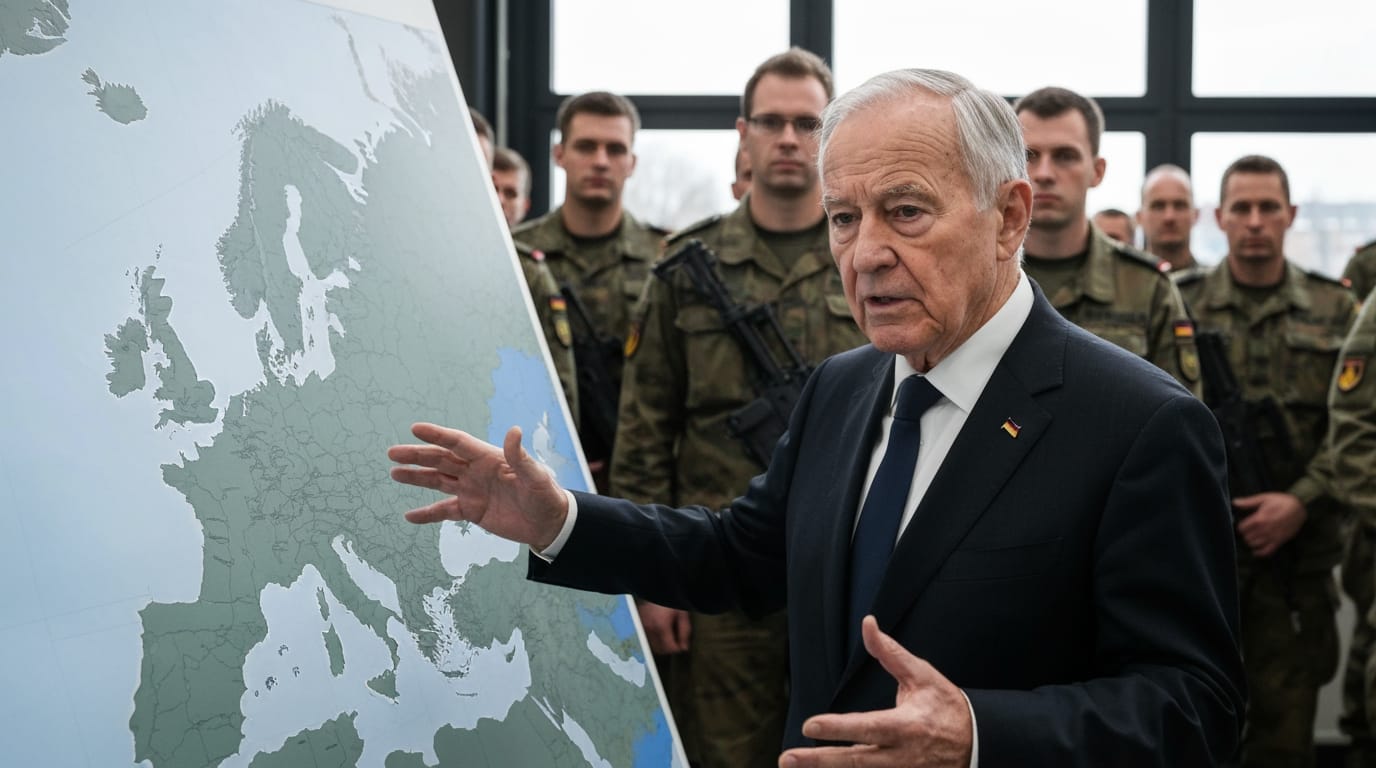
BERLIN – A fresh wave of geopolitical candor has swept through transatlantic relations, sparked by recent remarks from German Defense Minister Boris Pistorius, who has underscored Europe’s evolving role on the global stage. His statements, delivered in the wake of controversial comments by former U.S. President Donald Trump, emphasize a dual message: Europe must cultivate greater strategic autonomy, yet remains an indispensable partner in a world grappling with escalating security challenges. The discourse reflects a growing European assertiveness and a recalibration of the long-standing alliance with the United States.
The Afghanistan Aftermath: A Call for Respect and Reciprocity
The catalyst for Minister Pistorius’s forceful declarations arrived in late January 2026, following former U.S. President Donald Trump’s assertions that the United States "never needed" NATO and that allied forces in Afghanistan "stayed a little off the front lines." These comments, made on Fox Business, elicited sharp criticism across European capitals.
Pistorius described Trump's remarks as "disrespectful," highlighting the significant sacrifices made by European nations, including Germany, in the Afghanistan mission. "They all stood there, at the side of the United States. To claim something different today is simply not true," Pistorius stated, stressing that NATO allies rallied behind the U.S. after the September 11, 2001, terrorist attacks – the only time NATO's Article 5, the collective defense clause, has been invoked. Germany, for instance, lost 59 soldiers during its deployment in Afghanistan from 2001 to 2021, while Britain suffered 457 combat deaths and Denmark 43. Pistorius publicly called on Trump to apologize for his "indecent and disrespectful" remarks, framing an apology as "a sign of decency, respect and insight" for the families of fallen soldiers. He further indicated his intent to directly address the issue with U.S. Defense Secretary Pete Hegseth.
The Imperative of European Strategic Autonomy
Beyond the immediate dispute, Pistorius's remarks signify a deeper shift in European strategic thinking. He explicitly noted that Europe must acknowledge it can no longer rely on the United States in the same manner it has for the past seven decades. This recognition fuels Europe's accelerating pursuit of "strategic autonomy" – a concept gaining significant traction across the continent, particularly amid uncertainties surrounding future U.S. foreign policy and the prospect of a potential return of the former president.
Germany, under Pistorius's leadership, has committed to substantially strengthening its armed forces, aiming to achieve full operational strength by 2029. This ambition is complemented by a pledge to reach 3.5% of its gross domestic product in core defense spending by the same year, a significant increase that underscores Berlin's commitment to greater self-reliance and burden-sharing within the alliance. The drive for European solutions extends to defense industrial capabilities, with calls for European nations to "develop together, build together, buy together, deploy together," even if it means overcoming national interests and merging industries. This reflects a growing consensus that a militarily strong and independent Europe is not just desirable, but a necessity.
Partners, Not Subordinates: An Evolving Transatlantic Compact
The sentiments expressed by Minister Pistorius resonate with broader statements from other senior German officials, signaling a unified European stance on the evolving transatlantic relationship. German Chancellor Friedrich Merz, addressing the Bundestag, articulated a clear message: "As democracies, we are partners and allies, not subordinates." Merz’s comments came in the context of recent U.S. tariff threats, particularly concerning Greenland, where he asserted the European Union's readiness to defend its economic interests and reject intimidation. This robust posture highlights a European desire for an equal partnership, one where cooperation is founded on mutual respect and shared principles.
This shift is also shaped by the 2026 U.S. National Defense Strategy (NDS), which implicitly suggests a greater onus on Europe for its conventional defense. The NDS posits that Europe is "rich, capable and therefore responsible for managing the Russian threat themselves," indicating that the U.S. will no longer automatically underwrite Europe's defense. While the U.S. is expected to remain in NATO and uphold its nuclear deterrent role, European allies are now expected to step up, with influence in the alliance increasingly tied to tangible military output. This perspective frames Europe’s long-discussed strategic autonomy not as a separation from the U.S., but as an unavoidable responsibility within the alliance, crucial for reconciling U.S. priorities in Asia with credible deterrence against Russia.
Navigating Cooperation in a Multipolar World
Despite the impetus for greater European autonomy, German officials consistently affirm the enduring importance of transatlantic cooperation. Minister Pistorius, while advocating for European self-reliance, has also stated that Germany does not want to act "without the US or against their will," particularly in areas like Arctic security. This nuanced position underscores the complexity of the alliance: Europe seeks to be a stronger, more capable partner, not an isolated entity.
The U.S. Defense Secretary Pete Hegseth, in a meeting with Pistorius in July 2025, reaffirmed the strong relations between the two NATO allies, commending Germany's commitment to defense spending and European leadership. This dialogue suggests a recognition on both sides of the need for continued collaboration. A stronger European pillar within NATO is increasingly seen as the logical progression of the alliance, reinforcing its collective security rather than undermining it. This approach aims to create a dynamic network of sovereign states working within a rules-based order, fostering cooperation while acknowledging distinct national and regional interests.
Conclusion: A Reshaped Transatlantic Future
The pronouncements from Germany's defense and political leadership signal a pivotal moment for transatlantic relations. Europe is no longer content to be a passive recipient of security guarantees but is actively shaping its destiny as a robust and self-reliant security actor. This drive for strategic autonomy, spurred by evolving global threats and perceived shifts in U.S. commitment, is juxtaposed with a continued, albeit reconfigured, dedication to the transatlantic alliance. The message is clear: a stronger, more unified Europe, capable of shouldering a greater share of the defense burden, is not only beneficial for its own security but also essential for the stability of the international order and, ultimately, for the United States itself. The future of this vital partnership hinges on mutual respect, shared responsibility, and a common understanding of evolving global dynamics.


