Germany's Foreign Minister Embarks on Crucial China Visit Amid Strained Relations
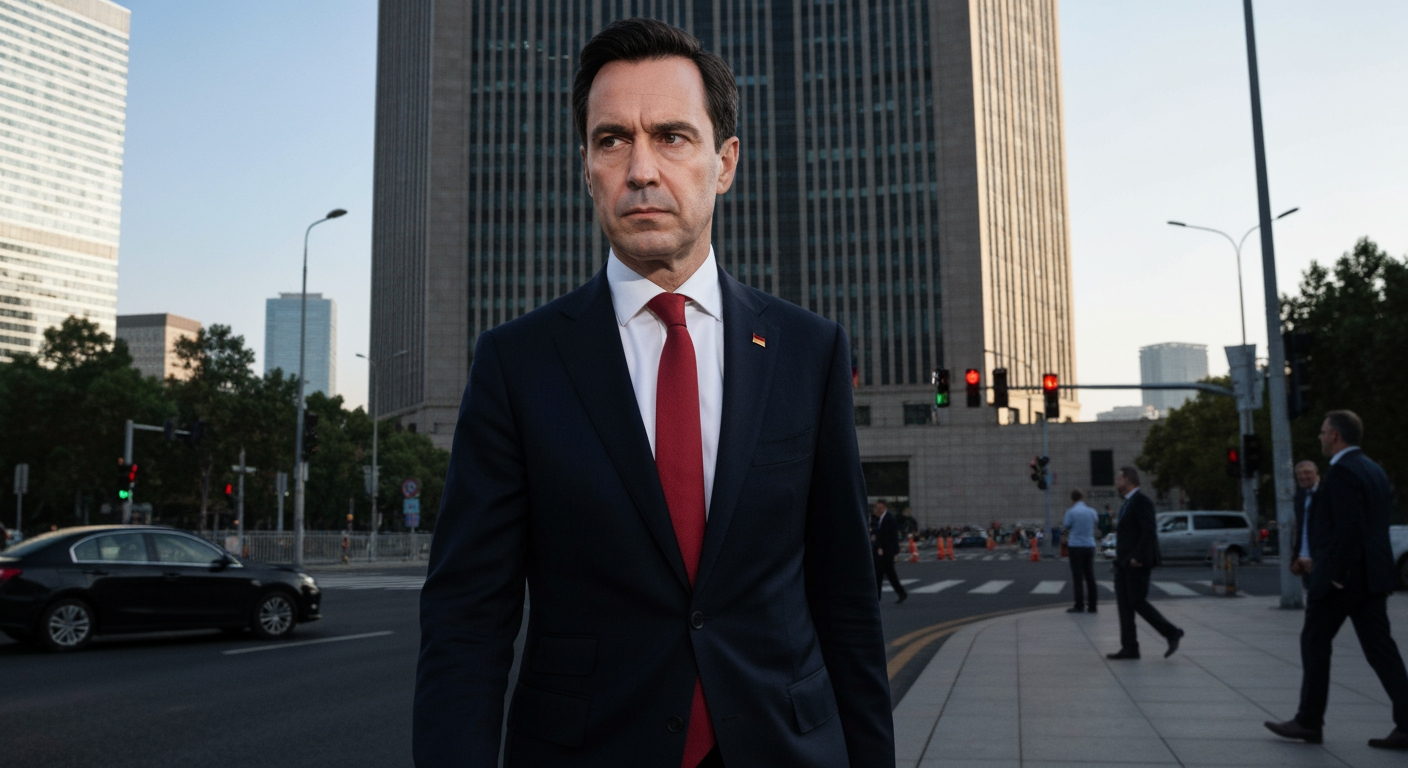
Beijing, China – December 6, 2025 – German Foreign Minister Johann Wadephul is set to arrive in Beijing for a highly anticipated diplomatic visit, aiming to stabilize and recalibrate the complex relationship between Germany and its largest trading partner, China. The trip comes at a critical juncture, following a previously canceled visit and mounting economic and geopolitical tensions that have underscored the delicate balance Germany seeks to maintain with the Asian superpower. This visit is expected to address contentious issues ranging from trade imbalances and supply chain resilience to human rights and the ongoing conflict in Ukraine, all within the framework of Germany's evolving "de-risking" strategy.
The upcoming visit by Minister Wadephul represents a significant effort to re-engage at the highest diplomatic levels, particularly after an abrupt setback just weeks ago. In October 2025, Wadephul's initial planned trip to Beijing was postponed at the last minute after Chinese authorities reportedly offered only a single official meeting, an insufficient itinerary for a delegation of its stature. This diplomatic snub highlighted the underlying friction in bilateral ties and signaled Beijing's displeasure with Berlin's increasingly assertive posture. However, the subsequent visit by German Finance Minister Lars Klingbeil in mid-November for the fourth China-Germany High-Level Financial Dialogue yielded positive outcomes, with both nations agreeing to strengthen commercial ties and work towards easing trade tensions. This successful exchange paved the way for the rescheduling of Wadephul's visit, now confirmed for the second week of December. The willingness of both sides to return to the negotiating table suggests a mutual recognition of the deep interdependence and the necessity of direct dialogue despite profound disagreements.
At the heart of the "fence-mending" mission are pressing economic concerns. Germany, Europe's largest economy, has grown increasingly wary of its reliance on China, particularly for critical raw materials and components. Beijing's recent imposition of export controls on rare earths, essential for German industries from automotive to electronics, has underscored vulnerabilities in global supply chains. Minister Wadephul's agenda includes discussions on ensuring the security and reliability of these supply chains, advocating for fair competition, and pushing for greater market access for German companies in China. Germany's overarching policy, articulated under Chancellor Friedrich Merz, is one of "de-risking without decoupling," aiming to reduce strategic dependencies while preserving robust economic engagement. In 2024, China remained Germany's second-largest trading partner, with bilateral trade volumes reaching approximately 246 billion euros, and over 5,000 German companies maintain substantial investments in the country. The economic dialogue seeks to navigate the complexities of this relationship, where China is simultaneously an indispensable market, a formidable competitor, and a systemic rival.
Beyond economics, the visit will inevitably confront a range of geopolitical and ethical considerations that strain the bilateral relationship. Germany continues to express deep concerns over China's human rights record, particularly the treatment of ethnic minorities and the erosion of individual freedoms. Furthermore, China's stance on the war in Ukraine, including its continued economic and technological support for Russia, remains a significant point of contention. German officials, including former Foreign Minister Annalena Baerbock during her 2024 visit, have previously emphasized that China's support for Moscow directly impacts European security interests. Wadephul is expected to reiterate these concerns, urging Beijing to leverage its influence to promote a peaceful resolution to the conflict. The stability of the Indo-Pacific region, including disputes in the South China Sea and the Taiwan Strait, is another critical item on the diplomatic agenda. Germany, like many Western nations, views any forced change to the status quo in these regions as a severe threat to international law and global trade, a message previously conveyed by Berlin.
The implications of this visit extend beyond mere bilateral ties, influencing the broader European Union's approach to China. Germany's China Strategy, adopted in July 2023, positions China as a partner, competitor, and systemic rival, a framework largely aligned with the EU's collective stance. Berlin consistently advocates for a united European front in its dealings with Beijing, pushing for reciprocal relations and increased EU cohesion. Wadephul's discussions will therefore also serve as a barometer for potential EU-China interactions, particularly concerning ongoing trade disputes, such as those related to electric vehicles. Success in addressing these multifaceted challenges will require astute diplomacy and a willingness from both sides to find common ground amidst profound differences. The visit is also seen as a crucial preparatory step for a potential visit by Chancellor Merz to China next year, underscoring the high stakes involved in stabilizing this pivotal international relationship.
In conclusion, Foreign Minister Wadephul's trip to China underscores the enduring necessity of dialogue between two global economic powerhouses, even as their strategic interests diverge. The delicate task of "mending fences" involves navigating deep economic interdependence, profound geopolitical disagreements, and fundamental differences in values. While Germany aims to protect its economic interests and diversify supply chains through a "de-risking" approach, it also seeks to engage China on shared global challenges like climate change, where cooperation is indispensable. The outcomes of these high-level talks will be closely watched, offering insights into the future trajectory of one of the world's most complex and consequential bilateral relationships, and its broader impact on international stability and prosperity.
Related Articles


Mounting Frustration Grips Russia as Economic Hardship and War's Toll Deepen
Moscow, Russia – A palpable shift in public sentiment is emerging across Russia, with growing frustration among citizens fueled by a confluence of economic pressures, increasing internet restrictions, and the undeniable...

Germany's Strategic Calculus: Ukraine Aid is an Investment in European Security, Not Charity
Berlin – The ongoing provision of substantial aid to Ukraine by Germany and its allies is increasingly being framed not as an act of altruism, but as a crucial investment in European security and stability. This...