Germany's Rules-Based Reckoning: Iran and the Shifting Sands of Global Order
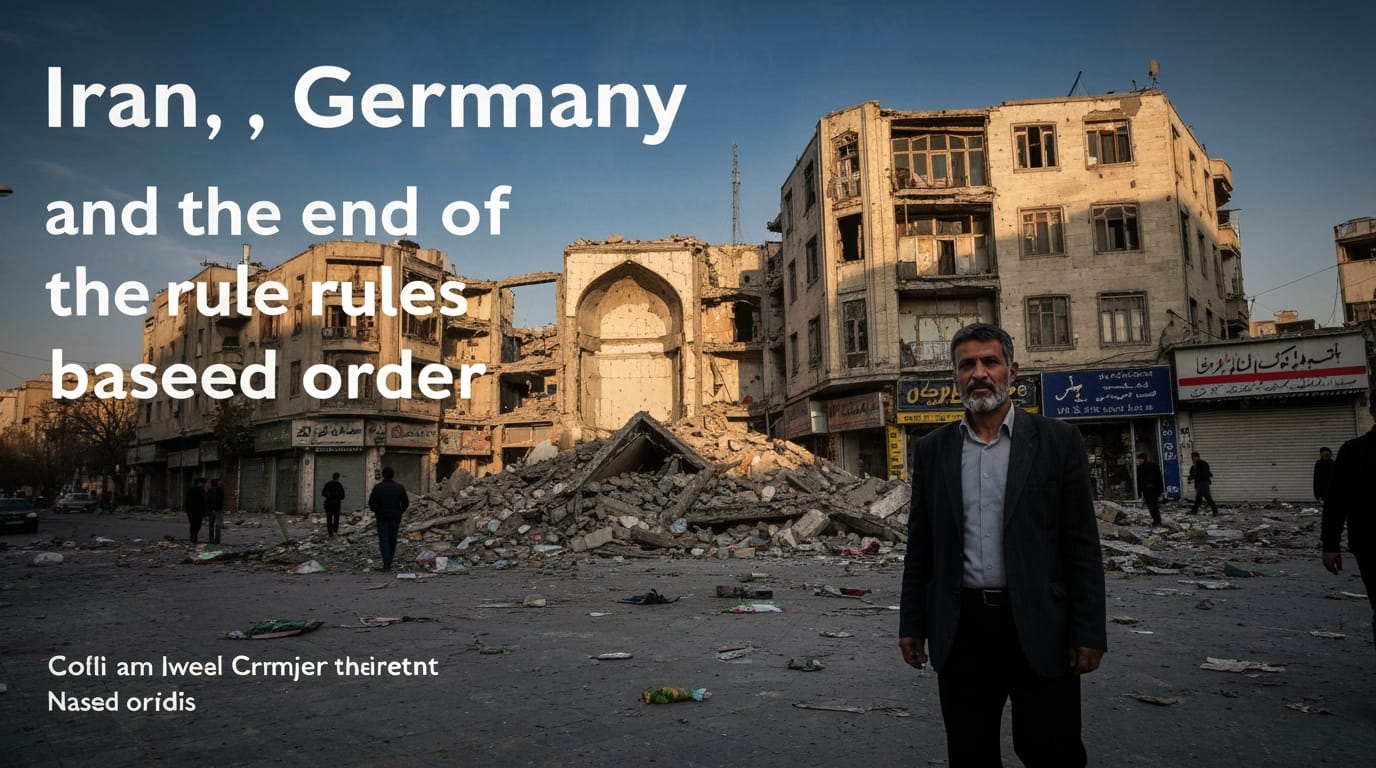
The foundational pillars of the international rules-based order, long championed by nations like Germany, appear increasingly fractured amidst escalating tensions with Iran. A series of recent events, including military strikes and pronouncements from top German officials, underscore a growing disillusionment with the efficacy of international law and multilateral diplomacy when confronted by persistent defiance and a perceived lack of universal adherence. This evolving dynamic signals a potential recalibration of foreign policy, not just for Germany, but for a wider Europe grappling with its strategic role in a volatile world.
The Erosion of a Post-War Ideal
For decades following World War II, Germany meticulously cultivated an identity rooted in the defense of international law, multilateralism, and a rules-based global order. This commitment, born from a painful history, positioned Germany as a moral compass in international relations, advocating for global justice and collective action over unilateral power. Its resolute support for institutions like the United Nations and the European Union reflects this deep-seated conviction that global challenges are best addressed through shared norms and legal frameworks. However, this post-war ideal is now confronting stark realities. There is a growing sentiment that the very rules Germany so ardently defends are being systematically undermined by major powers, with enforcement proving inconsistent and compliance often optional. This perceived decline in the international legal order's authority has prompted a critical reassessment within European capitals.
Iran's Persistent Challenge to Global Norms
Iran's actions have consistently presented a significant test to the international rules-based order. Its nuclear program, regional activities, missile development, and human rights record have drawn widespread international condemnation. Efforts to constrain Iran's nuclear ambitions led to the landmark Joint Comprehensive Plan of Action (JCPOA) in 2015, an agreement that saw Iran limit its nuclear activities in exchange for sanctions relief. Germany, as a key member of the P5+1 group, played a central role in negotiating and implementing this deal, viewing it as a triumph of diplomacy and multilateralism. However, the JCPOA faced a critical blow with the United States' withdrawal in 2018, which led to the re-imposition of sanctions and Iran's subsequent reactivation and expansion of its nuclear program beyond agreed limits. This sequence of events severely weakened the European Union's efforts to uphold the agreement and maintain diplomatic engagement, leaving many to question the long-term viability of such accords without broader international consensus and enforcement.
Germany's Shifting Realities and Diplomatic Dilemmas
In the face of these ongoing challenges, Germany's traditional foreign policy approach appears to be undergoing a subtle but significant shift. German Chancellor Friedrich Merz recently articulated a more "realist" perspective, suggesting that international law loses its relevance when consistently disregarded. He indicated that Europe should reconsider lecturing allies, such as the United States or Israel, on the legality of their actions against Iran, particularly given the perceived ineffectiveness of previous diplomatic and punitive measures. This viewpoint acknowledges a stark gap between normative ideals and geopolitical realities, where decades of sanctions and appeals to international legal mechanisms have not fundamentally altered Iran's strategic calculus or halted its contentious activities. While Germany, alongside France and the United Kingdom, triggered the JCPOA's snapback mechanism in August 2025 to reimpose UN sanctions due to Iran's violations, the broader European response to the escalating conflict has been notably divided. German Foreign Minister Johann Wadephul has, however, made it clear that Germany will not participate in US or Israeli military strikes against Iran and will not support concrete measures aimed at regime change, emphasizing that any such change must originate from the Iranian people themselves. This stance highlights a delicate balancing act: condemning destabilizing actions while seeking to avoid direct military entanglement and uphold humanitarian principles.
The Economic Hammer and Human Costs
Economic sanctions have long been a primary instrument to pressure Iran into compliance with international norms, significantly impacting its economy. Germany, a historically important trading partner for Iran, has seen its bilateral trade volume sharply decline due to these sanctions, particularly after the US withdrawal from the JCPOA. While studies suggest that sanctions inflict considerable economic harm on targeted nations like Iran, their ability to compel long-term behavioral change remains a subject of debate. Iran's real GDP has reportedly rebounded periodically despite heavy sanctions, and nuclear enrichment programs have continued. Beyond geopolitical maneuvering, the human cost of the ongoing tensions is substantial. Germany consistently expresses deep concern over human rights violations in Iran, advocating for an end to executions, discrimination, and restrictions on fundamental freedoms. Conversely, Iran has accused Germany of "double standards" on human rights, pointing to what it perceives as selective criticism and support for certain military actions in the region. This exchange underscores the deep ideological chasm that persists between Tehran and many Western nations.
An Uncertain Future for Global Governance
The current dynamic between Iran and Germany reflects a broader crisis of confidence in the international rules-based order. Europe finds itself at a crossroads, with its traditional foreign policy tools yielding limited success and its unity sometimes faltering in the face of complex global challenges. The mixed messages from European nations following recent military actions against Iran further illustrate this disjointed response and Europe's limited leverage in some situations. As geopolitical anxieties mount, the future of the rules-based order hinges on the willingness of states to not only uphold its principles but also to devise effective mechanisms for enforcement and compliance that can withstand the pressures of power politics. For Germany and its European partners, the challenge is to reconcile their deeply held commitment to international law with the pragmatic realities of a world where traditional norms are increasingly contested, and the consequences of inaction are profound.


