Germany's Underwater Arsenals: A Rusting Legacy and Looming Ecological Crisis

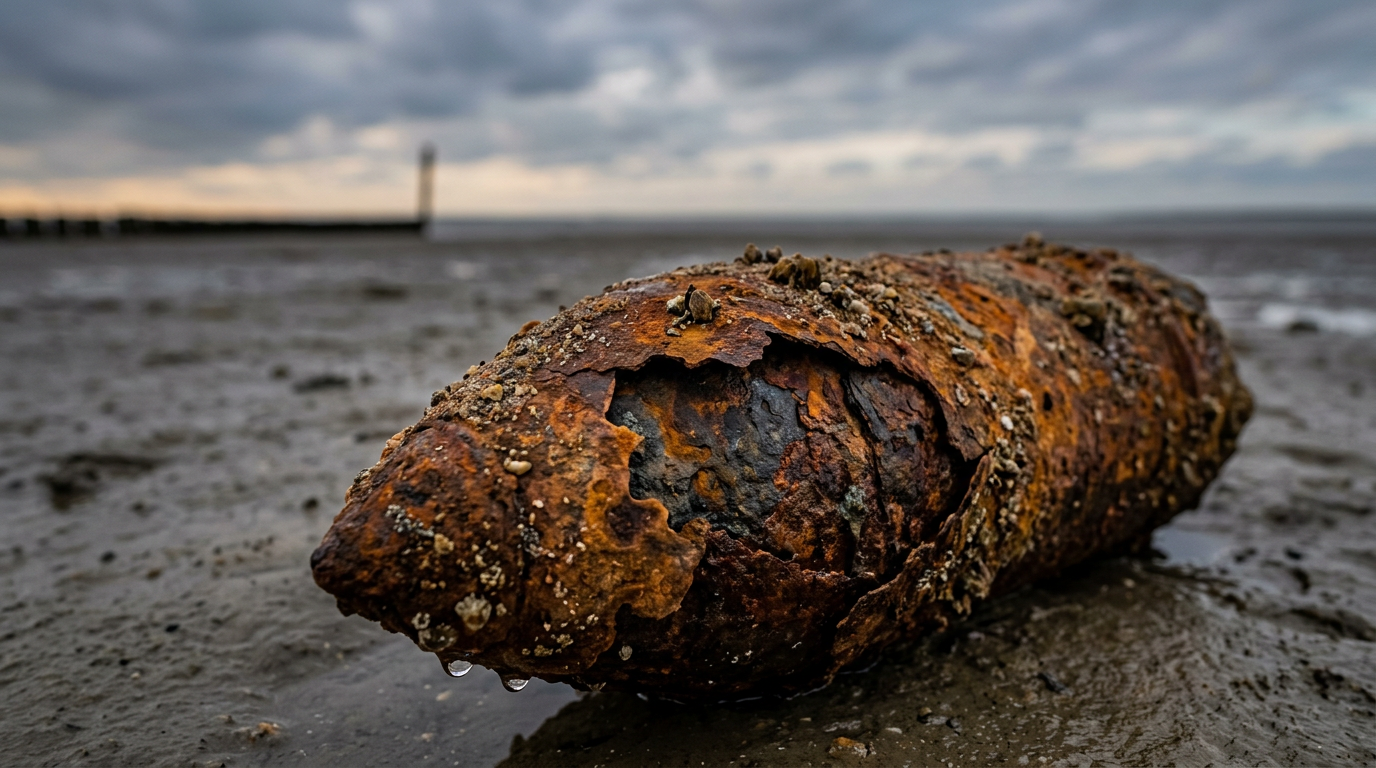
Beneath the seemingly placid waters of Germany's North and Baltic Seas lies a vast, decaying arsenal of World War II munitions, a ticking ecological time bomb that scientists warn is reaching a critical point. Decades of saltwater corrosion are compromising the casings of millions of tons of conventional and chemical weapons, releasing a cocktail of toxic substances that threaten marine life, human health, and vital maritime industries. The sheer scale of this submerged threat, coupled with the immense challenges of remediation, has spurred Germany into an ambitious, long-term initiative to defuse this dangerous legacy before irreversible damage occurs.
A Legacy of Conflict: Millions of Tons Submerged
The origins of this underwater crisis trace back to the aftermath of both World Wars, particularly World War II, when Allied powers embarked on a massive disarmament effort. Rather than dismantling vast stockpiles of captured German munitions on land, which was deemed too laborious and dangerous, millions of tons of bombs, mines, grenades, and chemical agents were systematically dumped into the North and Baltic Seas between 1945 and 1948. This practice, which also included munitions lost during combat and naval exercises, transformed designated areas, and even routes to them, into extensive underwater dumpsites.
Estimates suggest that German territorial waters alone harbor approximately 1.6 million tons of unexploded ordnance. Of this staggering amount, around 300,000 tons are believed to be in the Baltic Sea, with up to 1.3 million tons residing in the North Sea. These figures include a significant quantity of chemical weapons – an estimated 50,000 tons in the Baltic Sea alone. These chemical agents encompass highly dangerous substances such as sulfur mustard (yperite), adamsite, chloracetophenone, arsenic-based compounds, phosgene, and tabun. Conventional munitions often contain trinitrotoluene (TNT), white phosphorus, and other incendiary or explosive materials. Key dumping locations are spread across the inner German Bight, off the coast of Lower Saxony, near Sylt and Heligoland, and prominently in areas like Kiel Bay, Lübeck Bay, Gotland Deep, Gdańsk Deep, east of Bornholm, and the Słupsk Furrow.
The Silent Contamination: Environmental and Health Impacts
For decades, the prevailing view was that the sea would act as a benign repository. However, the relentless forces of corrosion are now undeniable, as metal casings, originally thought to last indefinitely, are deteriorating rapidly. Sonar surveys and underwater robots have revealed "hundreds of cracked bombs and shells oozing yellowish sludge" and "clouds of black sediment around ammunition-laden wrecks". This deterioration allows toxic compounds to leach into the marine environment, contaminating the water, sediment, and ultimately, the food web.
Scientists are increasingly detecting these hazardous substances in marine organisms. Carcinogenic and mutagenic compounds, including metabolites and decomposition products of TNT, have been found accumulating in fish and shellfish, such as mussels. Research indicates a significantly higher prevalence of liver tumors in flatfish species found near munitions dumpsites compared to uncontaminated areas. Mussels exhibit biochemical signs of oxidative stress, demonstrating how TNT-related compounds can damage proteins, lipids, and DNA. The closed circulation of the Baltic Sea, with its narrow passage to the open ocean, means that pollution tends to linger and circulate, exacerbating the problem across coastal areas. The long-term concern is the bioaccumulation of these toxins, particularly arsenic, up the food chain, posing a potential threat to human consumers of seafood. Incidents of fishermen hauling mustard-filled shells in their nets, leading to severe burns and other injuries, underscore the immediate and tangible human risk.
A Multi-faceted Threat to Commerce and Security
Beyond the profound environmental and health implications, the submerged munitions pose significant dangers to commercial activities and maritime security. Accidental encounters with these decaying explosives are a constant threat to shipping, fishing, and tourism. Ship anchors snagging on ordnance, errors during naval exercises, or collisions with wrecks could trigger explosions with devastating consequences. The construction and maintenance of critical offshore infrastructure, including wind farms, gas pipelines, and communication cables, are also severely hampered by the presence of these underwater relics. Areas designated for such developments frequently reveal explosive ammunition, necessitating costly and time-consuming clearance operations.
The presence of chemical munitions further complicates these activities. For instance, white phosphorus, a highly toxic incendiary agent, can burn at extremely high temperatures upon exposure to air, posing a direct threat to individuals on beaches or those handling fishing nets. The sheer unpredictability of these decaying weapons, some of which become more sensitive to friction and impact over time, adds another layer of hazard.
Germany's Ambitious Response: A Generational Task
Recognizing the escalating urgency of the situation, the German government has launched a comprehensive "immediate action program" for munitions clearance in the North and Baltic Seas. This initiative, described as a generational task, represents the world's first dedicated large-scale effort to address underwater munitions. Initially, €100 million was allocated to kickstart the program. More recently, the federal government committed to providing €50 million annually for six years, totaling €300 million, to coordinate and scale up clearance operations.
Key to these efforts is scientific support and technological innovation. The GEOMAR oceanographic research center, based in Kiel, is providing crucial scientific backing, developing strategies for safe and environmentally sound clearance. GEOMAR also helped establish the MUNIMAR Competence Center and a European network to foster international knowledge exchange and technology development. Pilot projects are already underway, including one in Lübeck Bay and the western Baltic Sea, which tests advanced technologies such as autonomous clearance systems and specialized disposal platforms. These projects aim to adapt proven land-based technologies, like incineration and deactivation furnaces, for safe deployment in the challenging marine environment. The goal is to construct a mobile, floating industrial facility for the thermal destruction of historical munitions at sea, with operations slated to begin by 2028. Companies like Rheinmetall and WilNor Governmental Services are collaborating on innovative solutions, such as their EMMA (Ammunition and Contaminated Sites Disposal Module) concept. While progress is being made, experts acknowledge the immense scale of the problem, with some estimates suggesting that it could take ten platforms 25 years to clear half of the munitions in the German Baltic Sea alone. The problem also extends beyond Germany's borders, necessitating broader international collaboration, as exemplified by NATO's "Open Spirit" exercises, which focus on clearing shipping lanes of WWI and WWII ordnance.
Time is of the Essence
The rusting sea munitions off Germany's coast represent a critical environmental challenge that demands sustained attention and significant investment. The window of opportunity to prevent widespread, irreversible contamination is narrowing as corrosion continues its relentless work. While the immediate action program and long-term funding commitments by the German government mark a crucial turning point, the task ahead is monumental, requiring continued scientific innovation, international cooperation, and a steadfast political will. Only through a concerted and comprehensive strategy can this toxic legacy of past conflicts be neutralized, safeguarding the health of marine ecosystems and coastal communities for generations to come.
Related Articles


Ratko Mladić, "Butcher of Bosnia" and Convicted War Criminal, Dies at 84
THE HAGUE, Netherlands – Ratko Mladić, the former Bosnian Serb military commander known as the "Butcher of Bosnia" and convicted of genocide, war crimes, and crimes against humanity, has died at the age of 84. Serbian...


Long-Awaited 9/11 Mastermind Trial Set for 2028, Decades After Attacks
GUANTANAMO BAY, Cuba – Nearly a quarter-century after the devastating terror attacks of September 11, 2001, a military judge has finally set a trial date for Khalid Sheikh Mohammed, the alleged mastermind behind the...