Ghana's Parliament Re-Approves Anti-LGBTQ+ Bill, Intensifying Rights Debate and Economic Concerns
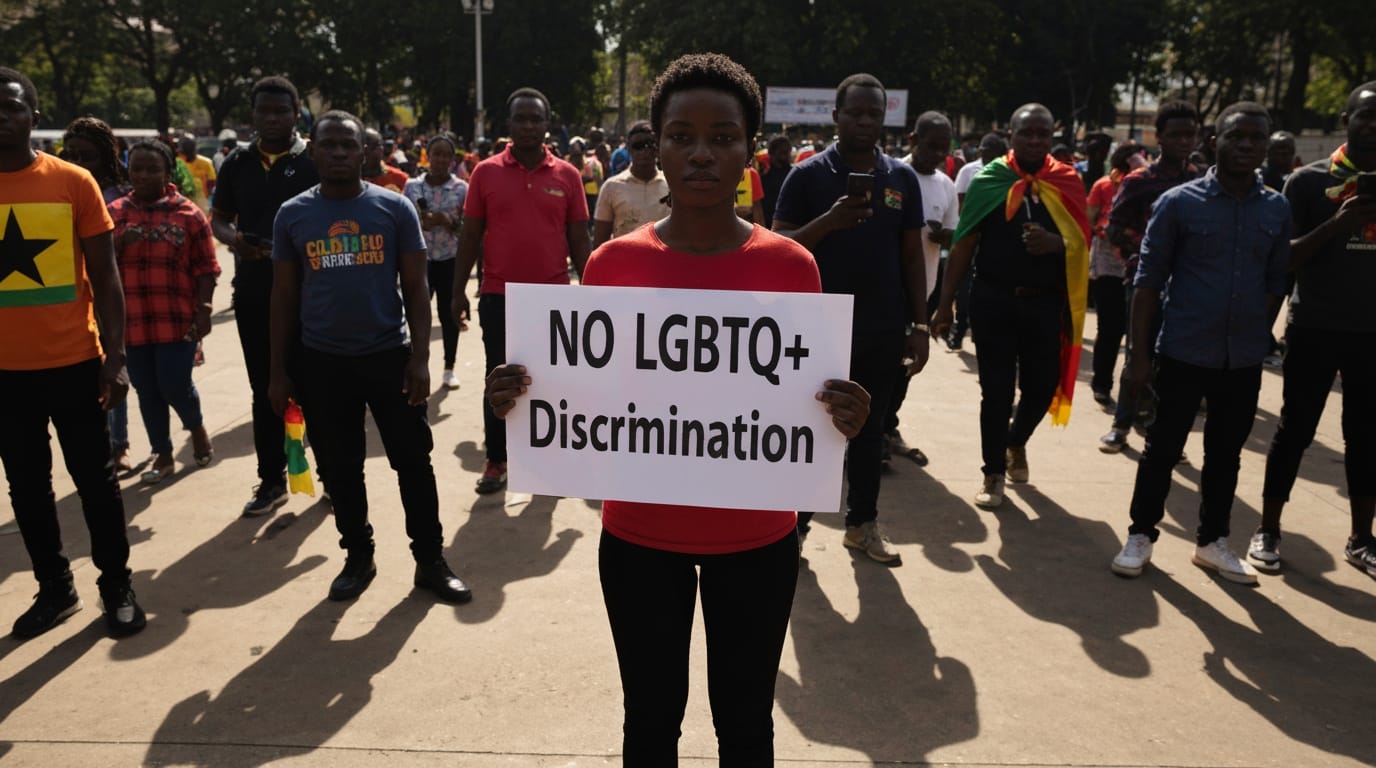
Accra, Ghana – Ghana's Parliament has once again approved a controversial bill that criminalizes LGBTQ+ promotion activities, sexual acts, and even self-identification, sending the comprehensive legislation to President John Dramani Mahama for his assent. The "Human Sexual Rights and Family Values Bill, 2025," passed on Friday, May 29, 2026, marks a significant escalation in the nation's stance on LGBTQ+ rights, drawing immediate condemnation from international human rights organizations and raising serious questions about Ghana's human rights obligations and economic stability. This re-approval follows an earlier passage in 2024 which was not signed into law by the previous administration due to legal challenges.
The bill's passage thrusts Ghana into the global spotlight, positioning it among African nations enacting increasingly stringent laws targeting sexual minorities. While proponents argue the legislation upholds traditional Ghanaian family values and cultural norms, critics warn of devastating consequences for human rights, public health, and the nation's economic outlook. President Mahama, who has previously indicated a willingness to sign the bill if passed by Parliament, now faces immense pressure from both domestic and international fronts.
The Draconian Provisions of the New Legislation
The "Human Sexual Rights and Family Values Bill, 2025" significantly expands existing colonial-era laws that already criminalized same-sex sexual activity in Ghana. Under the newly approved version, engaging in same-sex sexual acts maintains a penalty of up to three years in prison. Beyond this, the bill introduces severe punishments for "promoting, sponsoring, or supporting LGBTQ+ activities," carrying prison terms ranging from three to five years. Some interpretations of the bill's provisions indicate that individuals found to be promoting LGBTQ+ activities could face up to ten years in prison.
The scope of the legislation is far-reaching, criminalizing not only acts but also identity and advocacy. It mandates prison sentences of up to three years for individuals who identify as LGBTQ+. Forming or funding LGBTQ+ groups can lead to up to five years imprisonment. The bill explicitly prohibits same-sex marriage and marriage to individuals who have undergone gender reassignment. Disturbingly, it prescribes six to ten years imprisonment for anyone who educates children about LGBTQ+ issues or gender identities beyond the binary. Furthermore, the legislation imposes a "duty to report" prohibited LGBTQ+ acts to authorities, with non-compliance carrying a potential prison sentence of up to three years. It also amends Ghana's Extradition Act of 1960, making offenses under this new law extraditable.
Notably, the latest version of the bill includes amendments that exempt legal professionals providing advice or representation, journalists reporting on LGBTQ+-related issues, and medical professionals offering surgical, psychological, and counseling services from punishment under specific circumstances. However, these limited exemptions do little to assuage the fears of human rights advocates who argue the bill as a whole constitutes a grave assault on fundamental freedoms.
A Tortuous Legislative Journey and Presidential Dilemma
The journey of the anti-LGBTQ+ bill through Ghana's legislative system has been protracted and contentious. First introduced in Parliament in 2021, the "Human Sexual Rights and Family Values Bill" garnered bipartisan support and was initially passed by Parliament on February 28, 2024. However, then-President Nana Akufo-Addo declined to sign it into law, citing legal challenges to its constitutionality that were pending before the Supreme Court.
Following the dissolution of Parliament prior to the 2024 general election, the bill lapsed. It was reintroduced in March 2025 and again this week, reflecting sustained pressure from a coalition of religious and traditional leaders who have championed the legislation. President John Dramani Mahama, who assumed office in January 2025, had previously stated his position that marriage is between a man and a woman and that he would sign the bill if Parliament passed it. This declaration places him at a critical juncture, balancing strong domestic religious and cultural sentiments with Ghana's international human rights obligations.
International Outcry and Human Rights Implications
The re-approval of the bill has triggered widespread international condemnation, with human rights organizations and global bodies expressing profound alarm. The United Nations Human Rights Office has called the legislation "profoundly disturbing," emphasizing that it contravenes Ghana's own Constitution and its international human rights commitments, including those related to equality, non-discrimination, privacy, and freedom of expression. UN experts warned that such criminal sanctions legitimize prejudice, expose individuals to hate crimes, police abuse, harassment, intimidation, blackmail, and torture, while also perpetuating discrimination in access to essential services like healthcare and education.
Amnesty International has described the bill as "draconian" and "shocking," especially given Ghana's recent election to the United Nations Human Rights Council. Human Rights Watch has echoed these concerns, highlighting that the bill criminalizes identity, stifles advocacy, dismantles civil society structures, and compels citizens to surveil and denounce one another. Critics argue that the legislation, if enacted, will exacerbate existing discrimination and violence against LGBTQ+ individuals in Ghana, who already face significant societal challenges.
Domestic Support and Socio-Cultural Context
Despite the international outcry, the anti-LGBTQ+ bill enjoys significant support within Ghana. A coalition of Christian, Muslim, and traditional leaders has been instrumental in sponsoring and advocating for the legislation, asserting that it is necessary to protect what they perceive as Ghanaian cultural and family values. Public opinion polls have historically shown widespread anti-LGBTQ+ sentiments among the Ghanaian populace. Proponents of the bill argue that external pressures to accept LGBTQ+ rights undermine Ghana's sovereignty and deeply held religious beliefs.
However, even within Ghana, there are voices of dissent and concern. Some human rights advocates, local NGOs, and legal experts have cautioned against the bill, arguing that it violates constitutional rights and could lead to increased marginalization and abuse. The Humanist Association of Ghana expressed that the bill further oppresses the LGBTQI+ community and harms the nation's international reputation.
Economic Repercussions and Future Outlook
Beyond human rights concerns, the bill carries potentially severe economic implications for Ghana, a nation currently grappling with a significant debt crisis. Ghana's Ministry of Finance has explicitly warned that presidential assent to the bill could jeopardize an estimated $3.8 billion in World Bank financing over the next five to six years. Such a loss would derail a crucial $3 billion loan program from the International Monetary Fund (IMF) and impact the country's foreign exchange reserves and exchange rate stability. This warning is not without precedent, as the World Bank previously halted funding to Uganda after it adopted similar anti-LGBTQ+ legislation.
The economic fragility makes President Mahama's decision particularly fraught. Balancing the strong domestic support for the bill with the potential for devastating financial penalties will be a critical test for his administration. The passage of the bill also poses a challenge to Ghana's standing as a respected democracy that upholds human rights, with implications for foreign direct investment and diplomatic relations.
Conclusion
The re-approval of the "Human Sexual Rights and Family Values Bill, 2025" by Ghana's Parliament represents a defining moment for the West African nation. While rooted in a desire by its proponents to preserve perceived traditional values, the legislation stands in stark opposition to international human rights principles and carries significant risks. President Mahama's impending decision to sign or reject the bill will determine not only the immediate fate of Ghana's LGBTQ+ community but also its trajectory on the global stage, its economic stability, and its commitment to the universal principles of human rights and dignity. The world watches keenly as Ghana navigates this complex intersection of culture, law, and international relations.


