Global Arms Industry Reaches Unprecedented Revenue High as Conflicts Fuel Demand
STOCKHOLM – The world's largest arms manufacturers have reported record-breaking revenues, with the ongoing war in Ukraine and heightened global geopolitical tensions acting as significant catalysts for increased demand and profits, according to a recent report by the Stockholm International Peace Research Institute (SIPRI). For the first time since 2018, all five of the largest arms companies globally experienced an increase in their arms revenues in 2024, signaling a profound shift in the defense industry landscape.
The latest findings from SIPRI reveal that the combined revenue of the top 100 arms-producing and military services companies surged by 5.9 percent in 2024, reaching an unprecedented $679 billion. This marks the highest level recorded by SIPRI since it began tracking this data over 35 years ago, underscoring a period of robust growth for the sector. This financial upturn is directly attributed to the wars in Ukraine and Gaza, alongside escalating global and regional geopolitical tensions and steadily increasing military expenditures worldwide.
A New Era of Defense Spending
The conflict in Ukraine has particularly galvanized a substantial rearmament effort across numerous nations, prompting governments to replenish depleted stockpiles and modernize their arsenals. This surge in demand has translated directly into significant financial gains for defense contractors. More than three-quarters of the companies (77 out of 100) listed in SIPRI's report saw their arms revenues increase in 2024, with a notable 42 companies reporting at least double-digit percentage growth. Lorenzo Scarazzato, a researcher with the SIPRI Military Expenditure and Arms Production Programme, emphasized that global arms revenues reached their peak in 2024 as producers capitalized on high demand.
The trend indicates a sustained period of elevated defense spending, driven by a perceived need for enhanced security and military capabilities in an increasingly volatile international environment. Governments are not only replacing military aid sent to Ukraine but also investing in new equipment and expanding their own defense readiness.
Regional Shifts and Dominant Players
The financial benefits of this escalated demand have been unevenly distributed geographically, though most major arms-producing regions have seen substantial growth. Companies based in the United States and Europe were the primary beneficiaries of this unprecedented boom.
The United States continues to dominate the global arms market, with 39 American companies featuring in SIPRI's Top 100, collectively generating nearly half of the world's total arms sales. Their combined revenue rose by 3.8 percent to $334 billion in 2024. Prominent firms such as Lockheed Martin, Northrop Grumman, and General Dynamics were among the 30 U.S. companies that reported increased sales. Despite these gains, SIPRI highlighted persistent challenges, including widespread delays and cost overruns plaguing major U.S.-led programs like the F-35 fighter jet, the Columbia-class submarine, and the Sentinel intercontinental ballistic missile.
In Europe, the 26 companies from the Top 100 (excluding Russia) witnessed a significant aggregate increase of 13 percent in their arms revenues, reaching $151 billion. This growth is directly linked to the increased demand spurred by the war in Ukraine and the heightened perception of a threat from Russia. German arms companies, in particular, experienced a notable 36 percent rise in combined revenues, totaling $14.9 billion, driven by strong demand for ground-based air defense systems, ammunition, and armored vehicles.
A striking example of this surge is the Czech company Czechoslovak Group, which recorded the sharpest percentage increase among all Top 100 companies, with revenues soaring by 193 percent to $3.6 billion. The majority of its revenue was attributed to the war in Ukraine, significantly bolstered by the Czech Ammunition Initiative, a government-led project aimed at providing artillery shells to Ukraine. Ukraine's own JSC Ukrainian Defense Industry also reported a substantial 41 percent increase in arms revenues, reaching $3.0 billion. The country's domestic arms industry has seen remarkable growth, with more than 500 arms producers operational by 2024, demonstrating its efforts to strengthen its indigenous defense capabilities amidst the conflict.
Even Russian arms manufacturers, despite international sanctions, saw significant growth. The two Russian companies in SIPRI's list, Rostec and United Shipbuilding Corporation, collectively increased their arms revenues by 23 percent to $31.2 billion. This growth was primarily fueled by robust domestic demand, which effectively offset any losses from declining arms exports. The Russian economy has largely transformed into a war economy, with official reports indicating a 420 percent increase in the production of 152mm artillery shells between 2022 and 2024.
Conversely, the Asia and Oceania region was the only one to experience a decrease in sales. This decline was primarily due to internal issues within China's defense industry, including corruption scandals and the delay or cancellation of major weapons contracts in 2024. Meanwhile, companies in West Asia saw increased revenues, with the nine largest firms in the region reporting a 14 percent rise to $31 billion, and Israeli firms alone logging a 16 percent increase in sales to $16.2 billion.
Expanding Production Amidst Challenges
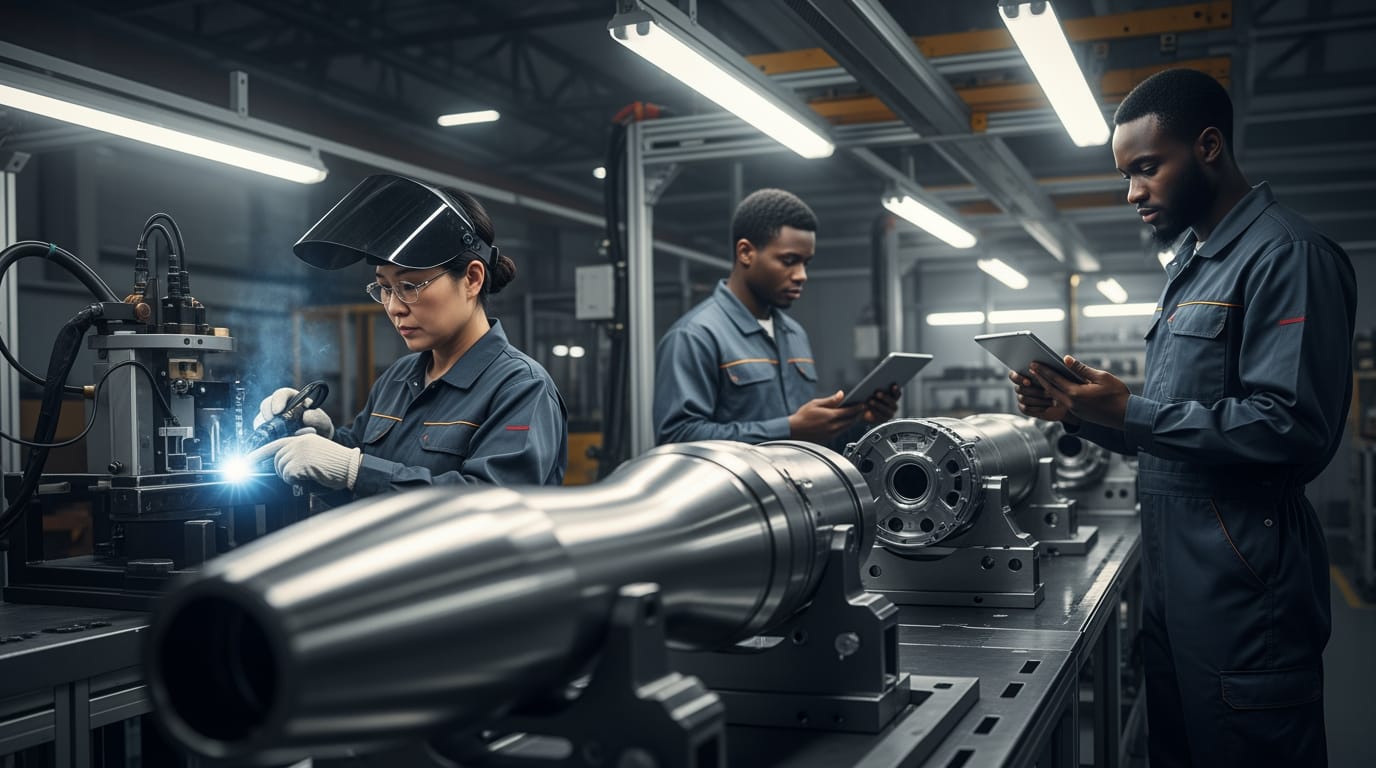
In response to the unprecedented demand, many arms manufacturers are actively expanding their production lines, increasing manufacturing capacity, establishing new subsidiaries, and engaging in acquisitions. This industrial expansion aims to meet the urgent need for military equipment and services.
However, this rapid scaling up is not without its challenges. SIPRI researchers highlight that sourcing critical materials, particularly essential minerals, poses a growing concern that could complicate European rearmament plans. For instance, companies like Airbus and Safran, which previously sourced a significant portion of their titanium from Russia, have been forced to find new suppliers since 2022. Similarly, Russia's arms industry faces a shortage of skilled labor, which could potentially impede production rates and stifle innovation in the long term. These supply chain vulnerabilities and labor constraints underscore the complexities inherent in rapidly scaling up an industry reliant on specialized components and expertise.
Conclusion
The SIPRI report unequivocally demonstrates that the war in Ukraine, coupled with wider geopolitical instabilities, has ushered in an era of unparalleled prosperity for the global arms industry. The significant revenue increases reported by defense contractors across the U.S., Europe, and even Russia reflect a global recalibration of national security priorities and a robust commitment to military spending. While this boom fuels industrial expansion and rearmament efforts, it also brings to the fore critical issues such as supply chain resilience and labor availability within the defense sector. The trajectory of arms manufacturers' profits remains intricately linked to the evolving geopolitical landscape, suggesting that the current growth trend is likely to continue as nations navigate an increasingly complex and contested world order.


