Global Economy's Unseen Foundation: Nature's Vital Role Under Threat
DAVOS, SWITZERLAND – The global economy, a complex web of production, trade, and finance, stands precariously balanced on a foundation often taken for granted: the natural world. A growing chorus of international reports and analyses underscores a stark reality: human prosperity is inextricably linked to healthy ecosystems, and the continued degradation of nature poses an escalating and significant threat to economic stability and growth worldwide. From the air we breathe to the food we eat, the services provided by nature are not merely environmental amenities but essential economic inputs, without which vast swathes of global output would falter.
The Invisible Backbone of Global Prosperity
At the core of this interconnectedness lies the concept of ecosystem services – the myriad benefits that nature provides to humanity. These include critical functions such as wild pollination for crops, the provision of food from marine fisheries, timber from native forests, freshwater purification, climate regulation, and fertile soil. Yet, these "free" services have historically been overlooked in traditional economic models, leading to their widespread exploitation.
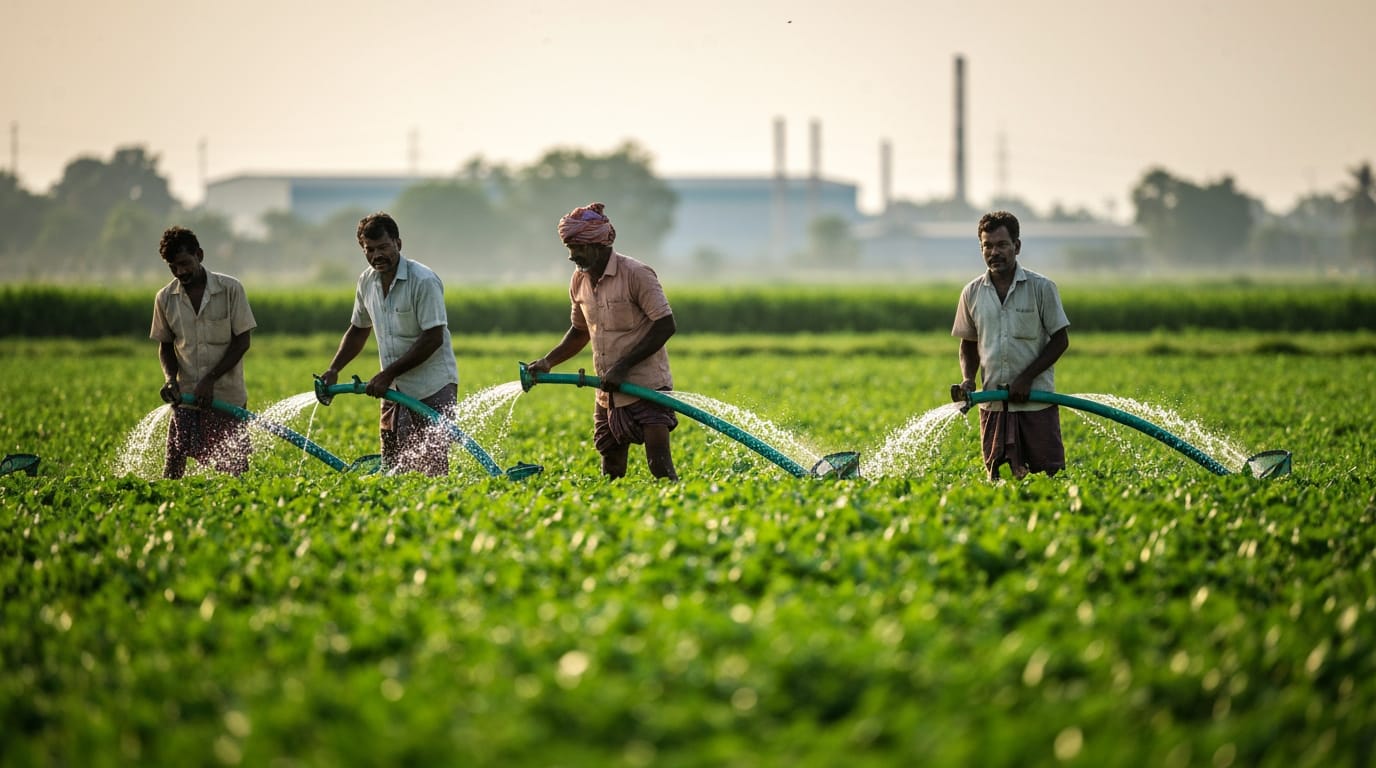
Recent assessments reveal the sheer scale of this dependency. A 2023 analysis by PwC, for instance, found that a staggering 55% of global Gross Domestic Product (GDP), equivalent to an estimated $58 trillion, is moderately or highly reliant on nature and its services. This represents a notable increase from previous estimates, highlighting an accelerating recognition of nature's economic significance. The World Economic Forum (WEF) has also consistently reported that over half of the world's total GDP relies on nature. Regional economies, too, exhibit this reliance, with some showing 46% to 60% dependency on nature's goods and services. Key economic sectors such as agriculture, fisheries, forestry, tourism, and construction are particularly exposed, directly drawing their inputs and value from natural systems. The very fabric of global trade is also intertwined, with approximately 40% of total annual world trade dependent on nature.
Mounting Risks and Staggering Costs of Nature's Decline
The erosion of biodiversity and the degradation of ecosystems are no longer distant environmental concerns; they represent profound financial risks with tangible economic consequences. The World Economic Forum's Global Risks Report frequently ranks biodiversity loss and ecosystem collapse among the top threats facing humanity over the next decade.
The costs associated with inaction are immense and rapidly accumulating. A 2021 World Bank report estimated that the collapse of select ecosystem services could lead to an annual decline of $2.7 trillion in global GDP by 2030. Other analyses suggest even higher figures, with nearly $33 trillion potentially lost from global GDP by the end of the decade if concerted action to protect biodiversity and ecosystems is not taken. The Intergovernmental Science-Policy Platform on Biodiversity and Ecosystem Services (IPBES) warns that the annual cost of biodiversity loss could range from $10 trillion to $25 trillion, a figure comparable to the entire U.S. GDP.
Certain regions and sectors face disproportionate impacts. Low-income countries, particularly Sub-Saharan Africa and South Asia, are acutely vulnerable, with projected GDP contractions of 9.7% and 6.5% respectively by 2030 due to ecosystem service collapse. This is primarily attributed to their heavy reliance on pollinated crops and forest products, coupled with a limited capacity to adapt to alternative production methods.
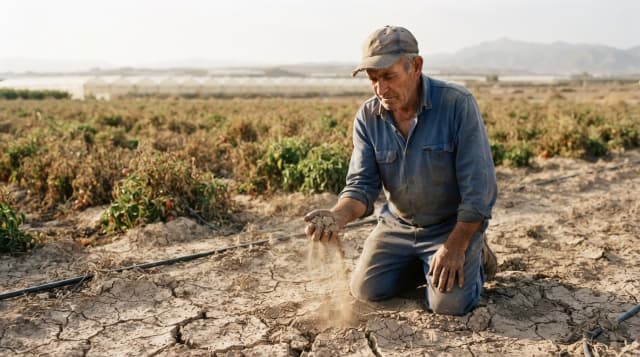
Specific examples of economic disruption abound. The loss of pollinators, such as bees, which underpin one in every three bites of food, poses a direct threat to food security and agricultural economies. Overexploitation of marine biodiversity has already led to the collapse of fish stocks, jeopardizing the livelihoods of millions globally. Furthermore, the degradation of oceans and marine ecosystems alone could cost the global economy around $8.4 trillion over the next 15 years. These economic impacts are not merely financial; they translate into increased poverty, instability, and social inequality.
Redefining Economic Value: The Nature-Positive Imperative
Recognizing the escalating crisis, there is a growing consensus that traditional economic frameworks, which have often treated nature as an infinite resource or an externality, are fundamentally flawed. Professor Sir Partha Dasgupta's landmark 2021 "Economics of Biodiversity: The Dasgupta Review" critically highlights that humanity has collectively mismanaged its "global portfolio" of natural assets. The review argues that our demands on nature far exceed its capacity to supply, placing current and future generations at "extreme risk." It challenges the conventional measure of economic success, Gross Domestic Product (GDP), for failing to account for the depreciation of natural capital.
In response, the concept of a "nature-positive economy" has gained significant momentum. This ambitious goal aims to halt and reverse nature loss by 2030, striving for a full recovery of nature by 2050. Achieving this involves measurable gains in the health, abundance, diversity, and resilience of species, ecosystems, and natural processes, benchmarked against 2020 levels. The nature-positive agenda aligns with the Kunming-Montreal Global Biodiversity Framework and integrates with broader sustainability efforts like the UN Sustainable Development Goals and the Paris Agreement's climate targets. It signals a shift from simply minimizing harm to actively enhancing ecosystems, enriching biodiversity, storing carbon, purifying water, and reducing risks such as pandemics.
A Call to Action: Integrating Nature into Financial Decisions
The transition to a nature-positive economy requires systemic change, particularly within the financial sector. Financial institutions are increasingly confronted with the imperative to assess and manage environmental risks, which are now recognized as central to macroeconomic and financial system stability. Underestimating these risks can lead to mispriced assets, over-allocation of capital to high-risk activities, and ultimately, financial instability.
However, this challenge also presents significant opportunities. Investments in nature-based solutions (NbS)—actions to protect, sustainably manage, and restore ecosystems—offer a powerful pathway forward. These solutions provide integrated strategies to reduce climate risks, while simultaneously delivering economic benefits such as carbon sequestration, income generation, and disaster risk reduction. Research indicates that for every $1 invested in restoring degraded land, an estimated $7 to $30 in economic benefits can be generated.
To facilitate this shift, there is an urgent need for "nature-smart policies" and reforms, including re-evaluating agricultural subsidies and increasing investments in agricultural innovation. International initiatives and frameworks are emerging to guide this transformation, such as the Task Force on Nature-related Financial Disclosures (TNFD), which aims to direct investments towards a nature-positive future. Public-private collaboration is crucial to mobilize the necessary capital, as current investment in nature-based solutions falls significantly short of what is required to meet global climate, biodiversity, and land degradation targets. The World Economic Forum estimates that investment in nature-based solutions needs to at least triple by 2030 and increase fourfold by 2050.
Ultimately, embedding the value of nature into economic decision-making is not merely an ethical choice but an economic necessity. The long-term prosperity and resilience of the global economy hinge on a fundamental rebalancing of humanity's relationship with the natural world, moving towards a system where economies thrive in harmony with, rather than at the expense of, nature.