Global Geopolitical Currents Converge on the Arctic: Lessons from Venezuela as Greenland's Strategic Value Soars
The international stage is witnessing a profound recalibration of power, characterized by heightened competition for strategic resources and influence. Recent developments in U.S.-Venezuela relations, marked by assertive American foreign policy in a resource-rich nation, underscore a broader trend of great power rivalry that is increasingly drawing attention to previously stable regions. In this evolving landscape, Greenland, with its critical geographical position and vast untapped natural resources, emerges as a significant focal point, raising questions about its future security and the European Union's capacity to protect its interests in the face of escalating global ambitions.
I. The Shifting Sands of Western Hemisphere Dominance: Venezuela's Geopolitical Crucible
The relationship between the United States and Venezuela has been severely strained for decades, intensifying significantly in recent years. This deterioration escalated notably in late 2025 with reports of U.S. military actions, including lethal maritime strikes against alleged drug-trafficking vessels and a blockade of sanctioned oil tankers off Venezuela's coast. These events followed a period of political turmoil, including the U.S. recognition of an interim president other than Nicolás Maduro and ongoing U.S. sanctions targeting Venezuela's leadership for alleged corruption, drug trafficking, and human rights abuses. Venezuela possesses the world's largest proven oil reserves, a factor that amplifies its geopolitical significance and positions it as a center of great power competition, despite its diminished current production capacity. The U.S. aims to secure its dominance in the Western Hemisphere, with some observers suggesting a strategic interest in Venezuela's oil wealth for American companies. The recent assertiveness in Venezuela reflects a broader U.S. foreign policy posture geared towards safeguarding national interests and projecting influence in key strategic regions.
II. Greenland: The Arctic's Emerging Geostrategic Linchpin
Far from the immediate sphere of Latin American politics, Greenland is experiencing its own surge in geopolitical prominence. The world's largest island, a self-governing territory within the Kingdom of Denmark, is strategically vital due to its unique location between the Arctic and Atlantic Oceans, along with its extensive natural resource potential. Its position within the GIUK (Greenland, Iceland, United Kingdom) gap makes it crucial for military strategy and control over key maritime and air routes.
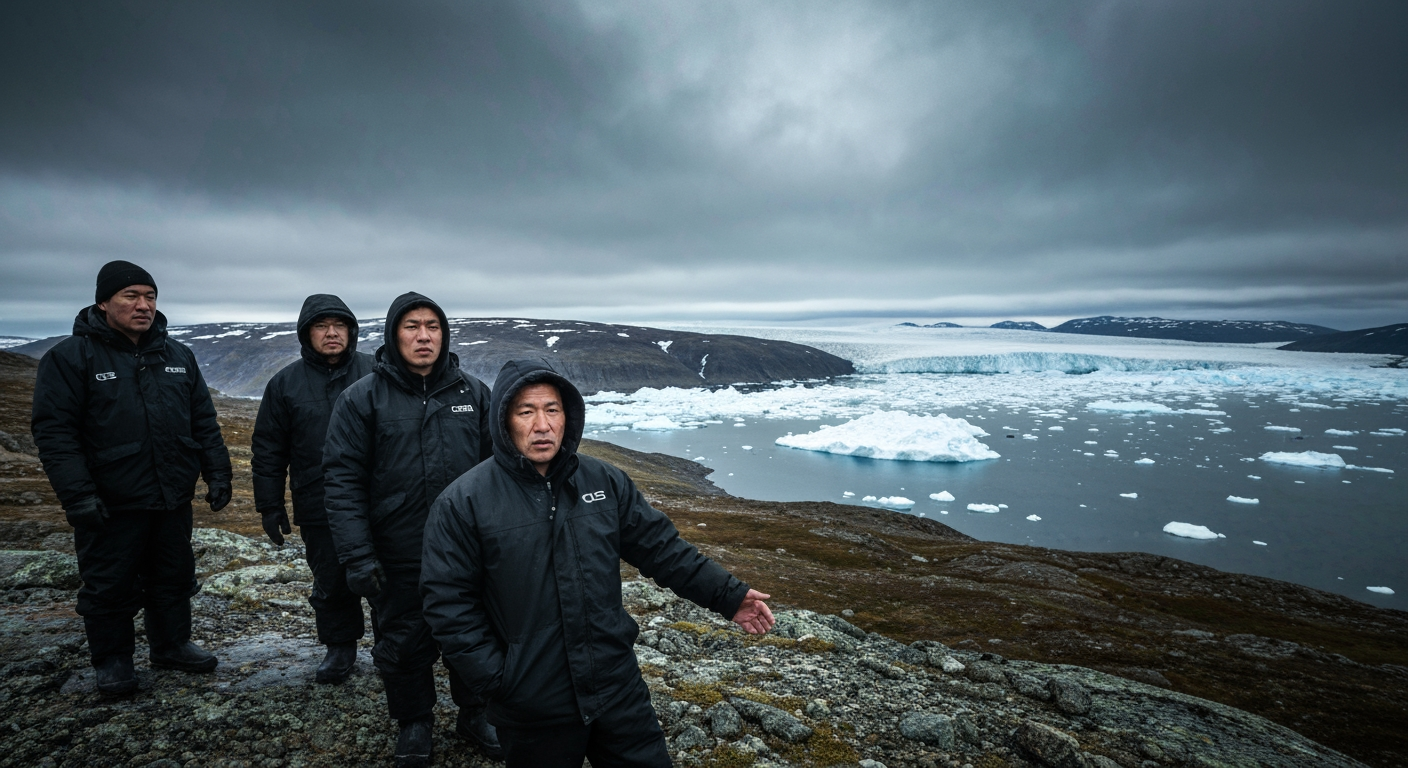
The accelerating melt of Arctic ice, driven by climate change, is opening new shipping routes and exposing previously inaccessible mineral wealth, including vast deposits of rare earth elements, oil, and gas. Greenland holds 25 of the 34 critical minerals identified in the EU’s official list, including graphite vital for military industries and lithium for batteries, offering an alternative to current supply chain dependencies. This combination of strategic location and abundant resources has made Greenland a central focus of intensified geopolitical competition among global powers, notably the United States, Russia, and China. Both the US and China have explicitly outlined strategies for engaging with the Arctic, seeking to expand their influence through military presence, scientific research, and economic investments. Russia, an Arctic nation, continues to prioritize its Arctic zone's development and national security, including significant military buildup in the region. This renewed interest transforms Greenland from a remote outpost into a critical asset in a new global "Great Game".
III. The European Union's Stake and Protective Posture in the Arctic
The European Union, despite lacking direct Arctic coastline (except through its member states Denmark, Sweden, and Finland), views the Arctic as strategically important for its climate, economic, and security interests. The EU's Arctic policy, updated in 2021, centers on three pillars: tackling climate change and environmental protection, promoting sustainable development for Arctic communities, and strengthening international cooperation. The EU aims for a peaceful, sustainable, and prosperous Arctic, framing its engagement as contributing to the European Green Deal and securing its geopolitical interests.
Through its Common Security and Defence Policy (CSDP), the EU possesses both civilian and military instruments for crisis prevention, management, and peacebuilding missions outside its borders. Recent years have seen a push to enhance the EU's ability to act autonomously in security and defense, including the establishment of Permanent Structured Cooperation (PESCO) among member states and a target to develop a new rapid deployment capacity of 5,000 troops by 2025. While the EU is not designed for large-scale power projection in the same manner as individual nation-states like the U.S. or Russia, its focus on multilateral governance, scientific research, and sustainable development provides a distinct approach to the Arctic. Its close ties with Denmark, which retains ultimate responsibility for Greenland's foreign and security policy, provide a direct channel for influence and cooperation. The EU has also stepped up its engagement by opening an office in Nuuk, Greenland, in 2024 and forging a strategic partnership for sustainable raw materials.
IV. Interconnected Destinies: Global Competition and Regional Stability
The growing global competition exemplified by U.S. actions in Venezuela and the rising strategic importance of Greenland highlight an increasingly interconnected world where regional events can have far-reaching geopolitical implications. While direct parallels between Venezuela and Greenland are not straightforward, the underlying drivers of resource acquisition, strategic positioning, and assertion of national interests are universal. The melting Arctic is creating a new theater for great power competition, with significant risks of militarization and escalating conflicts if cooperative frameworks weaken.
The question of Greenland's future security is therefore intrinsically linked to these broader global dynamics. As major powers jostle for influence and access to resources, the EU's commitment to a peaceful and cooperative Arctic, alongside its developing defense capabilities, will be tested. Protecting Greenland, a vital part of the Kingdom of Denmark, an EU member state, falls within the EU's broader security concerns, especially given the island's critical role in transatlantic defense and its valuable resources. The challenge for the EU and its partners will be to navigate this complex geopolitical environment, balancing economic opportunities with environmental protection, indigenous rights, and the imperative of maintaining regional stability in a world where strategic assets are increasingly coveted.
Sources
- thecable.ng
- state.gov
- time.com
- americanbazaaronline.com
- iris-france.org
- capitaleconomics.com
- epis-thinktank.com
- cpac.org
- prospect-journal.org
- europa.eu
- tasam.org
- archives.gov
- energy.gov
- arcticyearbook.com
- ulapland.fi
- uaf.edu
- highnorthnews.com
- uaf.edu
- bundesumweltministerium.de
- theparliamentmagazine.eu
- europeanrelations.com
- europa.eu
- auswaertiges-amt.de
- europa.eu
- europa.eu
- european-cyber-defence-policy.com
- netzwerk-ebd.de
- sustainability-directory.com
- responsiblestatecraft.org
- columbia.edu
- trendsresearch.org
- ie.edu
Related Articles


Mounting Frustration Grips Russia as Economic Hardship and War's Toll Deepen
Moscow, Russia – A palpable shift in public sentiment is emerging across Russia, with growing frustration among citizens fueled by a confluence of economic pressures, increasing internet restrictions, and the undeniable...

Germany's Strategic Calculus: Ukraine Aid is an Investment in European Security, Not Charity
Berlin – The ongoing provision of substantial aid to Ukraine by Germany and its allies is increasingly being framed not as an act of altruism, but as a crucial investment in European security and stability. This...