Global Momentum: A Week of Significant Environmental Progress Signals Hope for a Sustainable Future
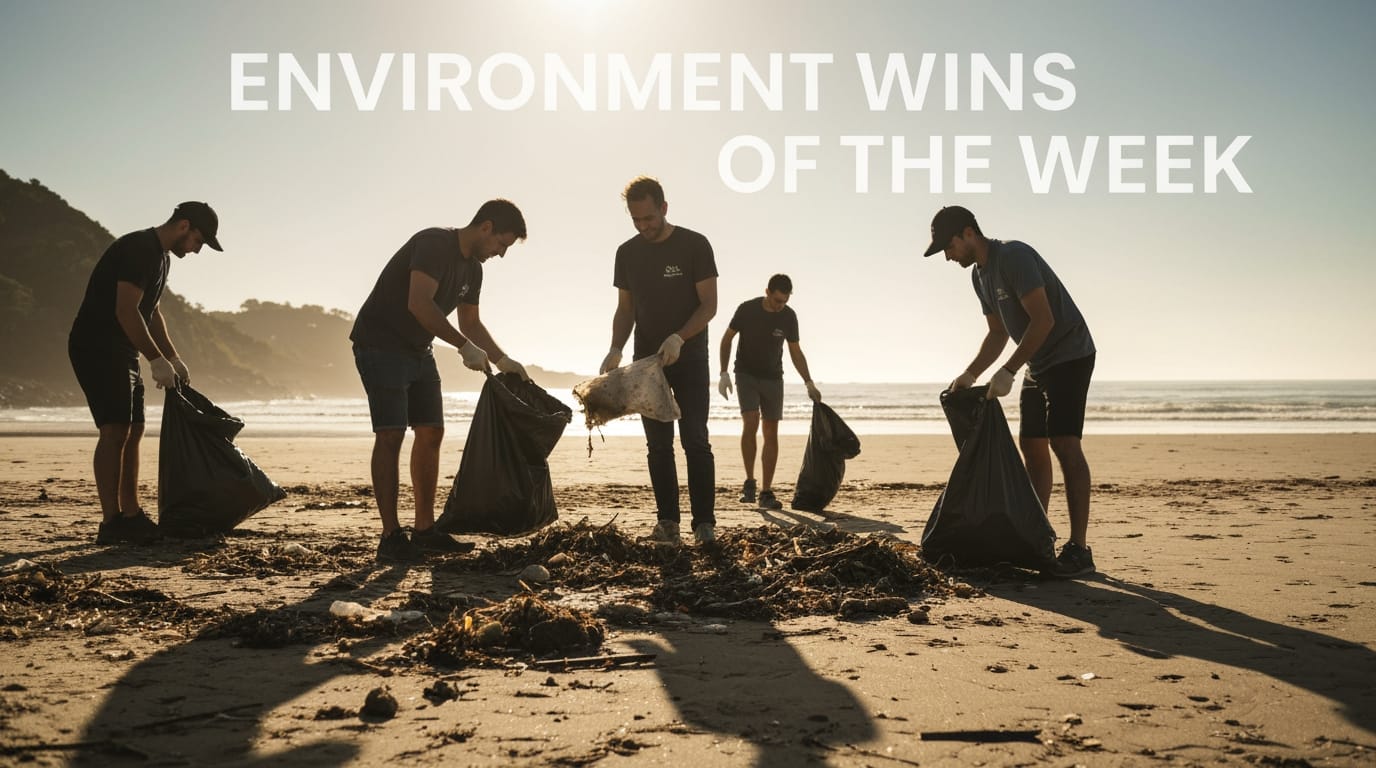
Despite the pervasive narrative of environmental challenges, the past week has illuminated a series of remarkable advancements across conservation, renewable energy, and innovative green technologies, underscoring a growing global commitment to planetary health. From sweeping policy changes and technological breakthroughs to triumphant conservation efforts, these developments paint a picture of tangible progress, offering a powerful counter-narrative to often-dire ecological forecasts. The collective impact of these initiatives demonstrates that a sustainable future is not only aspirable but increasingly achievable through concerted global action and scientific ingenuity.
Ecosystems on the Mend: A Wave of Conservation Successes
Recent reports highlight significant victories in protecting and restoring vital ecosystems worldwide, demonstrating the impact of dedicated conservation efforts. In a promising development for the planet's largest rainforest, deforestation in the Brazilian Amazon between August 2025 and March 2026 plummeted by 36% compared to the previous year, marking the lowest figure since 2018. This reduction, totaling 1,460 square kilometers, is attributed to stronger enforcement, enhanced satellite monitoring, and renewed environmental protections.
Beyond the Amazon, one of the most extraordinary wildlife recoveries in modern history is underway with the Saiga antelope. Once on the brink of extinction due to poaching, disease, and habitat loss, Kazakhstan's Saiga population has rebounded to an estimated four million animals, a testament to intensive conservation efforts. This comeback underscores the potential for species recovery when targeted actions are implemented.
Ocean conservation also saw a momentous week, with French Polynesia announcing the creation of the world's largest marine protected area. Covering an astonishing 4.8 million square kilometers of ocean, this protected zone will safeguard critical marine ecosystems, including coral reefs, migratory routes, and essential feeding grounds for marine life. Over one million square kilometers within this area will receive particularly stringent protections. This achievement contributes to the global milestone of over 10% of the world's oceans now officially under protection, a benchmark long sought by marine conservationists.
Further brightening the ecological outlook, a new study reveals a "global turning point" for mangrove forests. These crucial coastal ecosystems, vital for protecting against storms, absorbing carbon dioxide, and serving as fish nurseries, suffered alarming declines since the 1980s. However, recent data indicates that gains have been outpacing losses over the last 16 years, resulting in only a 1% net decline in total area covered over the past four decades. Researchers noted that existing mangrove forests are becoming denser and healthier, reflecting the positive impact of conservation policies and restoration programs. Southeast Asia, home to roughly a third of the world's mangroves, has seen significant recovery, gaining over 1,000 square kilometers since 2010. These widespread conservation victories offer substantial optimism for climate action and biodiversity preservation.
The Renewable Revolution Accelerates: Powering a Cleaner Future
The global energy landscape is undergoing a rapid transformation, with renewable sources increasingly dominating new installations and electricity generation. Breakthroughs in solar technology continue to push efficiency boundaries, exemplified by scientists at EPFL and CSEM achieving an impressive 31.25% efficiency in perovskite-on-silicon tandem solar cells. This layered architecture significantly reduces energy losses, enabling conversion efficiencies well above conventional silicon modules and promising increased energy yield with reduced land requirements for future solar installations. Complementing these advancements, innovative solutions like floating photovoltaic (PV) systems are transforming reservoirs and lakes into productive solar generation assets, conserving land and reducing water evaporation. The rapid expansion of offshore wind infrastructure is also creating new opportunities across the blue economy, driving innovation in marine industries and fostering economic growth alongside decarbonization efforts.
In a historic shift, wind and solar power combined generated 22% of global electricity in April 2026, surpassing gas-fired generation, which accounted for 20% for the first time ever. This significant milestone, reflecting a 13% year-on-year growth in renewables output, indicates a structural shift in the global energy mix. China's aggressive adoption of electric vehicles (EVs) has also delivered substantial environmental dividends, preventing an estimated 260,000 premature deaths due to a massive decrease in air pollution. Carbon monoxide levels in Chinese cities have fallen by over 30%, and fine particulate matter by approximately 32% as a direct result of the widespread EV rollout. Similarly, the Philippines is fast-tracking 1.47 GW of new renewable energy projects and has become Asia's largest solar panel importer, signaling a decisive move away from fossil fuels. These developments collectively underscore a powerful global momentum towards clean energy dominance.
Policy Shifts and Economic Incentives Drive Sustainable Practices
Policy and economic frameworks are increasingly being leveraged to accelerate environmental protection and foster a nature-positive economy. Europe has taken a significant step towards a circular economy with landmark "Right to Repair" legislation. These new rules mandate manufacturers to offer repairs for a range of products, provide better access to spare parts, and make repairs more affordable, directly challenging the culture of disposable consumption and aiming to reduce the average European's 16kg of electronic waste generated annually.
The European Union's Green Week 2026 and the associated LIFE Awards emphasized the undeniable economic case for nature restoration. EU Commissioner Jessika Roswall highlighted that restoring ecosystems can unlock billions in sustainable growth and resource security while mitigating severe climate risks. The consensus emerging is that "Ecosystems are the infrastructure that prop up all other infrastructure," with every euro invested in ecosystem restoration potentially generating up to €38 in economic returns. The LIFE Awards celebrated exceptional projects that protect nature and biodiversity, promote circular economy principles, and contribute significantly to climate action.
On the global stage, the UN High Seas Treaty officially entered into force, establishing new standards for environmental review and conservation measures in the two-thirds of the ocean beyond national jurisdictions. This landmark agreement closes a significant legal gap that had allowed illegal fishing and destructive practices to thrive, marking a major win for international ocean governance. Concurrently, Australia is reforming its federal environmental laws, with a renewed focus on ground cover as a key pillar for positive environmental outcomes and the health of the Great Barrier Reef. This shift recognizes the importance of effective and sustainable land management principles over a simplistic "tree-centric" approach. These policy and economic shifts illustrate a growing understanding that environmental stewardship is integral to long-term prosperity and stability.
Cutting-Edge Technologies Pave the Way for Novel Solutions
Innovation in green technology continues to yield promising solutions for some of the most complex environmental challenges. Scientists have developed a battery-free artificial photosynthesis system that significantly simplifies and reduces the cost of converting sunlight, water, and carbon dioxide into usable fuel. This breakthrough lies in an electrolyzer that self-regulates, adapting to changing sunlight by altering its electrical properties as it heats up, thereby stabilizing solar fuel production without the need for external battery control systems. This advancement could make artificial photosynthesis a more viable pathway for renewable energy storage and production, including the generation of formic acid, a potential clean fuel.
Further contributing to a future powered by clean fuels, significant progress is being made in hydrogen electrolyzer technology. These devices, crucial for splitting water into hydrogen and oxygen, are becoming more efficient and cost-effective. Innovations in Anion Exchange Membrane (AEM) electrolyzers, for instance, combine the advantages of established systems while using non-precious-metal catalysts, reducing both operational and material costs. These advancements facilitate the integration of hydrogen production with renewable energy sources, offering a pathway to high-purity hydrogen that can be stored, transported, or directly used as fuel, significantly reducing carbon emissions. These technological strides are not merely incremental improvements but represent fundamental shifts in how clean energy can be generated and utilized.
A Week of Progress, A Blueprint for the Future
The environmental wins of the past week collectively offer a powerful beacon of hope, demonstrating that a future where human society thrives in harmony with nature is within reach. From the resurgence of endangered species and the protection of vast marine areas to the accelerating transition to renewable energy and the development of groundbreaking green technologies, these successes are the result of dedicated efforts by scientists, policymakers, conservationists, and communities worldwide. While significant challenges remain, the clear progress across diverse environmental fronts provides a robust blueprint for continued action. These victories underscore the critical importance of international collaboration, innovative policy, and sustained investment in scientific and technological solutions. As the world navigates the complexities of climate change and biodiversity loss, this week's achievements serve as a powerful reminder that positive change is not only possible but actively underway, inspiring further commitment to building a truly sustainable planet.