Greenland: Arctic Keystone in a Reshaping Geopolitical Landscape
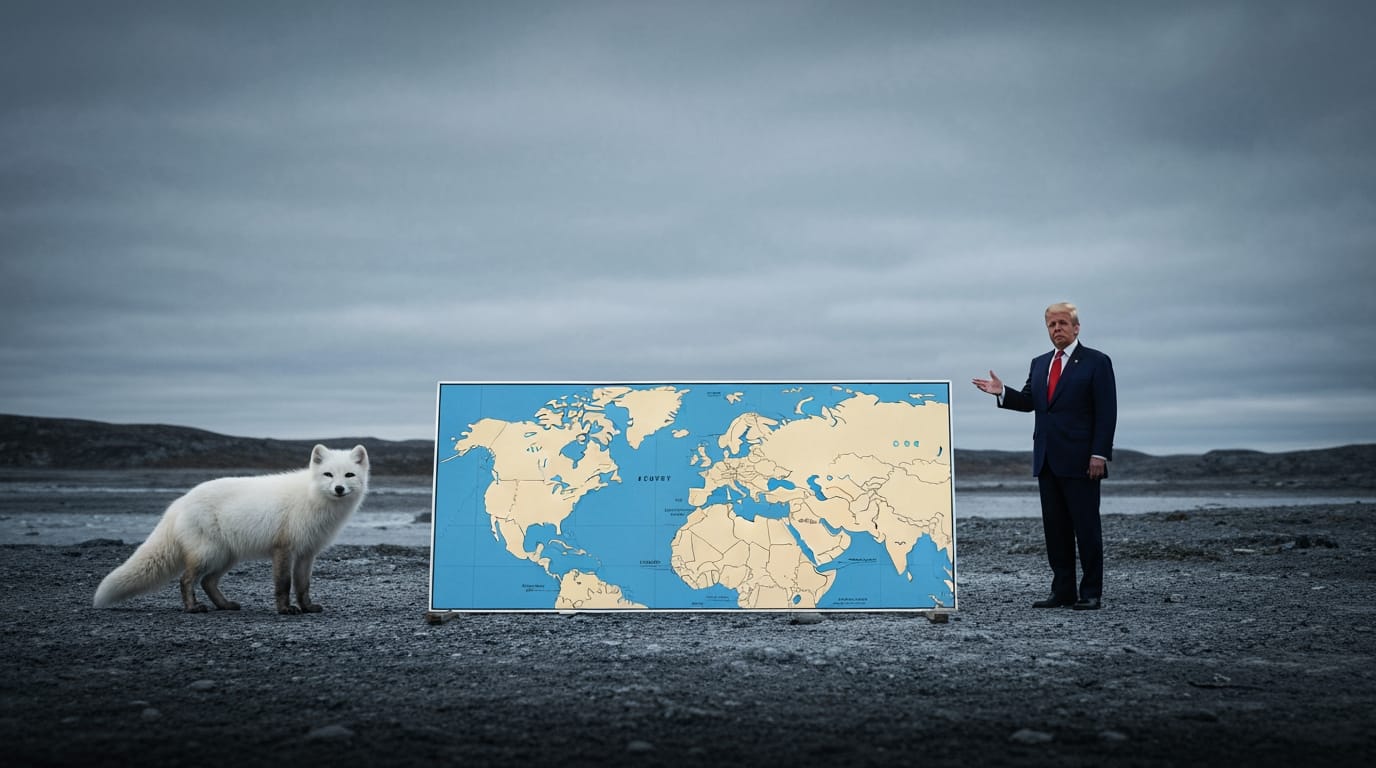
Donald Trump's repeated assertions regarding U.S. acquisition of Greenland, some even hinting at military action, have dramatically propelled the vast Arctic island into the international spotlight, illuminating its long-held yet newly intensified strategic importance to global powers. This renewed focus on the Danish autonomous territory is driven by a complex interplay of military strategy, vast untapped natural resources, and the accelerating impacts of climate change that are rapidly opening new Arctic frontiers. The U.S. interest, while reignited by Trump, echoes historical ambitions stretching back over a century, positioning Greenland as a pivotal element in a burgeoning geopolitical competition.
A Legacy of American Ambition
The idea of the United States acquiring Greenland is not a novel concept, with historical discussions and offers dating back to the 19th century. U.S. internal government discussions explored a potential purchase in 1867, 1910, and following World War II, with a secret offer of $100 million in gold bars made to Denmark in 1946. This consistent interest underscores Greenland's perceived enduring value to American strategic interests. However, Trump's more recent overtures, including during his first presidency in 2019 and renewed in his second term since 2025, have been met with firm rejections from both Greenlandic and Danish leadership, who unequivocally state that the island is "not for sale." Despite these clear rebuffs, Trump's administration has continued to signal its intent, with actions such as appointing a U.S. special envoy to Greenland in December 2025, further emphasizing Washington's sustained focus on the territory. These actions highlight a fundamental tension between American strategic aspirations and the sovereign rights and self-determination of the Greenlandic people.
Arctic Bulwark: Greenland's Military Imperative
Greenland's geographical position, nestled between North America and Europe, makes it a critical strategic asset, particularly for defense and early warning systems. The island is home to Pituffik Space Base, formerly known as Thule Air Base, the northernmost U.S. military installation. Established during World War II and continuously operated since, this base is a cornerstone of U.S. missile warning, defense, and space surveillance capabilities. Its radar systems are integral to the North American Aerospace Defense Command (NORAD), providing crucial early detection of ballistic missile threats and monitoring space activities.
Beyond its role as a key monitoring outpost, Greenland forms a vital part of the Greenland-Iceland-United Kingdom (GIUK) Gap, a critical maritime choke point for tracking naval movements in the North Atlantic. As the Arctic warms and ice recedes, the strategic significance of this region has intensified, particularly in response to increased military activity by Russia and the expanding presence of China. Both Moscow and Beijing are actively probing for influence in the Arctic, making Greenland's location ever more central to Western security and NATO's deterrence strategy. The long-standing defense agreement between the U.S. and Denmark ensures American military access and collaboration, though the dynamic is increasingly tested by heightened geopolitical competition.
A Subterranean Riches: The Lure of Critical Minerals
Beneath Greenland's vast ice sheet lies a wealth of natural resources, a significant draw for global powers. The most prominent among these are rare earth elements (REEs), a group of 17 metallic elements essential for modern technologies, including electric vehicles, renewable energy systems, advanced electronics, and defense applications. Greenland ranks among the top countries globally for rare earth reserves, with estimated resources of 1.5 million tons, including two of the world's largest deposits at Kvanefjeld and Tanbreez. The Kvanefjeld site alone holds over 11 million metric tons of reserves and resources, including a substantial amount of heavy rare earths.
For the United States and its allies, access to these critical minerals is paramount for diversifying supply chains and reducing dependence on China, which currently dominates the global REE market. Beyond rare earths, Greenland also possesses significant potential reserves of iron ore, graphite, tungsten, palladium, vanadium, zinc, gold, uranium, copper, molybdenum, hafnium, niobium, platinum group metals, and titanium. However, the harsh Arctic climate, coupled with a lack of developed infrastructure, presents formidable challenges to large-scale commercial extraction. Mining operations in the Arctic can be five to ten times more expensive than elsewhere, and developing a mine can take an average of 16 years from conception to operation. Despite these hurdles, ongoing investments and advancements in processing technology aim to unlock Greenland's subterranean wealth, positioning it as a potentially leading supplier of these vital elements.
Melting Ice and Evolving Sovereignty
Climate change is profoundly reshaping the Arctic, with Greenland at its epicenter. The island's ice sheet is rapidly shrinking, a trend mirrored by the broader reduction in Arctic sea ice. This melting phenomenon is not only an environmental crisis but also a catalyst for significant geopolitical shifts. Crucially, it is opening new sea routes, such as the Northwest Passage, that were previously impassable or only seasonally navigable. These shorter shipping lanes offer economic advantages for global trade, saving millions in fuel costs for routes between Asia, Europe, and North America. Control over these emerging maritime corridors, and the extensive Greenlandic coastline they skirt, is becoming increasingly important for commercial logistics and military projection.
Amidst these evolving strategic and economic considerations, the sovereignty and aspirations of Greenland's 56,000 residents, predominantly Inuit, remain a central factor. Greenland gained home rule in 1979 and achieved near full self-governance within the Kingdom of Denmark in 2009, managing most domestic affairs while Denmark retains control over defense and foreign policy. This journey towards greater autonomy fosters a strong desire for self-determination. The firm rejection of any U.S. acquisition attempts by Greenlandic leaders underscores their commitment to their sovereignty and the right to chart their own future. Any strategy that overlooks this principle, including speculative talks of "buying" or "seizing" the territory, is viewed as an affront to their self-governance and is met with resistance.
The Future of an Arctic Flashpoint
Greenland's importance to the United States, as underscored by the persistent focus from the Trump administration, is multi-faceted and deeply rooted in its geopolitical reality. From its undeniable role as a critical military outpost providing missile defense and space surveillance, to its vast untapped reserves of rare earth elements essential for a technological future, and its pivotal position along emerging Arctic shipping lanes, Greenland has become a central piece on the global chessboard. The accelerating impacts of climate change amplify these considerations, transforming the Arctic from a remote frontier into a zone of intense strategic competition. While the island's unique blend of strategic value and resource potential is clear, any future engagement will necessitate careful navigation of Greenlandic aspirations for self-determination and the complex international diplomacy with Denmark, ensuring that a focus on strategic gains does not overshadow the principles of sovereignty and mutual respect in this rapidly evolving Arctic landscape.


