Greenland Navigates Geopolitical Currents: A Complex Dance of Strategic Relief and Lingering Mistrust
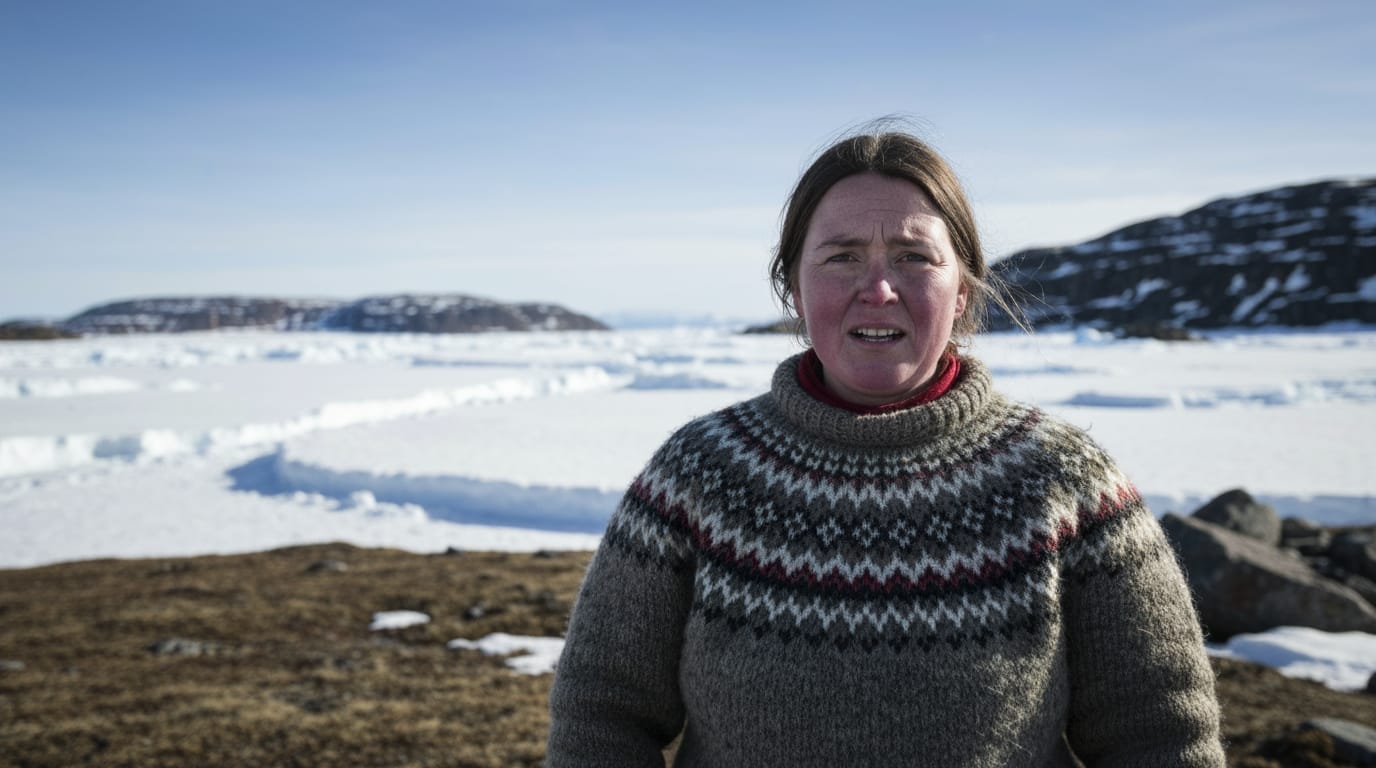
Greenland, the vast Arctic island on the cusp of greater self-determination, finds itself at the heart of an evolving geopolitical landscape, marked by a recent U.S.-NATO "framework" deal that has elicited a mixture of cautious relief and persistent mistrust across its icy fjords and political corridors. The proposed arrangement, stemming from earlier contentious proposals, aims to solidify Arctic security and counter growing Russian and Chinese influence, yet it simultaneously rekindles historical sensitivities surrounding sovereignty and economic autonomy. This delicate balance underscores Greenland's strategic importance and its efforts to navigate a future intertwined with global powers while safeguarding its unique identity.
The Arctic's New Frontier: A Strategic Nexus
Greenland's colossal ice sheet and strategic location have long positioned it as a vital geographical asset, particularly for defense and scientific research. Its role has intensified amidst heightened global interest in the Arctic, an area increasingly seen as a new frontier for trade routes, resource extraction, and military maneuvers. For the United States and NATO, securing Greenland is paramount to their Arctic strategy, especially in light of perceived expansions by Russia and China in the region. The existing 1951 defense agreement between the U.S. and Denmark already grants the U.S. considerable operational freedom for its military bases, most notably Pituffik Space Force Base (formerly Thule Air Base), a critical outpost for missile detection and space surveillance located approximately 1,500 kilometers north of Greenland's capital, Nuuk. The recent "framework" discussions aimed to build upon this foundation, reportedly focusing on ensuring these rival powers "never gain a foothold – economically or militarily – in Greenland".
Averted Crisis: The Dawn of Cautious Relief
The initial proposals from the previous U.S. administration, which included a highly controversial desire to "acquire" Greenland, had sent diplomatic shockwaves across the transatlantic alliance, leading to considerable friction with Denmark and its European allies. The idea was met with immediate and firm rejection from Danish and Greenlandic officials, who vehemently reiterated that Greenland was not for sale. The tension escalated further with threats of tariffs on European nations that opposed the acquisition efforts.
A significant moment of de-escalation arrived with U.S. President Donald Trump's explicit declaration that the U.S. would not use force to acquire the island, coupled with the withdrawal of the tariff threats. This announcement, made during high-level discussions with NATO Secretary General Mark Rutte, brought a "collective – if cautious – exhale" among diplomats and European leaders. The ensuing discussions centered on creating a "framework for future agreements" focused on Arctic security and bilateral defense cooperation between Denmark, Greenland, and the U.S.. NATO Secretary General Rutte emphasized that Greenland's sovereignty remained undiscussed, with the focus solely on bolstering Arctic security. This shift from outright acquisition to a cooperative framework offered a degree of relief, signaling a move away from confrontational rhetoric towards a more collaborative approach, at least on the surface.
Deep-Seated Mistrust: Sovereignty, Ambiguity, and History
Despite the momentary relief, a palpable sense of mistrust continues to permeate discussions surrounding the U.S.-NATO engagement with Greenland. Danish Prime Minister Mette Frederiksen has consistently maintained Denmark's unwavering stance on Greenland's sovereignty, stating unequivocally, "Our red lines are the same as they have been throughout, and as they will continue to be: that we will not, of course, relinquish sovereignty". This firm position underscores a broader sentiment in Greenland and Denmark, where the island's self-determination and territorial integrity are non-negotiable. The 1951 defense agreement itself, while granting the U.S. operational flexibility, explicitly upholds the "sovereignty of the Kingdom of Denmark".
The ambiguity surrounding the specifics of the new "framework" deal has also fueled skepticism. While President Trump hinted at Greenland's involvement in a proposed "Golden Dome" missile defense system and access to its vast mineral rights, the details remain "complex" and largely undefined. This vagueness has led policy experts to suggest that "complexity" might be a euphemism for a lack of concrete details, raising concerns about the potential for future interpretations that could impinge on Greenlandic autonomy. Military experts view the "Golden Dome" concept as a significant expansion of radar and interception capabilities at Thule Air Base, designed to counter hypersonic missiles from rival powers, while the pursuit of mineral rights is seen as a strategic move to preempt China's access to critical Arctic resources. These developments, while framed as security measures, are also interpreted by some as a broader U.S. strategy for military and economic hegemony in the Arctic, potentially sidelining Greenlandic interests.
Historical experiences, particularly those related to the U.S. military presence and the broader legacy of great power politics, contribute to Greenland's cautious stance. The island has experienced periods where its strategic importance overshadowed its local needs and aspirations. This history, combined with the U.S. administration's past unilateral actions and its fluctuating commitment to alliances, has eroded trust across Europe and within Greenland itself. Even the Danish government, despite being a NATO ally, has taken proactive steps, considering plans to deploy up to 1,000 soldiers, warships, and aircraft to Greenland, a move that signals an intent to reinforce its presence and protection of the island. Furthermore, a bipartisan group of U.S. lawmakers introduced legislation, such as the "Greenland Sovereignty Protection Act," to explicitly prohibit federal funds from being used to acquire the island or influence its public opinion, underscoring domestic U.S. concerns about undermining international law and weakening NATO.
Balancing Progress and Prudence for Greenland's Future
The "framework" deal and the ongoing discussions highlight Greenland's delicate position as a self-governing entity within the Kingdom of Denmark, situated in an increasingly competitive geopolitical theater. On one hand, enhanced cooperation could bring economic benefits through infrastructure development and job creation, along with strengthened security. On the other hand, the experience has underscored the critical need for robust safeguards to protect Greenlandic sovereignty, environmental integrity, and cultural heritage. The path forward demands a nuanced approach, where the strategic interests of global powers are carefully balanced with the aspirations of Greenlanders for greater self-determination and sustainable development. The interplay between international security objectives and local concerns will undoubtedly continue to shape Greenland's trajectory, ensuring that its journey remains a complex narrative of both strategic necessity and inherent self-preservation.


