Greenland Police Fine German Satire Show Over Provocative US Flag Stunt in Nuuk
Nuuk, Greenland – Greenlandic authorities have issued a fine to a German television satire show after its team attempted to raise an American flag in the heart of Nuuk, the capital city, sparking local outrage and highlighting simmering sensitivities around Greenland's sovereignty and international relations. The provocative stunt, reportedly orchestrated by German comedian Maxi Schafroth, involved an effort to plant the U.S. flag while being filmed, drawing swift intervention from local police. The incident has reignited discussions about foreign perceptions of the autonomous Danish territory and the boundaries of satirical expression on an international stage.
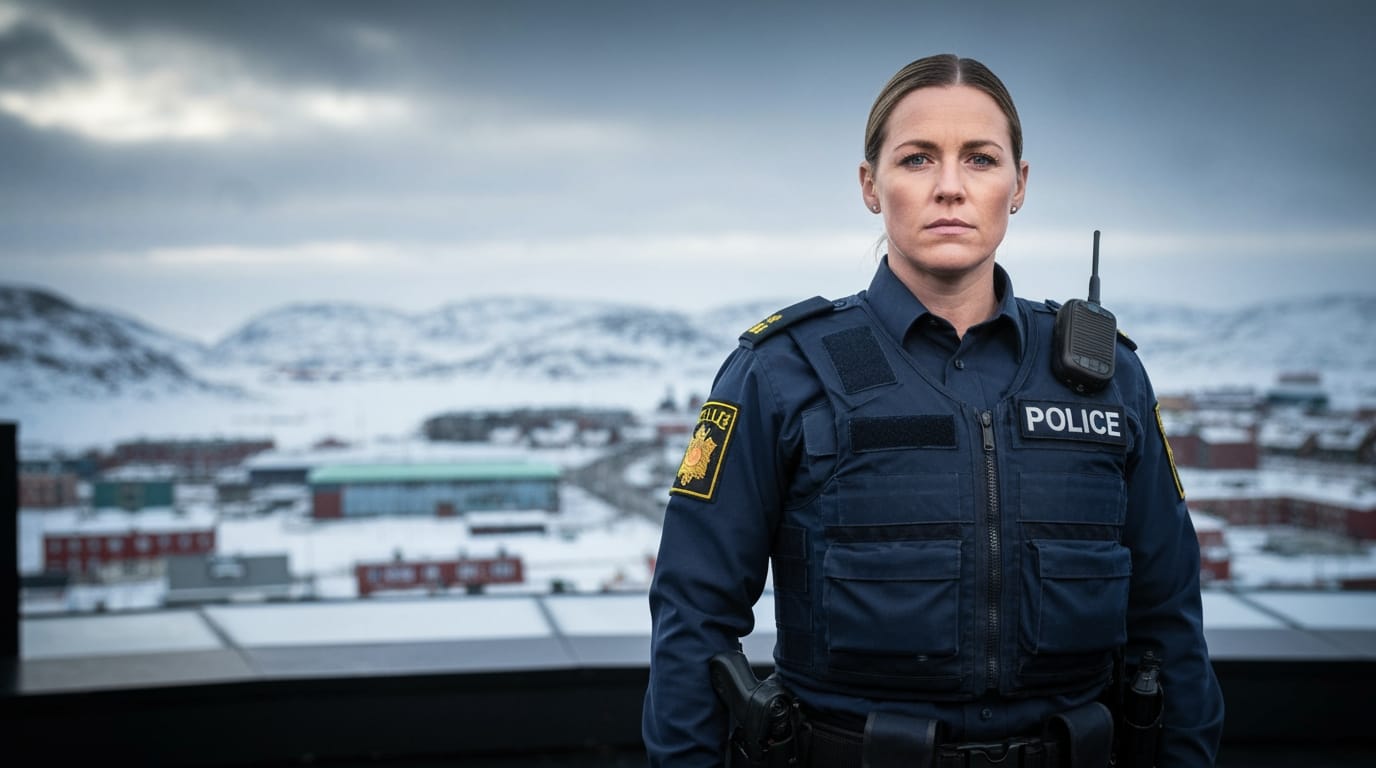
The attempted flag-raising occurred in Nuuk's city center, drawing immediate attention from residents. Reports indicate that a foreign individual, later identified as a German comedian, was in the process of erecting an American flag while accompanied by a film crew. Greenlandic police acted quickly, apprehending the individual before the flag could be fully unfurled. The swift response from law enforcement underscores the seriousness with which such symbolic acts are viewed in Greenland, a nation deeply protective of its self-governance and cultural identity. The German satire show now faces a financial penalty for the incident.
This recent episode unfolds against a backdrop of heightened awareness regarding Greenland's geopolitical status. In previous years, Greenland found itself at the center of international attention when then-U.S. President Donald Trump publicly expressed interest in purchasing the vast island. This proposition, widely perceived as disrespectful, elicited strong reactions from Greenlandic leadership and its population. Greenland's Premier Jens-Frederik Nielsen, in response to an image circulating on social media depicting Greenland draped in an American flag, unequivocally stated in early January, "Our country is not for sale, and our future will not be shaped by debates on social media". He further emphasized that "messages that carry symbolism of possession are not the path forward" and that relations between countries must be based on "mutual respect and international law". This prior context illuminates why the German satire show's stunt resonated so strongly and negatively within the community.
The motivation behind the German satire show's stunt appears to be rooted in a critique of perceived American hegemonic tendencies and the commodification of sovereign nations. German political satire is known for its incisive and often biting commentary, frequently targeting international political events and figures. By attempting to "plant" a U.S. flag in Greenland, the comedians likely aimed to lampoon the idea of territorial acquisition and the notion that Greenland's future could be dictated by external powers. However, the execution of the satirical act seemingly overlooked the profound cultural and political sensitivities of the Greenlandic people, whose history includes periods of colonial influence and a persistent struggle for self-determination. The stunt, intended as a form of critical commentary, instead ignited local indignation.
Legally, the act of flying foreign flags in Denmark and its autonomous territories like Greenland is subject to specific regulations. Historically, Danish law has restricted the display of flags other than the Danish national flag, with very limited exceptions. While some modern interpretations have eased these restrictions, allowing flags of other Nordic countries or the EU flag under certain conditions, the unauthorized hoisting of a foreign national flag, particularly in a public and provocative manner, can lead to legal consequences. This legal framework, coupled with the deeply felt offense at the symbolic gesture, explains the police's prompt action and the subsequent fine. The incident serves as a reminder that even acts intended as satire can have real-world legal and diplomatic repercussions when they intersect with national sovereignty and cultural pride.
The Nuuk flag incident underscores the delicate balance between artistic freedom, political commentary, and international respect. While satire often pushes boundaries to provoke thought and highlight societal absurdities, it also carries a responsibility to consider the context and potential impact on the subjects of its commentary. For Greenland, a nation asserting its identity and sovereignty on the global stage, the attempted flag-raising was not merely a joke but a direct affront to its nationhood, echoing past anxieties about foreign dominion. The police intervention and subsequent fine serve as a clear message that such symbolic gestures, regardless of their intent, will not be tolerated when they infringe upon the dignity and self-determination of a sovereign people. The incident is a vivid illustration of how international relations, even in the age of globalized media and satirical commentary, remain grounded in principles of mutual respect and the recognition of national boundaries, both physical and symbolic.


