Greenland Rejects U.S. Overture, Prime Minister Expresses "Sadness" Over Control Push
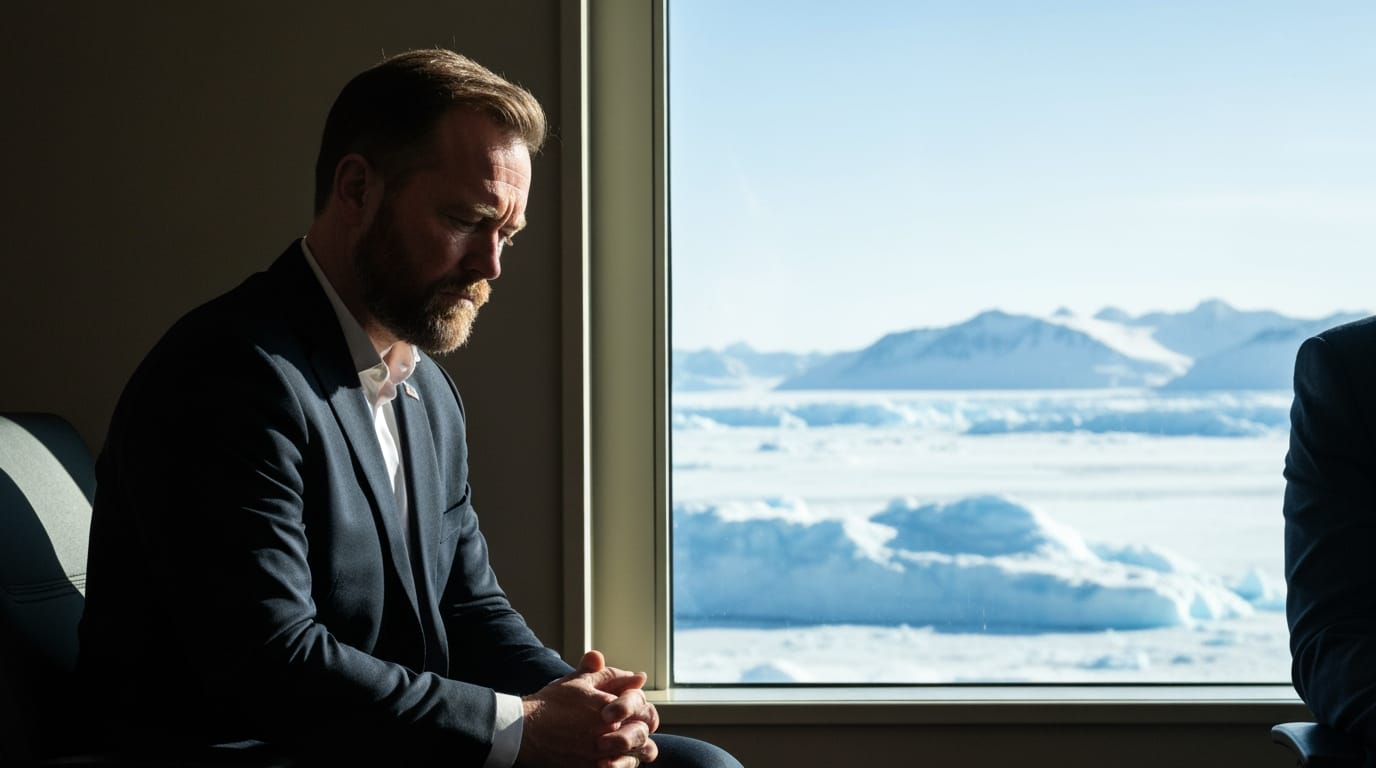
Nuuk, Greenland – The leadership of Greenland has unequivocally rejected renewed calls for U.S. control over the vast Arctic island, with Prime Minister Jens-Frederik Nielsen expressing profound "sadness" over statements that reduce Greenland to a mere pawn in geopolitical power struggles. The definitive stance from Greenland, echoed by its sovereign Denmark, underscores the island's steadfast commitment to self-determination amidst persistent American interest.
U.S. President Donald Trump recently reiterated his conviction that the United States "needs" Greenland for national security, refusing to rule out measures to secure its control. This renewed push included the appointment of a special envoy tasked with integrating the Danish territory into the U.S. However, Greenlandic and Danish officials have consistently and firmly rejected any notion of a transfer of sovereignty, asserting that the island is not for sale and that its future will be determined solely by its people.
A Firm Rejection from the Arctic Shores
Prime Minister Nielsen articulated Greenland's position with clarity and emotion following President Trump's recent remarks and the appointment of an envoy. "Such words reduce our country to a question of security and power. That is not how we see ourselves, and that is not how we in Greenland can or should be described," Nielsen stated on social media. He emphasized that Greenland is its own country, and all decisions regarding its future are made on the island. "We do not belong to anyone else. We decide our own future," the Prime Minister affirmed, reiterating a sentiment widely shared across the island: "We are not for sale and cannot simply be taken."
This sentiment was reinforced by previous statements from Greenlandic leaders, who have stressed a distinct cultural and national identity. "We don't want to be Americans, nor Danes; We are Kalaallit," referring to the indigenous Greenlandic people. This robust assertion of identity highlights a deep-seated desire for autonomy that transcends external pressures.
Denmark, Greenland's sovereign state, has stood in full solidarity with its autonomous territory. Danish Prime Minister Mette Frederiksen previously called the initial 2019 proposal "absurd" and maintained that Greenland "belongs to the Greenlanders." Foreign Minister Lars Løkke Rasmussen expressed being "deeply angered" by the recent U.S. moves and formally summoned the U.S. ambassador, underscoring that the United States "cannot interfere in Denmark's internal affairs" and must respect international law and national sovereignty. The European Union, through leaders like Commission President Ursula von der Leyen and French President Emmanuel Macron, has also offered "full solidarity" to Denmark and Greenland, affirming the principles of territorial integrity and sovereignty.
Historical Echoes and Geopolitical Underpinnings
The current debate is not an isolated incident but rather the latest chapter in a long history of American interest in Greenland. The United States has eyed the world's largest island since the late 19th century, with historical proposals to purchase it dating back to 1867 and a significant offer of $100 million in gold in 1946 from President Truman. These historical overtures were rooted in Greenland's immense strategic value.
Greenland's geographical position, nestled between North America and Europe, makes it a pivotal location for defense and maritime control. It hosts the Pituffik Space Base (formerly Thule Air Base), a critical U.S. military installation vital for missile early warning, defense, and space surveillance. During the Cold War, Greenland was a key part of the GIUK (Greenland-Iceland-United Kingdom) Gap, a crucial anti-submarine warfare chokepoint in the North Atlantic. Today, its strategic importance is magnified by growing geopolitical competition in the Arctic, particularly from Russia and China. The melting Arctic ice cap is opening new shipping routes, such as the Northern Sea Route and the Northwest Passage, further amplifying Greenland's role in global logistics and security.
Beyond its strategic location, Greenland is rich in untapped natural resources. Its vast subsoil is believed to contain significant deposits of rare earth metals—essential for modern technologies like smartphones, electric vehicles, and military systems—along with uranium, zinc, oil, and gas. With China currently dominating the global supply of rare earths, securing access to Greenland's reserves is seen by some as a way to diversify critical material supply chains.
Sovereignty, Economy, and the Path to Independence
Greenland functions as an autonomous territory within the Kingdom of Denmark, a status granted through the Home Rule Act of 1979 and further expanded by the Self-Government Act of 2009. While Denmark retains control over foreign policy and defense, Greenland manages most domestic matters, including natural resource development. Crucially, the Self-Government Act recognized Greenlanders as "a people pursuant to international law with the right to self-determination." This legal framework solidifies the principle that Greenland cannot be acquired by any country without the explicit consent of its people.
The island's economy, however, remains heavily reliant on fishing, which accounts for approximately 90% of its exports, and substantial annual block grants from Denmark, constituting about half of the government's revenue. This economic dependence poses a challenge to Greenland's long-term aspiration for full independence. The government's strategy involves diversifying its economy through responsible resource extraction, tourism, and increased trade to reduce its reliance on Danish subsidies. While some Greenlanders envision economic benefits from closer ties with the U.S., the majority prioritize sovereignty and the protection of their environment and traditional industries over external control. Concerns exist that becoming part of the U.S. could lead to environmental damage, negative impacts on the fishing industry, and increased living costs.
International Repercussions and Future Trajectories
The U.S. administration's assertive stance on Greenland has caused significant diplomatic strain. Denmark, a NATO ally, has found itself in an unusual and uncomfortable position, leading to increased investment in its Arctic defense and intensified diplomatic efforts to highlight European unity. The incident has also fueled broader international concern that such proposals undermine fundamental principles of international law, particularly the sovereignty and self-determination of nations. Some European leaders have expressed worry that it legitimizes the notion of changing international borders through coercion.
For Greenland, the episode underscores its growing visibility on the global stage and the complex interplay between its desire for self-determination, its economic vulnerabilities, and its strategic importance to major powers. Despite the pressures, the message from Nuuk and Copenhagen remains consistent: Greenland is not a commodity to be bought or taken. Its future is intertwined with its people's right to decide, a principle that remains non-negotiable in the face of persistent external interest. The episode serves as a powerful reminder of the enduring significance of national identity and sovereignty in an increasingly contested world.