Greenland's Unsettled Ice: Scientists Navigate Geopolitical Storms, Community Tensions, and Dire Climate Realities
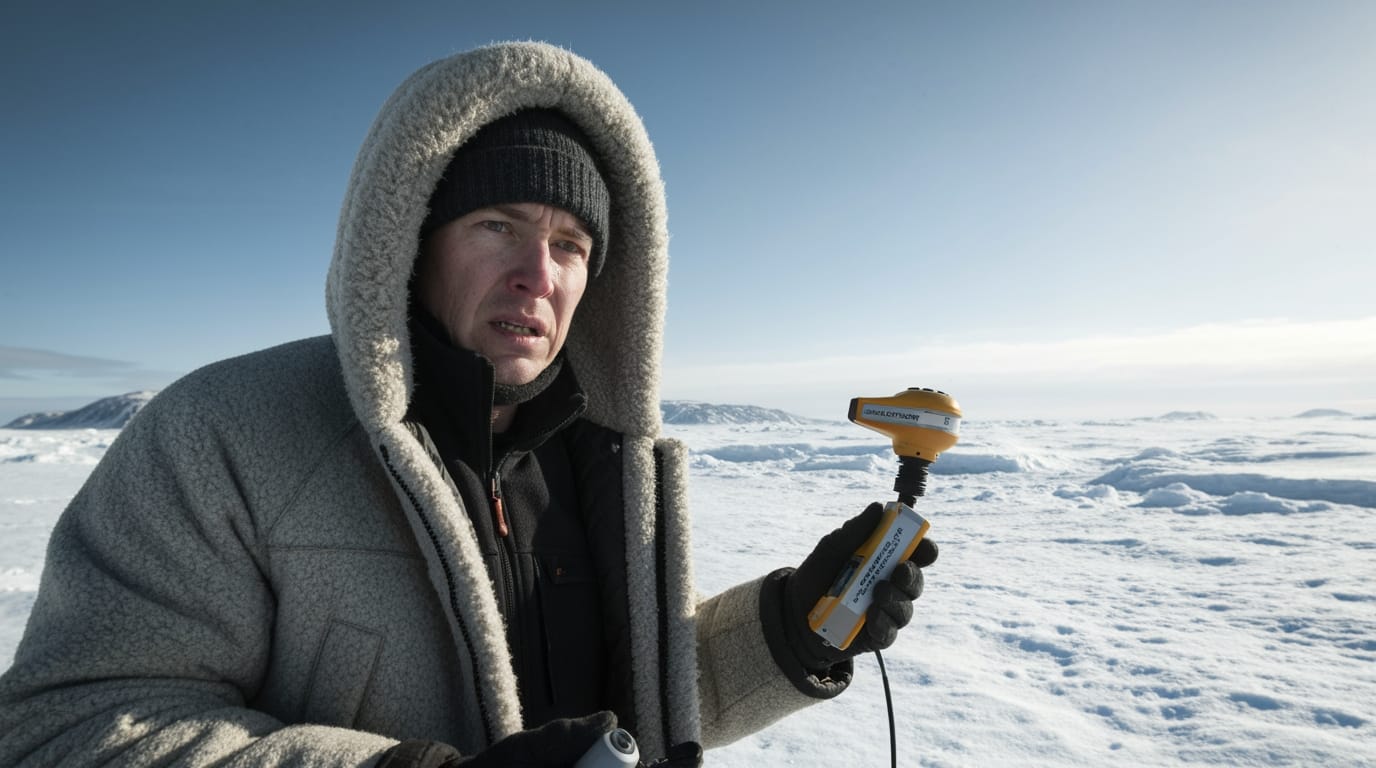
NUUK, GREENLAND – A complex tapestry of geopolitical tensions, community concerns, and increasingly alarming climate data is creating a palpable sense of unease among Arctic scientists engaged in critical research across Greenland. Far from being a pristine, isolated laboratory, the world’s largest island has become a crucible where the urgency of global climate change intersects with indigenous rights, international diplomacy, and the profound human impact of scientific exploration. The very ground beneath their feet, both literally and figuratively, is shifting, pushing researchers to confront not only the planet's environmental breakdown but also the ethical and political dimensions of their work.
Geopolitical Undercurrents Threaten Scientific Collaboration
The scientific community in Greenland finds itself navigating increasingly choppy political waters, particularly in the wake of renewed U.S. attempts to acquire the autonomous Danish territory. Recent rhetoric from U.S. officials has been met with strong condemnation from Greenland's Prime Minister, Jens-Frederik Nielsen, who characterized the overtures as "totally unacceptable" and "disrespectful". This sentiment is widely echoed by a growing chorus of international scientists, many of whom have signed letters vehemently opposing the U.S. efforts. They fear that a U.S. takeover could severely undermine the long-standing international scientific enterprise that relies on collaborative relationships with Greenland and its people.
Greenland holds immense strategic importance due to its location between the North American and Eurasian Arctic, as well as its rich reserves of minerals like lithium, copper, and rare earths. However, the notion of extensive mining, particularly for rare earths, has been dismissed by experts like Malte Humpert of The Arctic Institute as "completely bonkers," highlighting the formidable logistical challenges posed by the island's ice-covered landscape. The U.S. interest, framed by some as a move to prevent Russia or China from gaining influence in the region, has, ironically, strained relationships with key allies and raised questions about the stability of the Western world order. For scientists, the political maneuvering injects an unwelcome element of instability into crucial research initiatives that demand global cooperation, not territorial disputes. The delicate nature of these scientific collaborations, many of which are relatively new, is particularly vulnerable given the historical context of U.S. intervention in Greenland.
Addressing "Research Fatigue" in Local Communities
Beyond the geopolitical stage, scientists are also grappling with a more localized, yet equally significant, source of discomfort: "research fatigue" within Greenlandic communities. Years of being the focus of intense international scrutiny—from climate researchers to journalists and tourists—have led some residents to feel a sense of distrust, or even exploitation. When researchers conduct short-term projects without sufficiently engaging with or giving back to the local population, it can create the impression that the research offers no tangible benefit to the communities hosting them.
This sentiment can be exacerbated when local residents are implicitly or explicitly relied upon for tasks such as translation or logistical support, like booking accommodations, without adequate recognition or reciprocity. Acknowledging this "outsider fatigue" is becoming an ethical imperative for scientific endeavors in Greenland. Experts underscore the importance of fostering mutually beneficial relationships, ensuring that research not only extracts data but also contributes meaningfully to the well-being and knowledge base of the communities that facilitate it. The challenge lies in transitioning from a model where Greenland is merely a research site to one where it is an equal partner, and where the human element of scientific interaction is prioritized and respected.
Unveiling Greenland's Alarming Climate Story
Perhaps the most profound discomfort felt by scientists in Greenland stems from the very subject of their study: the accelerating pace of climate change and its direct, stark consequences. Researchers working on the island's vast ice sheet are collecting data sets that are described as "very scary" and have a profound personal impact, "taking their sleep away at night". Greenland's ice sheet is a critical indicator of global climate health, and its rapid changes have significant implications for sea-level rise, ocean currents, and global weather patterns.
The interface between basic geochemical and climate science and societal impact has rarely been so direct, creating a scientifically "extremely exciting" yet terrifying time for those on the front lines. The sheer scale of ice loss, the destabilization of glaciers, and the unfolding changes to the Arctic ecosystem present a clear, undeniable picture of a planet undergoing rapid and potentially irreversible transformation. This scientific discomfort is rooted in the objective, quantitative evidence that points towards a future with significant global repercussions, forcing researchers to confront the weight of their discoveries and their potential impact on humanity.
The Harsh Realities of Arctic Expeditions
Operating in Greenland also presents immense practical and environmental challenges that contribute to the prevailing sense of discomfort. The island's cold, ice-choked harbors and frozen coastlines are formidable barriers, necessitating specialized equipment and extensive logistical planning. Movement is heavily reliant on robust icebreakers – enormous vessels designed to crush and cleave through thick ice with powerful engines and reinforced hulls. However, the availability of such vessels is a significant constraint, with the United States, for example, possessing only a handful, some of which are barely operational.
This dependence on icebreaking capabilities underscores the inherent difficulties and resource-intensive nature of conducting sustained research in Greenland. Beyond the maritime challenges, scientists face extreme weather conditions, vast distances, and limited infrastructure, making fieldwork inherently arduous and often hazardous. These environmental realities are a constant reminder of the raw power of the Arctic and the demanding conditions under which crucial scientific understanding is being forged.
A Call for Respect and Sustainable Engagement
The multi-layered discomfort experienced by scientists in Greenland highlights the intricate relationship between humanity, the environment, and geopolitics in the 21st century. The geopolitical aspirations of powerful nations, the imperative for ethical engagement with indigenous populations, and the alarming truths revealed by climate science all converge on this crucial Arctic frontier. As the ice continues to melt and the global consequences become ever more apparent, the need for international scientific collaboration, underpinned by respect for Greenland's sovereignty and its people, has never been more critical. The experiences of scientists on the ground serve as a stark reminder that understanding and addressing the climate crisis requires not only rigorous research but also thoughtful, ethical, and politically astute engagement with the places and communities most directly affected.