Grim Toll Mounts to 61 in Karachi Mall Inferno, Dozens Still Missing
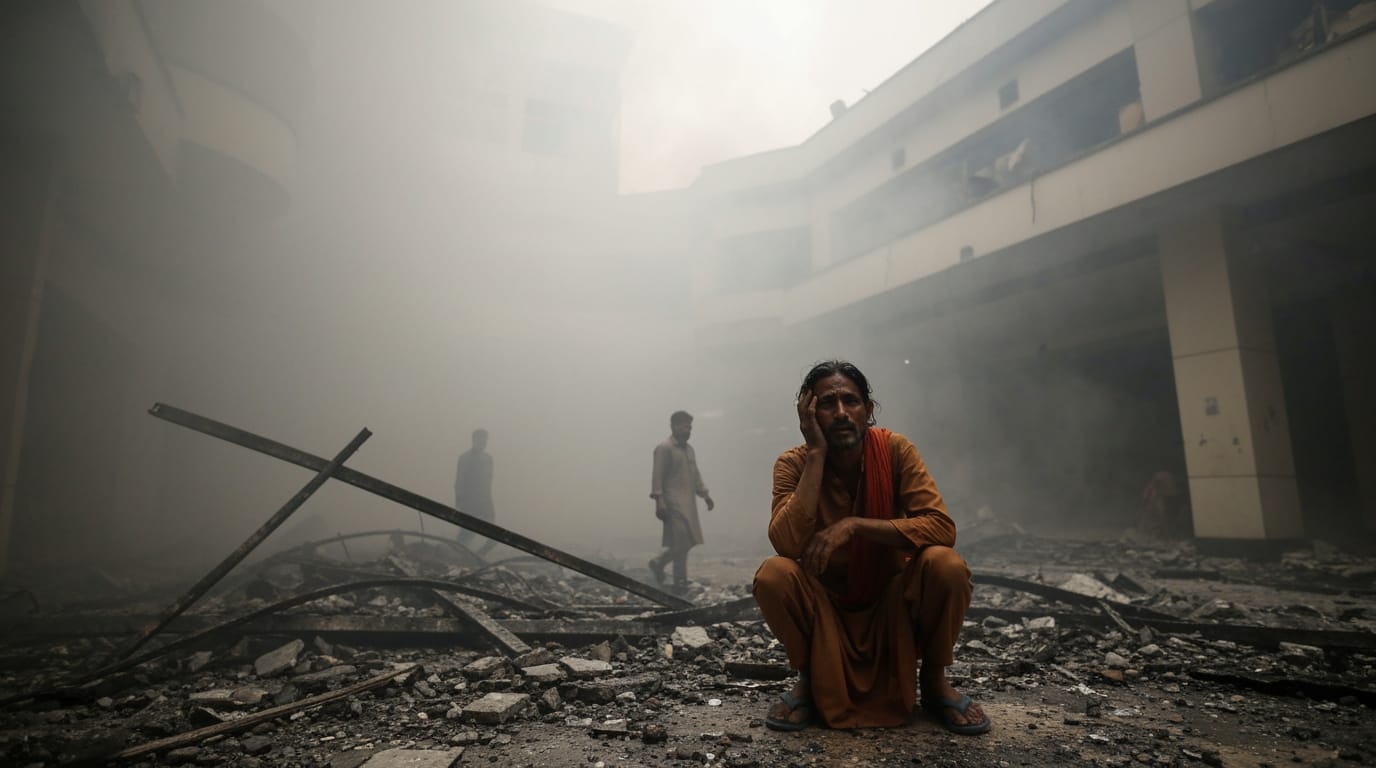
KARACHI, Pakistan – A devastating fire that engulfed Gul Plaza, a prominent multi-story shopping mall in Karachi, has claimed the lives of at least 61 people, with search and recovery operations continuing days after the blaze erupted. The inferno, which began late Saturday, January 17, 2026, has left a trail of destruction and despair, as rescue workers painstakingly search through the charred remains and families grapple with the agonizing wait for news of their loved ones. The tragic event has cast a somber shadow over Pakistan's largest city, reigniting critical questions about urban safety standards and the enforcement of building codes.
A Catastrophic Blaze and the Rising Human Cost
The fire ignited around 10:15 PM PKT on Saturday within the Gul Plaza shopping center, located on Muhammad Ali Jinnah Road in the city's densely populated Saddar area. The flames, reportedly starting on the ground floor, quickly spread upward, fueled by the highly combustible materials stored in the mall's approximately 1,200 shops, including cosmetics, garments, and plastic household goods. Firefighters battled the raging inferno for more than 24 hours, with some reports indicating the blaze persisted for nearly two days, before it was largely brought under control.
Initial reports confirmed a handful of fatalities, but as rescue teams gained precarious access to the building's interior, the death toll escalated sharply. By Monday, January 19, officials reported 23 confirmed deaths, a figure that climbed to 26 by Tuesday. The grim reality of the disaster became clearer as Wednesday morning arrived, with authorities announcing that the estimated death toll had reached 61. Among the confirmed deceased is a firefighter, Furqan Ali, who lost his life in the line of duty. While over 20 people sustained non-fatal injuries, primarily due to smoke inhalation, the focus remains on locating the dozens still reported missing, with numbers ranging from 46 to 85.
Harrowing Search and Identification Challenges
The aftermath of the fire has seen a harrowing and arduous search operation. Rescue workers, navigating extreme heat, thick smoke residue, and structurally compromised areas, have faced immense challenges in recovering bodies and clearing debris. Portions of the building, which was larger than a football field, crumbled due to the intensity of the fire, further complicating efforts and necessitating the use of heavy machinery to stabilize and clear sections.
A significant challenge lies in identifying the victims. Police surgeon Dr. Summaiya Syed stated that many bodies were "beyond recognition," necessitating DNA testing for identification. More than 50 families have provided DNA samples, a testament to the devastating impact on the community. The personal stories emerging are heartbreaking; Qasir Khan, for instance, reported his wife, daughter-in-law, and her mother missing after they went to the mall for wedding shopping. One particularly tragic discovery involved the retrieval of 30 bodies from a single shop, "Dubai Crockery," located on the mezzanine floor. Reports indicate that these victims, believing they would be safe from the flames, had suffocated while awaiting rescue. Relatives of the missing have expressed criticism over what they perceive as a slow rescue operation. Karachi Mayor Murtaza Wahab has affirmed that rescue operations will continue until all missing persons are accounted for.
Unraveling the Cause and Safety Failures
The precise cause of the inferno remains under investigation, though initial assessments point to a potential short circuit. However, the rapid spread and high casualty count have highlighted severe deficiencies in fire safety protocols and infrastructure within the commercial complex. Investigations have revealed a shocking lack of basic fire prevention and suppression systems at Gul Plaza; the building reportedly had no emergency exits, smoke alarms, fire hoses, fire extinguishers, or fire sprinkler systems. Compounding the danger, 13 of the mall's 16 exits were locked at the time the fire broke out, trapping individuals inside.
This tragedy is not an isolated incident in Karachi, a city that has a long and grim history of deadly fires often attributed to poor safety standards, illegal construction, and lax enforcement. In November 2023, another mall fire in the city killed 10 people and injured 22. A more catastrophic event in 2012 saw a garment factory fire claim 260 lives. Following the Gul Plaza disaster, the Sindh Building Control Authority has issued warnings to developers and building owners, urging them to rectify fire safety violations or face legal consequences.
Economic Devastation and Call for Accountability
Beyond the tragic loss of life, the fire has inflicted a severe economic blow. The Gul Plaza, housing 1,200 shops, represented the livelihoods of countless traders. Initial estimates from Karachi's business community placed losses at around $18 million, while other reports suggested an even higher figure of approximately 100 billion Pakistani rupees, equivalent to about $360 million. The Sindh provincial government has announced compensation of 10 million rupees (approximately $36,000) for the family of each person killed in the fire. Chief Minister Murad Ali Shah has also formed a committee to assess the total losses and devise a plan for the rehabilitation of affected traders, including exploring temporary arrangements for businesses to resume operations.
The scale of the destruction and loss of life has intensified calls for greater accountability and more rigorous enforcement of safety regulations. While investigations are ongoing into the specific cause of the Gul Plaza fire, the recurring nature of such disasters underscores a systemic failure to prioritize safety in commercial establishments across the city.
A City Mourns, A Call for Change
The catastrophic fire at Gul Plaza has plunged Karachi into mourning, leaving behind a community scarred by immense loss and uncertainty. The recovery of dozens of bodies, many unidentifiable, highlights the brutal reality faced by families awaiting closure. As DNA tests proceed and the full extent of the tragedy unfolds, the disaster serves as a stark and urgent reminder of the critical need for robust safety infrastructure and strict regulatory oversight in public spaces. Without fundamental changes to building safety standards and their enforcement, the risk of similar devastating fires continues to loom large over the bustling metropolis of Karachi. The path to healing and rebuilding will be long, intertwined with the imperative to ensure that such a tragedy is never repeated.


