Health Secretary Wes Streeting Resigns Amidst Mounting Pressure on PM Starmer, Sparking Leadership Speculation
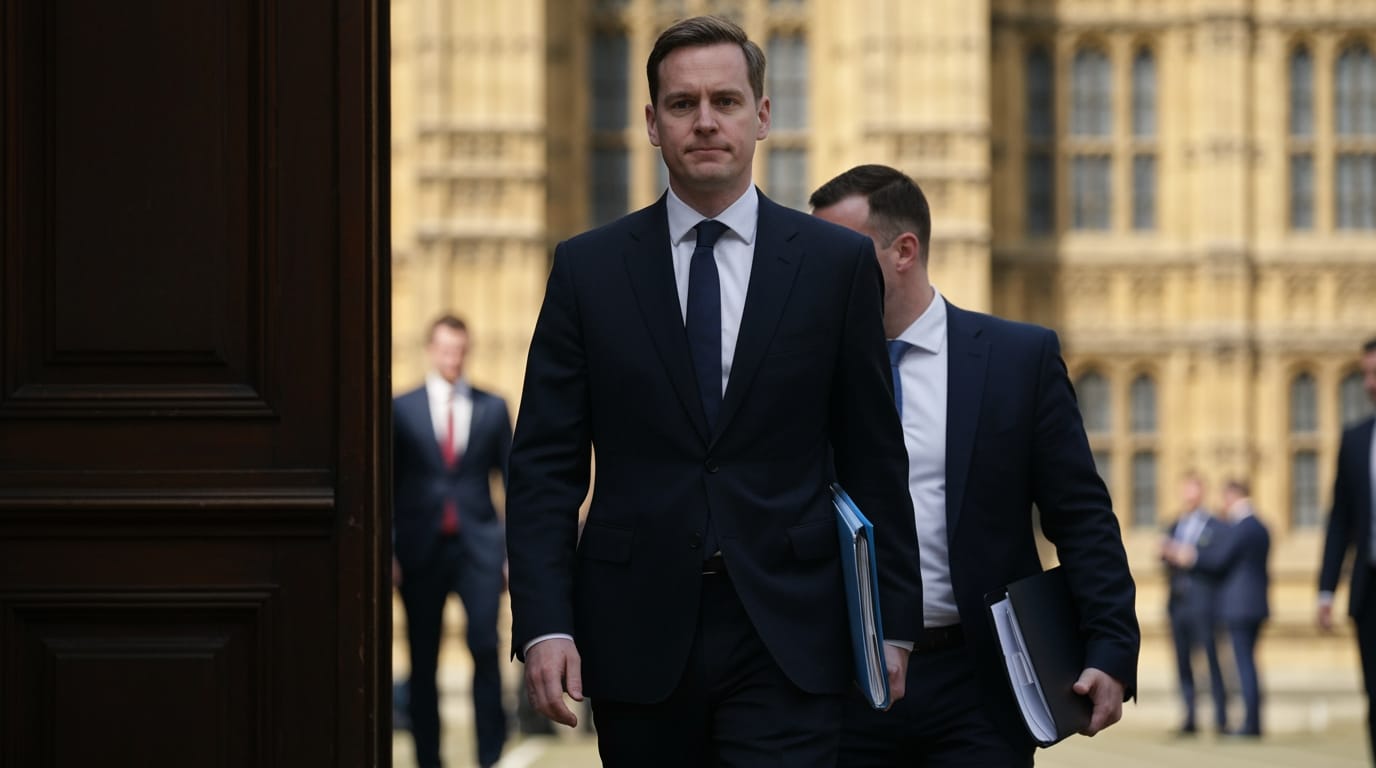
LONDON, UK – May 14, 2026 – Health Secretary Wes Streeting has resigned from his Cabinet post, plunging Prime Minister Keir Starmer's embattled government into further turmoil and immediately triggering widespread speculation of a leadership challenge. Streeting's departure, confirmed this morning, comes amidst a period of intense instability for Starmer, whose leadership has been severely weakened by a series of devastating losses in recent local and regional elections across the UK. The move by a high-profile Cabinet minister is widely interpreted as a direct maneuver to unseat the sitting Prime Minister, setting the stage for a potentially bruising contest for the leadership of the Labour Party.
The Resignation and Immediate Fallout
Wes Streeting, who has served as Secretary of State for Health and Social Care since July 2024, stepped down from his position on Thursday, May 14, 2026. While Streeting's official statement cited a lack of confidence in Starmer's leadership following Labour's poor electoral performance, political observers quickly converged on the understanding that his resignation is a prelude to an anticipated bid for the party's top job. This marks a critical moment for the Labour government, which swept to power in 2024, promising stability after years of Conservative rule. The abrupt exit of a senior minister from the Cabinet immediately signals a deep fracture within the party, escalating the political crisis facing Prime Minister Starmer. The timing of Streeting's move amplifies the pressure on Starmer, who has been grappling with calls for his departure from more than 80 Labour Members of Parliament (MPs) in the wake of the recent electoral setbacks.
Starmer's Precarious Position and the Path to Challenge
Prime Minister Keir Starmer finds himself in a profoundly precarious position. Less than two years after leading Labour to a significant general election victory, his authority has eroded rapidly. The recent local and regional elections in May 2026 saw Labour suffer heavy losses, leading to intense internal scrutiny and public discontent. While Starmer has publicly affirmed his intention to remain in office, stating he has "no intention to stand down," the sheer number of MPs urging his exit underscores the severity of the challenge to his leadership.
Under Labour Party rules, a leadership election can be triggered in two ways: either the leader resigns, or a challenger garners the support of 20% of Labour MPs. With Labour currently holding 403 MPs, this threshold translates to 81 nominations. Should enough support be marshalled for a formal challenge, the incumbent leader, Starmer in this case, is automatically placed on the ballot paper and does not need to secure additional nominations. Beyond parliamentary support, prospective candidates must also secure nominations from at least 5% of Constituency Labour Parties (CLPs) or a minimum of three affiliated organizations, including at least two trade unions, whose combined membership constitutes 5% of the total affiliated membership. The process culminates in a preferential voting system among party members and affiliates, where a candidate must secure over 50% of the vote to win. Historically, Labour leadership contests can be lengthy, often stretching over 12 weeks, a timeline that suggests a protracted period of internal party struggle during a critical juncture for the government. The unique aspect of this situation is that no sitting Labour Prime Minister has ever faced a leadership challenge of this nature while in office, setting an unprecedented precedent for the party.
Wes Streeting: The Ambitious Contender
Wes Streeting has long been regarded as a rising star within the Labour Party and a figure with clear leadership aspirations. Elected as the MP for Ilford North in 2015, Streeting has built a considerable political profile, marked by his background in student politics, serving as president of both the Cambridge Students' Union and the National Union of Students. His career trajectory has seen him hold various significant shadow ministerial roles, including Shadow Exchequer Secretary to the Treasury, Shadow Minister for Schools, and Shadow Secretary of State for Child Poverty, before his appointment as Health Secretary.
Streeting is often characterized as being on the more moderate, "right" wing of the Labour Party, with some analysts drawing comparisons to former Prime Minister Tony Blair. While he has previously denied the "Blairite" label, his political positions and perceived pragmatism have positioned him as a formidable contender for leadership. Reports suggest that relations between Streeting and Starmer had become strained in recent months, with some speculating that Streeting's ambitions were causing friction even prior to his resignation. His allies have confirmed that he was indeed preparing a leadership bid, indicating that his resignation is a calculated step in a broader strategy to challenge Starmer.
Wider Implications for Labour and the UK
Streeting's resignation and the looming threat of a leadership contest carry profound implications not only for the Labour Party but for the stability and direction of the United Kingdom. The current political climate in the UK is already marked by significant fragmentation, with the traditional two-party dominance giving way to a more complex, "five-party" landscape. The Labour government, despite its 2024 landslide victory, has faced criticism for not delivering a sufficiently "progressive agenda," and its initial success is now seen by some as more a rejection of the previous Conservative government than an enthusiastic embrace of Starmer's leadership.
A protracted and potentially divisive leadership battle could further destabilize the government and divert its focus from crucial policy initiatives at a time when the country faces significant economic and social challenges. Other potential challengers, such as former Deputy Prime Minister Angela Rayner, who has recently resolved a tax issue, and even figures like Andy Burnham, despite not currently being an MP, are also being discussed as possible contenders. The internal strife risks creating an image of a party at war with itself, potentially eroding public confidence and offering opportunities for opposition parties to gain ground. The outcome of any leadership contest will not only determine who leads the Labour Party but could also redefine its political ideology and future electoral strategy.
Conclusion
The resignation of Health Secretary Wes Streeting has unleashed a torrent of political uncertainty, transforming an already challenging period for Prime Minister Keir Starmer into a fight for his political survival. With the Labour Party's rules now poised to potentially facilitate a formal leadership challenge, the coming weeks are expected to be dominated by intense maneuvering and internal debate. The stakes are exceptionally high: for Wes Streeting, it is an ambitious play for the nation's top office; for Keir Starmer, it is a battle to retain control amidst a mounting rebellion; and for the Labour Party, it is a defining moment that will shape its future trajectory and the course of British politics. The nation watches as the internal dynamics of the governing party threaten to overshadow its mandate and redefine its path forward.


