High-Stakes Diplomacy: Iran Demands 'Mutual Respect' as US Talks Commence in Oman Amid Regional Tensions
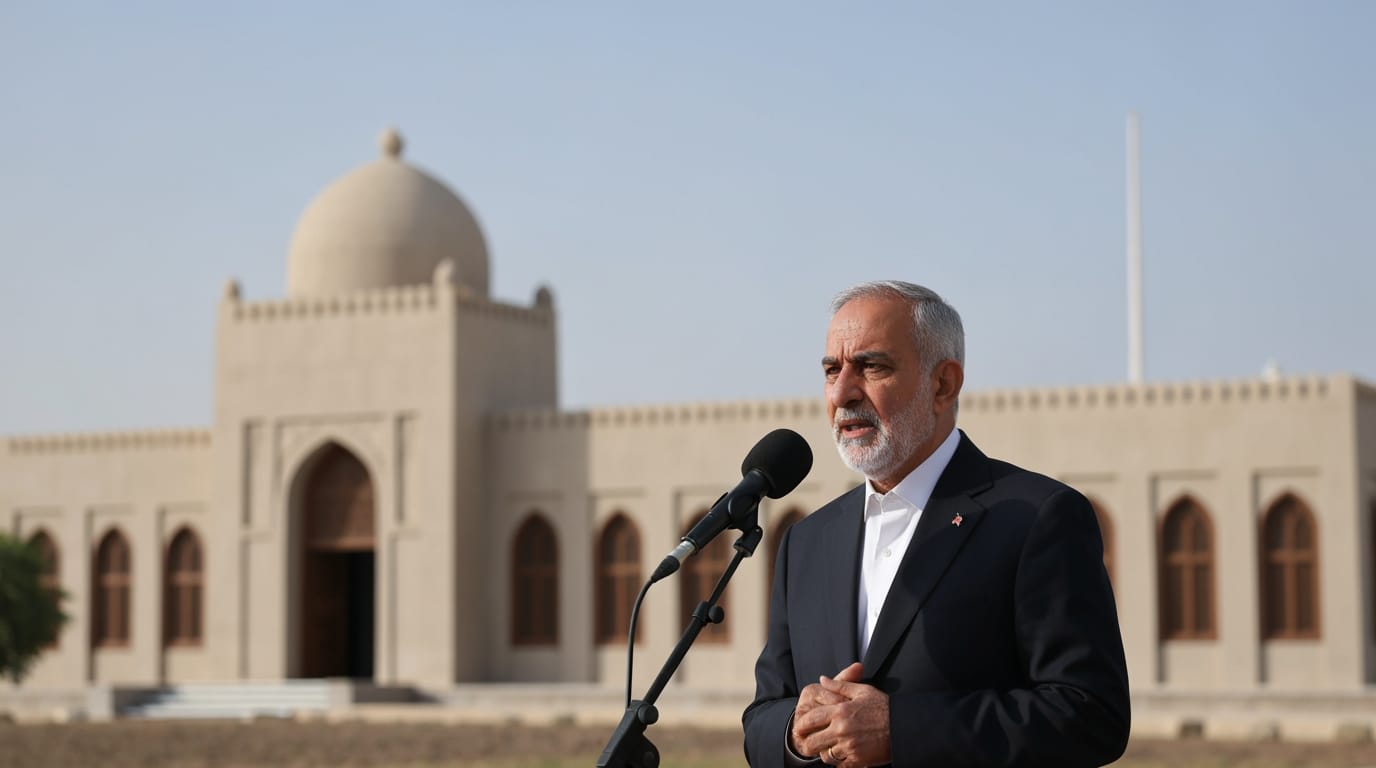
MUSCAT, Oman – In a high-stakes diplomatic maneuver, Iranian Foreign Minister Abbas Araghchi has called for "mutual respect" and "equal standing" as talks with the United States are underway in Oman today, February 6, 2026. The urgent negotiations, hosted by the Sultanate, represent a critical attempt to de-escalate soaring tensions between Washington and Tehran, occurring against a backdrop of recent military confrontations, a robust U.S. military buildup in the Persian Gulf, and international alarm over Iran's rapidly advancing nuclear program. Both sides arrive with entrenched positions and deep-seated mistrust, casting a long shadow over the prospects of a significant breakthrough.
The Immediate Diplomatic Front in Muscat
The Omani capital, Muscat, has once again become the focal point of intricate US-Iran diplomacy. Iranian Foreign Minister Abbas Araghchi, leading Tehran's delegation, arrived late Thursday, emphasizing his nation's commitment to engaging "in good faith" while firmly asserting its rights. Araghchi underscored that "commitments need to be honored" and that "equal standing, mutual respect and mutual interest are not rhetoric — they are a must and the pillars of a durable agreement." This assertion comes as Iran has insisted that the talks focus exclusively on its nuclear program and the lifting of U.S. sanctions.
The U.S. delegation, which includes Middle East envoy Steve Witkoff and potentially senior advisor Jared Kushner, has a broader agenda. Washington seeks to address not only Iran's nuclear activities but also its ballistic missile program, support for regional proxy groups, and its internal human rights record. White House Press Secretary Karoline Leavitt confirmed the U.S. participation, reiterating President Donald Trump's stated goal of "zero nuclear capability" for Iran. She also delivered a stern warning, noting that while diplomacy is the "first option," the U.S. maintains "many options" — a thinly veiled reference to potential military action.
The decision to hold the talks in Oman followed a period of uncertainty. Originally slated for Istanbul, Turkey, Iran's insistence on a shift to Muscat, a country it views as more "politically reliable," reportedly angered Washington. However, after urgent lobbying from at least nine regional countries, the U.S. ultimately agreed to the Omani venue.
A Troubled History: Escalation and the Specter of Conflict
The current diplomatic push unfolds against a backdrop of profoundly strained relations and recent escalations. U.S. President Donald Trump, who withdrew from the Joint Comprehensive Plan of Action (JCPOA) in 2018, has maintained a "maximum pressure" campaign against Iran. This strategy has involved extensive sanctions targeting Iranian government officials, its illicit petroleum trade, and its financial networks.
Adding to the regional volatility, June 2025 witnessed a 12-day conflict involving Israel and Iran, during which U.S. forces reportedly struck and "eviscerated" Iran's three major nuclear sites at Fordow, Isfahan, and Natanz. This military action followed the International Atomic Energy Agency (IAEA) finding Iran non-compliant with its nuclear obligations for the first time in two decades. Subsequently, in October 2025, Iran officially declared the 2015 JCPOA void, signaling an end to all restrictions on its nuclear program.
Iran's domestic situation is also precarious. Nationwide protests in January, triggered by a currency devaluation and soaring food inflation, were met with a "bloody crackdown" by Iranian authorities. The U.S. has since sanctioned Iranian officials for human rights abuses related to the suppression of these protests. The significant U.S. military presence, including an aircraft carrier strike group, in the region serves as a clear message to Tehran, with President Trump explicitly linking it to the ongoing talks.
The Contentious Nuclear File and Regional Stability
At the heart of the current talks is Iran's nuclear program. While Iran has long maintained its program is for peaceful purposes, analysts and the IAEA have consistently refuted these claims. As of May 2024, Iran was enriching uranium to 60% purity and accelerating its advancements with more sophisticated centrifuges. Experts estimate that Iran could produce enough weapons-grade uranium for a single nuclear weapon within a week and amass sufficient material for seven within a month, dramatically shortening its "breakout time."
However, the U.S. perspective extends beyond the nuclear dossier. Secretary of State Marco Rubio highlighted Washington's desire to address Iran's ballistic missile capabilities and its backing of armed groups across the Middle East. These proxy networks have been a consistent source of regional instability, contributing to conflicts in Yemen, Syria, and other flashpoints. The significant divergence in agenda — Iran's narrow focus versus the U.S.'s comprehensive approach — represents a fundamental hurdle to progress.
Oman's Enduring Role as a Discreet Facilitator
Oman’s long-standing policy of neutrality and its cultivation of friendly relations with both the U.S. and Iran have positioned it as a critical intermediary. The Sultanate played a pivotal, albeit discreet, role in facilitating the secret talks that eventually led to the 2015 JCPOA. Its pragmatic foreign policy, rooted in the Ibadi tradition of Islam, prioritizes dialogue and de-escalation over regional entanglements.
Historically, Oman has mediated numerous regional disputes involving Iran, including the Iran-Iraq war and prisoner exchanges between the U.S. and Iran. This track record lends Muscat unique credibility as a go-between, even as some critics express skepticism, pointing to Oman's close strategic and economic ties with Tehran and its alleged role as a hub for groups like the Houthis. Despite these concerns, the willingness of both Washington and Tehran to converge in Muscat underscores Oman's indispensable role in channeling communication between two deeply adversarial nations.
Challenges Ahead and Prospects for De-escalation
The path to a durable resolution remains fraught with challenges. The immediate dispute over the scope of the agenda highlights the vast chasm between the two sides. Iran's leadership, weakened by sanctions and internal dissent, faces immense domestic pressure not to concede on what it views as its sovereign rights. Conversely, the Trump administration, skeptical of Iranian intentions, is under pressure to secure a comprehensive deal that rolls back Iran's nuclear capabilities and curtails its regional influence.
The recent military actions, including the U.S. strikes on Iranian nuclear facilities and the presence of a formidable U.S. "armada," create an environment of high tension and potential miscalculation. While Iran's foreign minister insists on "mutual respect," the U.S. has made it clear that military options are not off the table.
These talks in Oman represent a fragile opportunity to avert further escalation in a volatile region. Success, however, will require a significant diplomatic effort to bridge the wide gap in expectations and address the fundamental security concerns of both the United States and Iran. The world watches cautiously, hoping that dialogue, however difficult, can prevail over the increasing drumbeat of confrontation.