High-Stakes Diplomacy Unfolds in Berlin as Zelenskyy, U.S., European Officials Seek Path to Peace
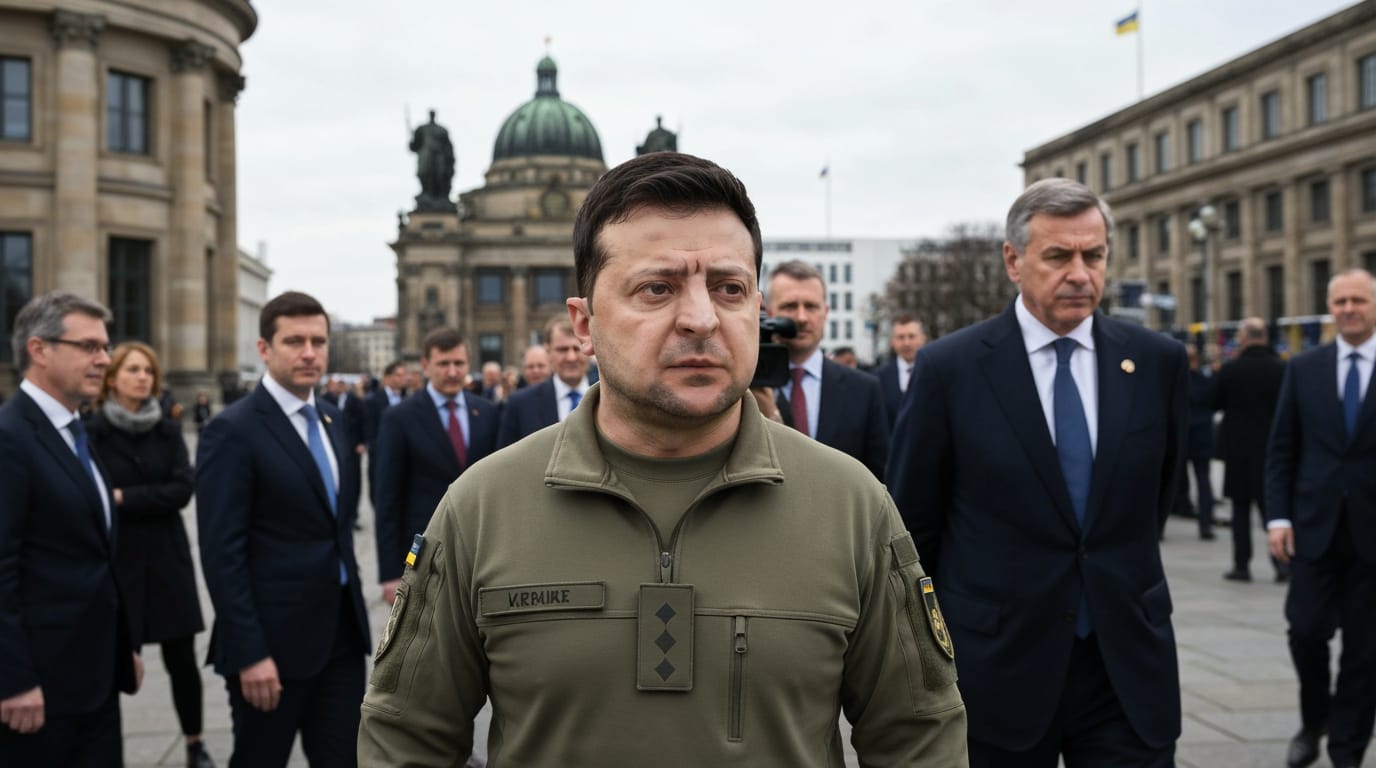
BERLIN – A critical series of diplomatic engagements commenced in Berlin this weekend, bringing together Ukrainian President Volodymyr Zelenskyy, U.S. Special Envoy Steve Witkoff, and a host of European leaders, including German Chancellor Friedrich Merz, to tackle the escalating conflict in Ukraine. These high-level meetings, which began with preliminary discussions over the weekend and will culminate in a major summit on Monday, December 15, aim to forge a unified strategy for peace, economic reconstruction, and security guarantees for Ukraine amidst persistent Russian aggression. The intensified diplomatic push comes as Kyiv reports "massive" Russian strikes on its energy infrastructure, underscoring the urgency of finding a viable resolution to the nearly four-year-old war.
The Berlin Diplomatic Blitz: A Search for Common Ground
The German capital has become the focal point of intense international diplomacy, with delegations from the United States and Ukraine engaging in preliminary talks over the weekend, followed by a broader summit involving European heads of state and government on Monday. Ukrainian President Volodymyr Zelenskyy confirmed his participation, highlighting the profound importance of these discussions for his nation's future. Zelenskyy is also scheduled to attend a German-Ukrainian business forum on Monday, further integrating economic recovery into the peace dialogue. The White House confirmed that U.S. President Donald Trump's special envoy, Steve Witkoff, is leading the American delegation, with reports indicating Jared Kushner is also part of the U.S. contingent. These meetings mark the first time Germany has hosted such talks since the details of a controversial U.S. peace proposal surfaced.
The backdrop to these urgent talks is grim, with Ukraine experiencing renewed and severe attacks on its energy facilities. Kyiv reported that "massive" Russian strikes overnight on Saturday left thousands without power, with Russia claiming it used hypersonic ballistic missiles in retaliation for Ukrainian actions. Zelenskyy emphasized that Russia's actions "still aim to destroy" Ukraine and inflict maximum pain, rejecting any notion that these attacks were about ending the war. This immediate crisis amplifies the pressure on diplomats to secure not just a ceasefire, but a "dignified peace" that includes robust security guarantees against future aggression.
Navigating Divergent Peace Proposals and Territorial Demands
Central to the discussions in Berlin is a U.S.-led 28-point peace proposal, initially revealed last month, which has been met with mixed reactions. The plan drew criticism for reportedly echoing Moscow's demands, including calls for Ukraine to cede crucial territory. Ukrainian officials have since submitted a revised version of the proposal to Washington, reflecting Kyiv's insistence on its sovereign interests. Zelenskyy has explicitly rejected territorial concessions, stating that such actions would be unconstitutional and would merely serve as a prelude to further Russian invasions. He has stressed that only the Ukrainian people, through a referendum, can decide on territorial issues.
The original U.S. plan reportedly included the swift accession of Ukraine into the European Union as early as January 2027, a move opposed by Moscow and a complex undertaking given the EU's lengthy accession process and the requirement for unanimous member state approval. Some EU members, notably Hungary, have consistently voiced opposition to Ukraine's full membership. Despite these challenges, the inclusion of EU membership in the revised plan signifies a significant diplomatic lever. Europeans and Ukrainians are also pressing the United States for "security guarantees" as a prerequisite for any territorial negotiations. This includes the possibility of a NATO Article-5-like clause involving Washington, aimed at reassuring Kyiv against future Russian aggression.
European Stakes and Collaborative Support
European leaders are playing a crucial role in refining the U.S. peace proposals, with Britain, France, and Germany actively working to amend the draft. German Chancellor Merz, who is hosting Zelenskyy and other European leaders on Monday, confirmed that a newly formulated European peace proposal, developed by Kyiv and its European allies, is on the table, including provisions on territory. He indicated that American officials would discuss this draft over the weekend, with U.S. participation in the main Berlin meeting contingent on the collaborative finalization of these documents. The inclusion of top EU and NATO officials in the Berlin summit underscores a unified aim to align Western strategy on both military support and the parameters of a potential peace settlement.
Beyond peace negotiations, economic support remains a critical focus. The European Union recently agreed to indefinitely freeze €210 billion of Russian Central Bank assets held in Europe, a move designed to bolster support for Ukraine. This freeze is intended to facilitate EU plans to provide Ukraine with a loan of up to €165 billion to cover military and civilian budget needs for 2026 and 2027. Ukrainian officials believe that this loan would only need to be repaid after Russia compensates Kyiv for war-related damages. While countries like Belgium, Italy, Bulgaria, and Malta supported the indefinite freeze, they have expressed reservations about directly transferring these funds to Ukraine, with a final decision expected at an upcoming EU summit. Russia has already announced plans to sue Belgian securities depository Euroclear, which holds a significant portion of the frozen assets, describing any use of its assets as "illegal" and a violation of sovereign immunity.
Geopolitical Tensions and Moscow's Calculating Stance
The diplomatic flurry in Berlin unfolds against a backdrop of complex geopolitical tensions and Russia's steadfast position. Moscow has indicated suspicion regarding amendments to the U.S. peace plan, which it had previously signaled support for. Kremlin foreign policy aide Yury Ushakov expressed concern that the revised version "will be worsened" and that it would be a "long process" to reach an agreement. Russia maintains that any ceasefire would require Ukrainian forces to withdraw from parts of the Donetsk region they still control, a demand Kyiv categorically rejects. Moscow also conveyed that Russian police and national guard troops would remain in parts of eastern Ukraine's Donbas, even if it became a demilitarized zone under a peace plan.
Meanwhile, transatlantic relations appear strained by differing approaches to the conflict. U.S. President Trump has reportedly pressured Kyiv for a quick peace settlement, with his administration's peace plan accused of favoring Moscow's demands. Trump has also been critical of European leaders, reportedly calling them "weak" and the European Union an entity established to "screw the United States," according to an international relations expert citing Trump's national security strategy. These comments highlight a potential rift as European governments strive to protect their own security interests and prevent Ukraine from being "boxed in" by a hasty agreement. Germany's Chancellor Merz noted the need for Europe to brace for a fundamental shift in its relationship with the U.S., signaling the end of "Pax Americana" as Europe knew it.
A Precarious Path Forward
The meetings in Berlin represent a crucial juncture in the international effort to end the war in Ukraine. The confluence of Ukrainian calls for a "dignified peace" and security, European efforts to refine peace proposals and provide financial backing, and the U.S. push for a settlement creates a complex and often contradictory diplomatic landscape. While Ukrainian President Zelenskyy has expressed a "considerable" chance for a political agreement to end the war, he also maintains skepticism about Russia's willingness to negotiate in good faith. The outcomes of these Berlin talks—ranging from concrete steps towards a ceasefire and reconstruction to renewed security assurances—will undoubtedly shape the trajectory of the conflict and the future of regional and global stability. The world watches to see if this diplomatic offensive can yield a sustainable path toward peace for Ukraine.


