High-Stakes US-Iran Negotiations Collapse in Islamabad, Nuclear Standoff Deepens
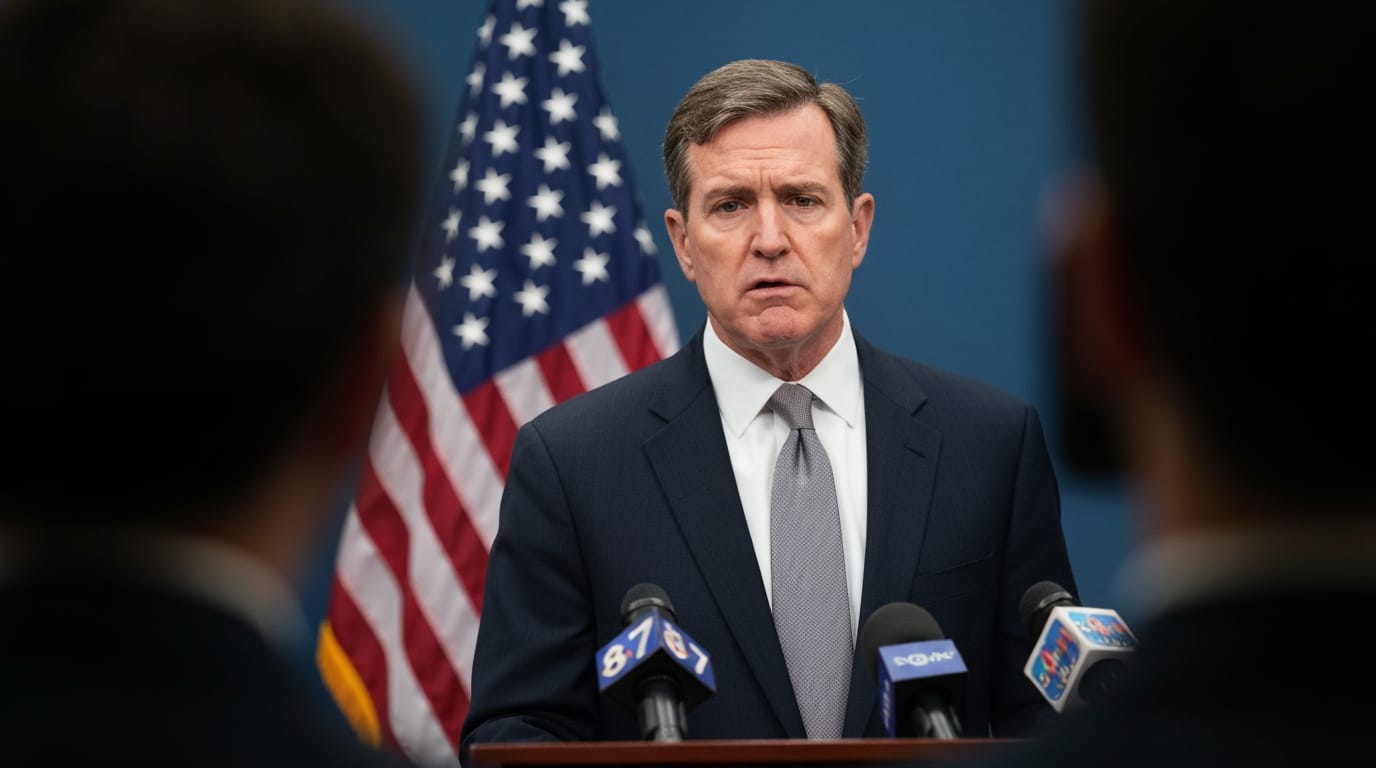
ISLAMABAD, Pakistan – Hopes for a diplomatic breakthrough in the escalating tensions between the United States and Iran were dashed early Sunday as 21 hours of marathon negotiations in Pakistan's capital concluded without an agreement. U.S. Vice President JD Vance announced the failure of talks, citing Iran's refusal to provide an "affirmative commitment" to abandon its pursuit of nuclear weapons, a core demand from Washington. The impasse leaves a "final and best offer" on the table from the U.S. and signals a precarious path forward for a region already grappling with a weeks-long conflict.
The high-level discussions, the most direct in-person engagement between Washington and Tehran since Iran's 1979 Islamic Revolution, were held amidst a fragile two-week ceasefire in a conflict that has claimed thousands of lives across Iran, Lebanon, and Israel. Pakistan mediated the intense talks, which involved key U.S. and Iranian officials, including Vice President Vance, Special Envoy Steve Witkoff, and Jared Kushner for the American side, and Iranian Parliamentary Speaker Mohammad Bagher Ghalibaf and Foreign Minister Abbas Araghchi for Iran. The lack of resolution underscores the deep mistrust and fundamental disagreements that continue to plague relations between the two long-standing adversaries.
Nuclear Ambitions at the Heart of the Stalemate
At the core of the failed negotiations was the United States' insistence on a definitive pledge from Tehran regarding its nuclear program. Vice President Vance explicitly stated that the U.S. requires an "affirmative commitment that they will not seek a nuclear weapon, and they will not seek the tools that would enable them to quickly achieve a nuclear weapon." According to Vance, the American delegation outlined clear "red lines" and "terms" that Iran ultimately chose not to accept. He characterized the outcome as "bad news for Iran much more than it's bad news for the United States of America."
This diplomatic standoff comes against a backdrop of increasing Iranian nuclear activity. The 2015 Joint Comprehensive Plan of Action (JCPOA), from which the United States unilaterally withdrew in 2018, aimed to constrain Iran's nuclear program in exchange for sanctions relief. However, in retaliation for the U.S. departure and subsequent sanctions, Iran has accelerated its uranium enrichment and limited international inspections, leading the International Atomic Energy Agency (IAEA) to report in May 2025 that Iran possessed over 400 kg of uranium enriched to 60% purity. This level of enrichment is a significant step closer to weapons-grade material and has fueled international alarm, highlighting the urgency of preventing a nuclearized Iran.
A Wider Conflict and Regional Tensions
The negotiations in Islamabad were an attempt to de-escalate a broader regional conflict that began on February 28, with the U.S. launching Operation Epic Fury. This ongoing "war" has seen thousands killed, with estimates including at least 3,000 in Iran, 2,020 in Lebanon, and 23 in Israel. The humanitarian toll and widespread damage to infrastructure across half a dozen Middle Eastern countries underscore the gravity of the current geopolitical landscape.
A significant point of contention beyond the nuclear issue involves the Strait of Hormuz, a critical global shipping lane. The U.S. military reported that two destroyers transited the Strait and began mine-clearing operations, a move characterized as a first since the war began, to ensure the waterway is "fully clear of sea mines previously laid by Iran's Islamic Revolutionary Guards Corps." Iran's state media, however, denied the joint military command's assertion regarding the mines. Iran's proposals for a resolution included gaining control over the Strait of Hormuz, alongside demands for compensation for damages from U.S.-Israeli strikes and the release of frozen Iranian assets.
U.S. President Donald Trump, who was in constant communication with Vice President Vance throughout the 21-hour talks, downplayed the significance of a deal's outcome. "We will see what happens… we win regardless. We have defeated them militarily," Trump stated, asserting that U.S. forces were "sweeping the Strait." This stance signals a continued willingness for robust military action despite the diplomatic efforts.
A Difficult Diplomatic History and Uncertain Future
The Islamabad talks represent the latest chapter in a long and often contentious history of U.S.-Iran relations, marked by periods of intense hostility punctuated by fitful diplomatic overtures. Negotiations for a nuclear peace agreement between the two nations technically began in April 2025, following a letter from President Trump to Supreme Leader Ali Khamenei, which set a two-month deadline for an agreement. Subsequent rounds of talks took place in various locations, including Oman, Rome, and Geneva, before the current round in Islamabad.
Despite the intensive nature of the recent discussions, the inherent "deep distrust" expressed by Iranian Foreign Minister Araghchi prior to the talks proved to be an insurmountable barrier. While the U.S. presented what Vance described as its "final and best offer," Iran's Fars news agency indicated that progress towards a deal hinged on Washington changing its "unreasonable demands" and avoiding "excessive demands and unlawful requests." This highlights the fundamental chasm between the two sides' expectations and objectives.
The failure to secure an agreement leaves the region in a state of heightened uncertainty. With a "final offer" now on the table, the ball appears to be in Tehran's court, but the immediate prospects for a diplomatic resolution remain dim. The return of U.S. and Iranian delegations from Islamabad without a clear path forward risks exacerbating the existing conflict and further destabilizing an already volatile Middle East. The international community now watches to see how this critical geopolitical standoff will evolve.


