Historic Alliance Under Strain: Zelenskyy's Honor in Jeopardy Amid Fraying Polish Sympathy
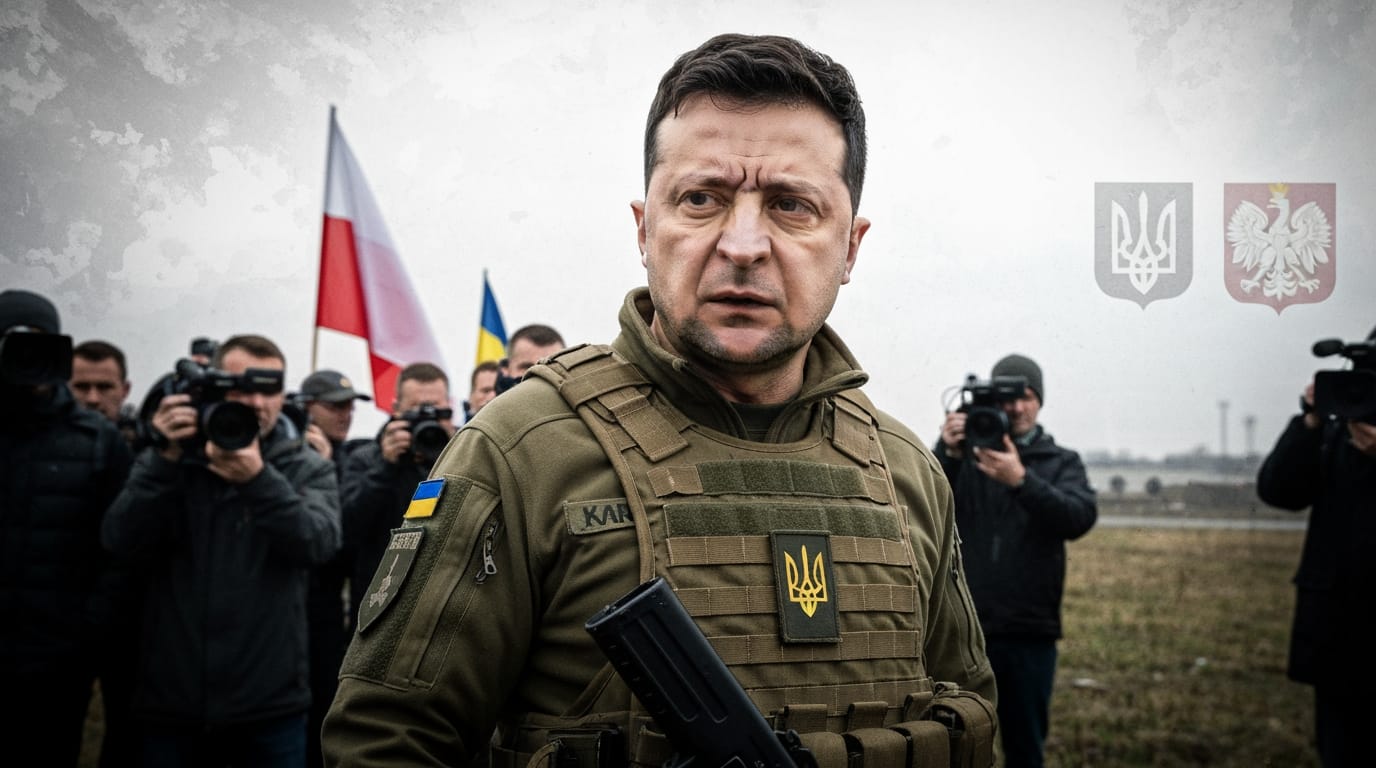
A significant rift has emerged between Ukraine and its steadfast ally, Poland, raising questions about the enduring strength of their wartime partnership. The recent proposal by Polish President Karol Nawrocki to strip Ukrainian President Volodymyr Zelenskyy of Poland's highest state distinction, the Order of the White Eagle, marks a dramatic escalation in tensions that have been simmering for months. This move, triggered by a Ukrainian decree honoring a military unit with a controversial historical name, underscores a complex interplay of historical grievances, economic disputes, and shifting public sentiment that threatens to redefine the once unshakeable bond between the two nations.
The Honor in Question: A Historical Divide Reopens
The immediate catalyst for the current diplomatic crisis arrived in late May 2026, when President Zelenskyy signed a decree bestowing the honorary title "Heroes of the UPA" upon the Northern Special Operations Center of the Ukrainian Special Operations Forces. This decision ignited outrage across Poland due to the deeply contentious legacy of the Ukrainian Insurgent Army (UPA). While in Ukraine the UPA is often viewed as a nationalist force that fought for independence against Soviet and Nazi rule, in Poland it is primarily associated with the Volhynia massacres. These horrific killings, which took place from 1943 to 1945, saw an estimated 100,000 Poles massacred by Ukrainian nationalists, an event recognized by the Polish parliament as genocide.
President Nawrocki, upon hearing of the decree, vehemently criticized the glorification of the UPA, arguing that it provided "ample oxygen for disinformation" to Russia and that the "European family cannot glorify bandits and murderers who killed women and children, Poles." He publicly announced his intention to propose to the Chapter of the Order of the White Eagle, an advisory council overseeing the award, that Zelenskyy's honor be revoked. Zelenskyy had received the Order of the White Eagle in 2023 from former Polish President Andrzej Duda, in recognition of his contributions to bilateral relations, democracy, peace, and security in Europe. The Ukrainian Foreign Ministry attempted to de-escalate the situation, emphasizing that the recognition was aimed at honoring resistance against Soviet domination and was not directed against Poland. However, the move was widely condemned across the Polish political spectrum, highlighting the enduring sensitivity of historical memory in the region.
The Grain of Discord: Economic Tensions Erode Trust
Beyond the historical reckoning, a protracted dispute over Ukrainian grain imports has significantly strained Polish-Ukrainian relations. Poland, alongside other Eastern European Union members, implemented a ban on Ukrainian agricultural products, citing concerns that an influx of cheaper Ukrainian grain was depressing local prices and harming Polish farmers' livelihoods. This protectionist measure, initially supported by the EU, became a point of major contention when the EU decided to lift the restrictions, prompting Poland to unilaterally extend its ban.
The situation escalated in September 2023 when Ukraine filed a complaint against Poland, Hungary, and Slovakia with the World Trade Organization (WTO). At the United Nations General Assembly, President Zelenskyy indirectly criticized these allies, suggesting that some European countries were "playing out solidarity in a political theater" and inadvertently assisting Moscow. Polish leaders reacted strongly to these remarks, with Prime Minister Mateusz Morawiecki threatening to expand the ban to include more Ukrainian products and even stating that Poland was "no longer transferring weapons to Ukraine" because it was focusing on arming itself. While subsequent clarifications indicated that the transit of arms from other countries through Poland would continue, the rhetoric underscored the depth of the disagreement. The grain dispute, fueled by pre-election domestic politics in Poland and the need to secure votes from farmers, revealed a significant economic fault line within the strategic partnership.
Shifting Tides of Sympathy: A Fading "Honeymoon"
The initial outpouring of solidarity and support from Poland following Russia's full-scale invasion of Ukraine in 2022 was exceptional. Poland provided substantial military and humanitarian aid, welcomed millions of Ukrainian refugees, and became a crucial logistical hub for Western assistance to Kyiv. However, this "honeymoon" phase has steadily receded. Surveys conducted in Poland from late 2024 into early 2025 reveal a noticeable decline in public support for continued military and refugee assistance to Ukraine. The proportion of Poles backing military aid dropped from 54% to 49% over 2024, and negative attitudes toward Ukrainians in Poland saw an increase, particularly among younger demographics.
Analysts attribute this decline to several factors, including "solidarity fatigue" after years of conflict, rising inflation, and the energy crisis impacting European households. Furthermore, the increasing influence of far-right parties in Poland, which often advocate for prioritizing national interests, has contributed to a more critical public discourse surrounding aid to Ukraine. The financial commitment from Poland also saw a significant reduction, with military and humanitarian aid reportedly halved in 2023 and further decreased in 2024 and 2025 under successive Polish governments. This shift suggests that while the strategic imperative to support Ukraine against Russian aggression remains, the relationship has evolved from one driven purely by empathy to one increasingly influenced by pragmatic calculations and domestic pressures.
Navigating a Complex Alliance: Strategic Imperatives vs. Domestic Pressures
The current strains place both Kyiv and Warsaw in a precarious position. For Ukraine, Poland remains an indispensable partner for military aid transit, logistical support, and political advocacy within NATO and the European Union. For Poland, a strong, independent Ukraine acts as a vital buffer against Russian expansionism, a strategic reality that has not changed despite the recent disagreements. Both nations share a common threat in Russia, and Moscow stands to benefit the most from any division between them.
Polish Prime Minister Donald Tusk has acknowledged the "crisis of trust" created by the historical dispute, urging Ukraine to take Polish concerns seriously. He highlighted that while he understands Ukraine's desire to honor those who resisted Soviet rule, Kyiv must be aware of the "dark legacy of the UPA" for Poles, cautioning that if these issues are not addressed, relations could become "hard business" rather than being governed by empathy. This sentiment underscores the challenge of balancing wartime unity with deeply rooted historical narratives and contemporary economic realities. The future of this crucial bilateral relationship hinges on the ability of both leaderships to navigate these complex layers of shared history, economic competition, and strategic necessity with delicate diplomacy and mutual understanding.
The proposed revocation of Zelenskyy's Order of the White Eagle, coupled with the persistent grain dispute and waning public enthusiasm, represents a critical juncture for Polish-Ukrainian relations. What began as an exemplary demonstration of solidarity against aggression is now being tested by historical memory and economic self-interest. While the strategic logic binding the two nations remains strong, the emotional bonds that once defined their alliance are undeniably under pressure, demanding careful stewardship to prevent further erosion and ensure a united front against common adversaries.


