Historic Amsterdam Church Engulfed in Flames Amidst Violent New Year's Eve Chaos
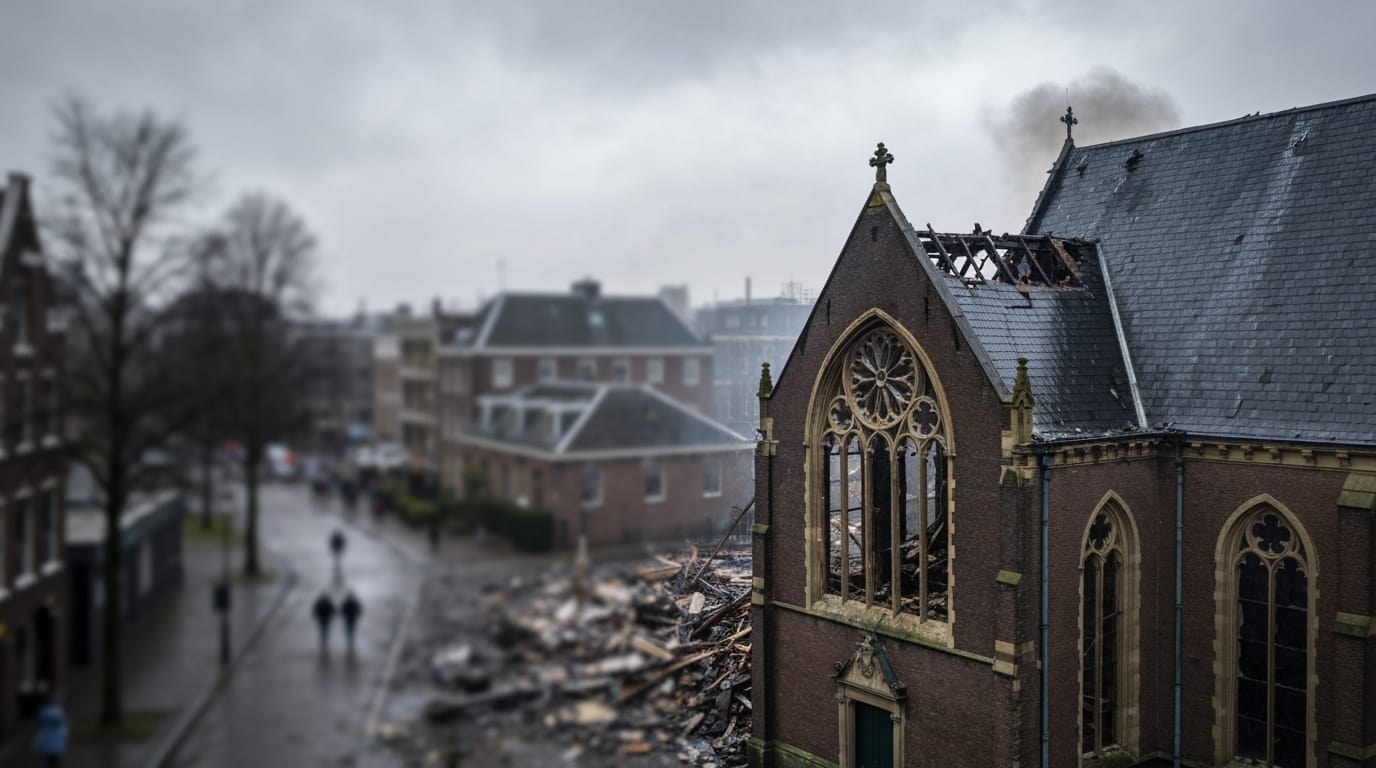
AMSTERDAM – A historic 19th-century church, the iconic Vondelkerk, was largely destroyed by a massive fire in the early hours of New Year's Day, casting a pall over celebrations already marred by widespread violence and two fatalities from fireworks across the Netherlands. The blaze, which erupted shortly after midnight, consumed the neo-Gothic landmark, sending its distinctive 50-meter (164-foot) spire crashing down and leaving behind a charred shell in a scene authorities initially deemed "no longer salvageable."
The Blaze and Immediate Aftermath
The inferno at the Vondelkerk, situated adjacent to Amsterdam's renowned Vondelpark, began around 12:45 a.m. local time on Thursday, January 1, rapidly escalating into a major regional emergency. Flames were seen engulfing the church's spire, with dramatic images circulating online showing the historic structure consumed by fire and debris falling away. Firefighters battled the intense blaze for approximately ten hours, finally bringing it under control by 11 a.m. Despite their extensive efforts, the church's 164-foot neo-Gothic tower collapsed, and its roof suffered severe damage.
The intensity of the fire prompted the evacuation of homes in the immediate vicinity, with officials expressing concern that the entire structure might collapse. While initial reports from Amsterdam authorities suggested the main structure might remain intact, later assessments indicated that the church's characteristic appearance was lost, and the building was considered beyond saving. Fortunately, no casualties were reported directly from the church fire. Amsterdam Mayor Femke Halsema described the incident as "a very intense and terrible fire in this monumental church," with authorities' primary concern being the safety and homes of nearby residents. The fire also caused power outages to nearly 100 neighboring residences.
A Landmark Lost: History and Significance
The Vondelkerk, constructed between 1870 and 1880 and first opened in 1872, holds significant historical and architectural value for Amsterdam. Designed by the renowned architect Pierre Cuypers, who also envisioned the Rijksmuseum and Amsterdam Central Station, the church was a prominent example of neo-Gothic architecture. For nearly a century, it served as a Roman Catholic parish before being deconsecrated in 1977. In recent decades, the Vondelkerk had transitioned into a popular venue for secular events, including conferences and concerts, becoming a well-known tourist attraction overlooking Vondelpark.
This was not the first time the Vondelkerk had faced destruction by fire; a previous blaze in 1904 led to the loss of its original tower. The community now grapples with the loss of a building that was not only a spiritual site for many years but also a vibrant cultural hub and an integral part of the city's architectural heritage. The destruction of such a landmark represents a profound cultural setback for Amsterdam.
A Night of Unrest: Broader Context of New Year's Eve
The devastating church fire unfolded against a backdrop of what Dutch authorities described as an "unsettled" and "unprecedented" New Year's Eve across the Netherlands. The night was marked by widespread violence targeting emergency services and significant fireworks-related incidents.
Nine Kooiman, head of the Dutch Police Union, reported an "unprecedented amount of violence against police and emergency services" nationwide, stating she was personally pelted with fireworks and other explosives while on duty in Amsterdam. Emergency services were overwhelmed, leading to a rare country-wide mobile phone alert urging citizens not to call unless lives were at risk. Reports of attacks on police and firefighters were widespread, including instances where petrol bombs were thrown at officers in Breda.
Tragically, two individuals, a 17-year-old boy and a 38-year-old man, died in separate fireworks accidents across the country. Additionally, three others sustained serious injuries. Eye hospitals also saw a surge in patients, with the eye hospital in Rotterdam treating 14 individuals, including 10 minors, for eye injuries, two of whom required surgery.
This New Year's Eve was particularly volatile as it marked the final year before an expected nationwide ban on unofficial consumer fireworks was set to take effect. Despite designated firework-free zones in some areas, their effectiveness appeared limited, with loud bangs reported well into the early morning in places like The Hague. The Dutch Pyrotechnics Association reported a record €129 million spent on fireworks by revelers in anticipation of the ban.
Investigation and Uncertain Future
The precise cause of the Vondelkerk fire remains unknown and is currently under investigation by Amsterdam police and fire departments. While the official cause has not been determined, local media reports indicate suspicion that fireworks may have sparked the blaze, a possibility given the night's context of widespread fireworks use and related incidents.
The destruction of the Vondelkerk presents a significant challenge for the city. Its previous restoration after the 1904 fire demonstrates a precedent for rebuilding, but the extent of the current damage raises questions about the feasibility and timeline for its recovery. The loss of such a prominent historical and cultural asset will undoubtedly prompt discussions about preservation, urban safety, and the future of community landmarks in a rapidly changing environment. The ongoing investigation will be crucial in determining not only the cause but also informing future preventative measures for similar cherished buildings.
Conclusion
The New Year's Day fire that gutted Amsterdam's Vondelkerk serves as a stark emblem of a turbulent ushering in of the new year for the Netherlands. The loss of a beloved 19th-century landmark, a structure that had witnessed over 150 years of the city's history, resonates deeply within the community. Its destruction, alongside the broader incidents of violence and fireworks-related casualties, underscores a night of profound unrest and challenges to public order. As investigations continue into the fire's origin, the city of Amsterdam faces the dual tasks of addressing the immediate aftermath of a night of chaos and contemplating the future of a cherished historical monument now reduced to ruins.


