Historic Voter Surge: Bengal and Tamil Nadu Witness Record Turnout in Assembly Elections
The search results confirm that the Assembly elections in West Bengal and Tamil Nadu, held on April 23, 2026, witnessed record-breaking voter turnouts. Chief Election Commissioner Gyanesh Kumar has explicitly stated that both states recorded their "highest-ever polling percentage since Independence."
For West Bengal, the Phase 1 polling registered a provisional figure of 91.78% to 91.91% across 152 constituencies. Some districts within West Bengal recorded even higher turnouts, with Dakshin Dinajpur at 94.85%, Cooch Behar at 94.54%, and Birbhum at 93.70%. This significantly surpasses its previous high of 84.72% in 2011. Female turnout in West Bengal reached 92.69%, higher than male turnout at 90.92%.
For Tamil Nadu, the overall voter turnout was provisionally reported around 84.69% to 85.15% for all 234 constituencies. This figure comfortably exceeds its previous highest of 78.29% set in the 2011 Assembly elections. In Tamil Nadu, women also showed strong participation at 85.76%, compared to men at 83.57%.
Several factors are cited for this unprecedented participation. The Special Intensive Revision (SIR) of electoral rolls, which involved deleting a significant number of names, is believed to have contributed to higher percentage turnouts by reducing the electorate base. While it reduced the overall number of electors, it resulted in a higher percentage of the remaining, seemingly more engaged, electorate casting their votes. Political observers also point to intense electoral competition, strong anti-incumbency sentiments in some areas, and the entry of new political players, like actor-politician Vijay's Tamilaga Vettri Kazhagam (TVK) in Tamil Nadu, as energizing the electorate. The peaceful conduct of elections, facilitated by tight security and vigilant electoral management, also played a role. The Election Commission's efforts, including live webcasting from all polling stations and voter-friendly initiatives, were also highlighted.
The high turnout is being interpreted differently by various political parties, with both incumbents and challengers claiming it signals a mandate in their favor. Analysts suggest that while high turnout is significant, its impact on electoral outcomes is complex and depends on factors like gender, youth participation, and regional patterns.
I have enough information to write the article.
Historic Voter Surge: Bengal and Tamil Nadu Witness Record Turnout in Assembly Elections
CHENNAI, India – Voters in the Indian states of West Bengal and Tamil Nadu have redefined democratic participation, flocking to polling stations in unprecedented numbers for the Assembly elections held on April 23, 2026. Both states recorded their highest-ever voter turnouts since India's independence, a development lauded by Chief Election Commissioner Gyanesh Kumar as a powerful affirmation of the nation’s democratic spirit. This remarkable surge in electoral engagement has sparked widespread analysis regarding its underlying causes and potential implications for the political landscape.
A Democratic Deluge
The Election Commission of India (ECI) reported staggering figures as the polls concluded. West Bengal, which went to elections in two phases, saw an exceptional 91.78% to 91.91% turnout in its first phase across 152 constituencies. This figure not only far surpasses the state's 2021 Assembly election turnout of 82.30% but also eclipses its previous highest of 84.72% recorded in 2011. Similarly, Tamil Nadu achieved a historic 84.69% to 85.15% turnout across all 234 constituencies, comfortably exceeding its 2011 record of 78.29% and the 73.6% recorded in 2021. The Chief Election Commissioner, Gyanesh Kumar, praised the voters, emphasizing that these percentages mark the "highest-ever polling percentage since Independence" for both states.
Across both states, several districts reported turnouts exceeding 90%. In West Bengal, Dakshin Dinajpur led with 94.85%, followed by Cooch Behar at 94.54%, and Birbhum at 93.70%. Tamil Nadu also witnessed districts like Karur (92.48%), Salem (90.42%), Dharmapuri (90.02%), Erode (89.97%), and Namakkal (89.63%) recording exceptionally high participation. A notable trend in both states was the higher participation of women voters, with female turnout reaching 92.69% in West Bengal and 85.76% in Tamil Nadu, surpassing their male counterparts.
Unpacking the Electoral Energy
The unprecedented voter turnout is attributed to a confluence of factors, central among them being the Special Intensive Revision (SIR) of electoral rolls. This exercise, which involved significant deletions of duplicate or non-existent entries, effectively streamlined the voter base, leading to a higher percentage of turnout among the revised electorate. While the SIR led to a reduction in the total number of electors, the remaining voters appeared highly motivated to cast their ballots.
Beyond procedural changes, the highly competitive political environment in both states served as a powerful catalyst. In West Bengal, the electoral battle was keenly contested between the incumbent Trinamool Congress (TMC) and the Bharatiya Janata Party (BJP), generating intense public interest and mobilization. Similarly, in Tamil Nadu, the ruling Dravida Munnetra Kazhagam (DMK)-led Secular Progressive Alliance faced a strong challenge from the All India Anna Dravida Munnetra Kazhagam (AIADMK)-led National Democratic Alliance, with the entry of actor-politician Vijay's Tamilaga Vettri Kazhagam (TVK) adding another dimension to the contest. Political analysts suggest that strong anti-incumbency sentiments in some regions, coupled with a renewed sense of urgency among voters, contributed significantly to the increased participation. The Election Commission's concerted efforts to ensure free, fair, and peaceful polling, including the deployment of central forces and live webcasting from all polling stations, also fostered a conducive environment for voter participation.
Battleground Bengal and Tamil Nadu
The high voter turnout has become a focal point of political interpretation, with both ruling parties and opposition factions claiming the robust participation as a mandate in their favor. In West Bengal, both the TMC and BJP have attempted to decode the surge, each asserting that the numbers reflect public support for their respective agendas. The incumbent Chief Minister Mamata Banerjee's Trinamool Congress is seeking a fourth consecutive term, while the BJP aims to build on its strong performance in the 2021 elections, where it emerged as the principal challenger.
In Tamil Nadu, the Dravida Munnetra Kazhagam, under the leadership of Chief Minister M.K. Stalin, is seeking re-election. The AIADMK, its traditional rival, is striving to regain power. The presence of the newly formed Tamilaga Vettri Kazhagam further fragmented the electoral landscape, making the outcome less predictable and potentially driving up interest. The heightened electoral stakes in both states meant that every vote was perceived as crucial, motivating citizens to exercise their franchise.
The Human Element: Voices from the Booths
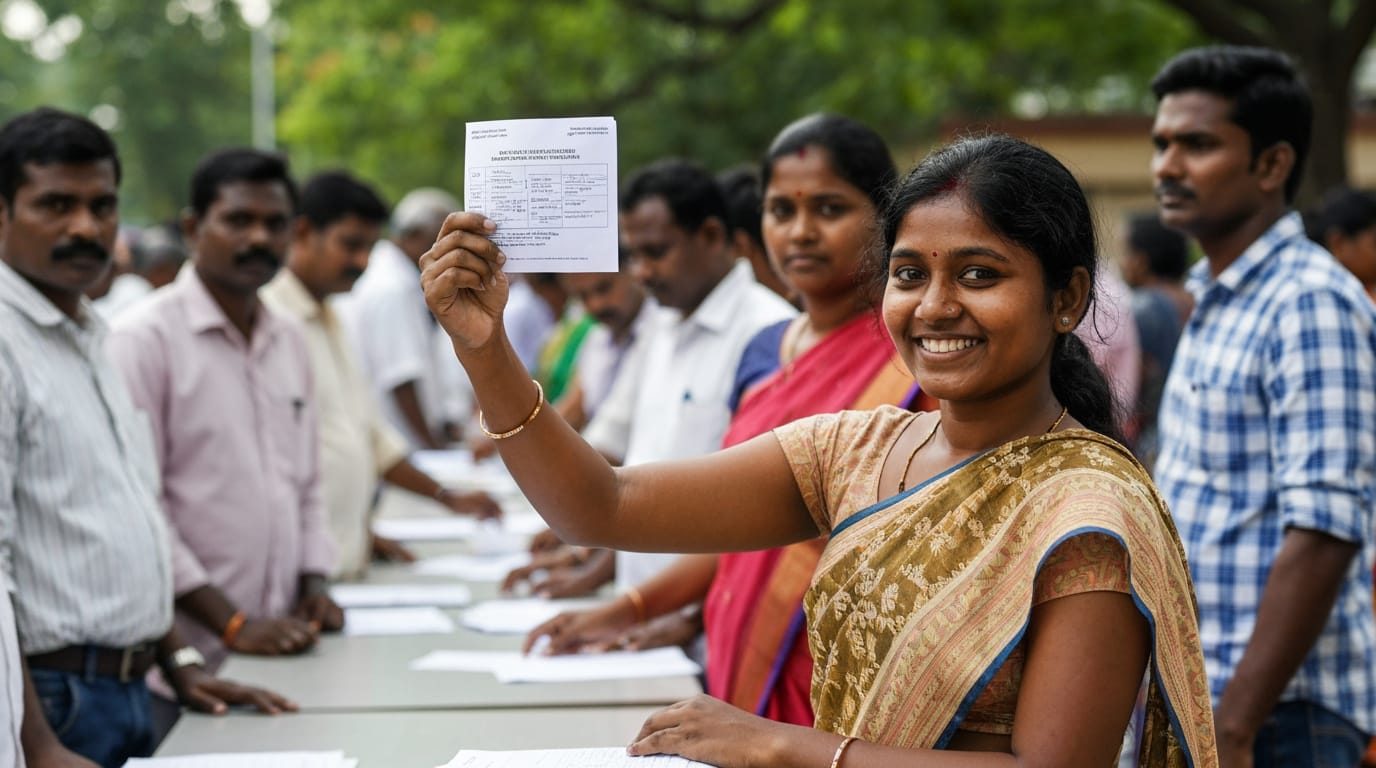
The scenes at polling stations across West Bengal and Tamil Nadu painted a vibrant picture of democratic enthusiasm. Long queues formed even before voting officially began at 7:00 AM, with citizens eager to cast their ballots. Many first-time voters, alongside senior citizens and individuals with disabilities, participated actively, facilitated by voter-friendly initiatives by the ECI, such as providing wheelchairs and transportation. The energetic participation of young voters, particularly those in the 18-24 age group in West Bengal (with a 93.90% turnout), highlighted a growing civic consciousness and an ardent desire to influence political outcomes. Despite isolated incidents of minor disruptions, the overall polling process remained largely peaceful, a testament to effective security arrangements and voter adherence to democratic norms.
Conclusion: A Stronger Democratic Pulse
The record voter turnouts in West Bengal and Tamil Nadu signify a robust and engaged electorate, underscoring the enduring vitality of India's democratic process. This surge in participation reflects not only the immediate political dynamics but also a deeper public commitment to electoral politics. While the ultimate impact on election results remains to be seen, with counting scheduled for May 4, 2026, the sheer scale of voter engagement sends a clear message: citizens are actively exercising their right and duty to shape the governance of their states. This historic electoral exercise will undoubtedly serve as a crucial point of reference for future elections, highlighting the importance of every vote in the world's largest democracy.