Thai Opposition Faces Historic Trial Over Bid to Reform Royal Defamation Law
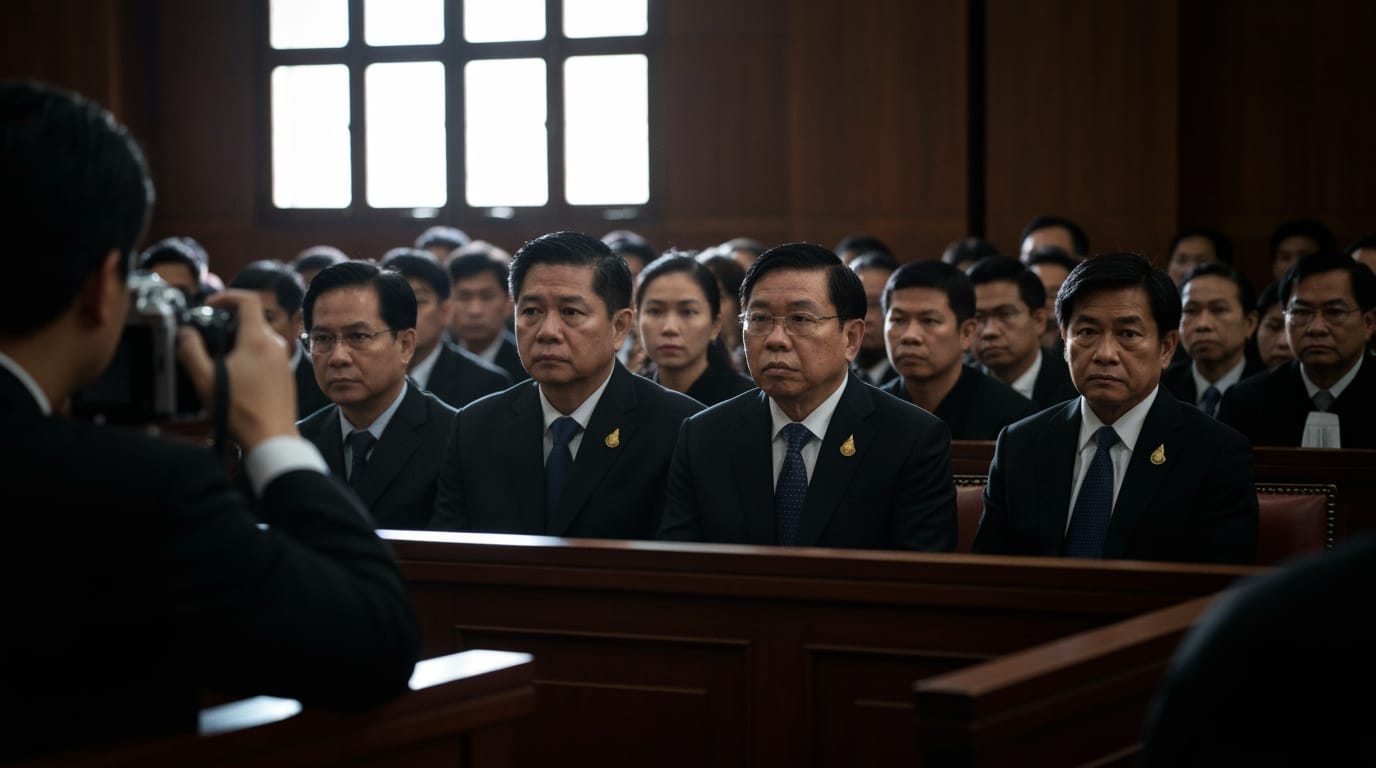
BANGKOK – A legal battle with profound implications for Thailand’s political landscape is set to commence as 44 current and former opposition lawmakers face trial for their attempt to amend the nation’s stringent royal defamation law. The case, which could result in lifetime political bans for those convicted, underscores the deep-seated tensions between the country's powerful conservative establishment and a burgeoning pro-democracy movement pushing for institutional reform. The proceedings, accepted by the Supreme Court, are scheduled to begin on June 30, 2026, marking a critical juncture in the ongoing struggle over free expression and the role of the monarchy in Thai society.
The charges stem from the lawmakers' involvement in a campaign by the now-dissolved Move Forward Party (MFP) to reform Article 112 of the Criminal Code, commonly known as the lèse-majesté law. The Constitutional Court previously ruled that the party's advocacy for amending this law constituted an attempt to overthrow the constitutional monarchy, leading to the MFP's dissolution and a ten-year political ban for its executive members, including former leader Pita Limjaroenrat. This latest trial extends the legal challenges to individual members who supported the reform initiative, raising concerns among human rights advocates about the shrinking space for political dissent in Thailand.
The Contentious Core: Thailand's Lèse-Majesté Law
At the heart of this legal saga is Article 112, a statute that has been a cornerstone of royal protection in Thailand for decades. The law stipulates that "Whoever defames, insults or threatens the King, the Queen, the Heir-apparent or the Regent, shall be punished with imprisonment of three to fifteen years." This broad wording has historically allowed for wide interpretation, leading to its application in cases ranging from online commentary and satirical gestures to academic discussions and political speeches. Critics argue that the law is among the harshest of its kind globally, with penalties often compounded for multiple alleged offenses, resulting in exceptionally long prison sentences.
The historical enforcement of Article 112 has seen considerable fluctuation. While there was a de facto moratorium on its use for a period, prosecutions surged dramatically following widespread pro-democracy protests that began in 2020. These protests, largely led by young activists, openly challenged previously untouchable aspects of Thai politics, including the monarchy's role and the existence of the lèse-majesté law itself. The revival of Article 112 prosecutions has seen hundreds of individuals charged, including minors, with some receiving sentences extending to decades. For instance, in January 2024, a man was sentenced to 50 years for online comments, and in 2021, Anchan Preelerd received a 43-year sentence for sharing critical content on social media. These severe penalties underscore the high stakes involved for anyone perceived to be in violation of the law.
The Move Forward Party's Stand for Reform
The Move Forward Party emerged as a significant political force, particularly among younger and urban voters, by campaigning on a platform of structural reforms, including a pledge to amend Article 112. Their unprecedented success in the 2023 general election, where they secured the most parliamentary seats, signaled a growing public appetite for change. The party proposed amendments aimed at aligning the law with human rights standards, reducing penalties, and limiting who could file complaints to prevent its perceived abuse as a political tool. Despite their electoral victory, the MFP was blocked from forming a government by conservative, military-appointed senators, who cited the party's stance on lèse-majesté as a reason for denying them power.
The attempt to amend Article 112 was not seen by MFP as an act of subversion but as a legitimate legislative effort within a constitutional monarchy. Pita Limjaroenrat, the party's former leader, maintained that their aim was to protect Thailand's constitutional monarchy and find a political consensus. However, the Constitutional Court viewed these efforts differently. In January 2024, it explicitly ordered the MFP to cease all actions related to amending the royal defamation law, concluding that the campaign was an attempt to undermine the existing democratic regime with the King as the head of state. This ruling set the stage for the party's dissolution in August 2024, which the court justified by stating the campaign posed "a threat to the constitutional monarchy and national order."
Legal Crossroads: The Trial of the 44
The current trial involving 44 current and former lawmakers from the MFP and its successor, the People's Party, represents a direct continuation of these legal battles. The National Anti-Corruption Commission (NACC) initiated the ethics petition that the Supreme Court has now accepted, accusing the parliamentarians of violating their constitutional obligations by seeking to amend Section 112. Among the defendants are prominent figures, including People's Party leader Natthaphong Ruengpanyawut and deputy leader Sirikanya Tansakul.
Should they be found guilty, the consequences are severe: a lifetime ban from political office and ten years of voting disenfranchisement. This potential outcome highlights a recurring pattern in Thai politics where reform-oriented parties, after gaining popular support, face legal and judicial challenges that ultimately lead to their incapacitation or dissolution. The precedent set by the dissolution of the MFP's predecessor, the Future Forward Party, on different charges in 2020, further illustrates this trend. Critics argue that these legal mechanisms are wielded by the royalist establishment to neutralize political opponents and suppress calls for genuine democratic change, effectively weaponizing the judiciary.
Implications for Thailand's Political Future
The trial of these 44 opposition figures carries significant implications for Thailand's political stability and democratic development. It tests the boundaries of free speech, legislative action, and the role of the judiciary in a country long grappling with cycles of military coups, civilian governments, and social unrest. The ongoing legal challenges against reform-minded politicians and activists risk stifling parliamentary debate on crucial issues and discouraging future generations from engaging in political processes.
International human rights organizations have consistently expressed concern over Thailand's use of the lèse-majesté law, viewing it as a tool to suppress dissent and restrict fundamental freedoms. The impending trial will undoubtedly draw further international scrutiny, especially given the current global emphasis on democratic values and human rights. As the country approaches this critical legal confrontation, the outcome will not only determine the political fate of the individuals involved but also send a powerful message about the future direction of Thai democracy and the space available for challenging entrenched power structures. The persistent efforts by a significant segment of the population to bring about reform, juxtaposed with the firm stance of the establishment, suggests that the tensions surrounding Article 112 and the monarchy will continue to shape Thailand's complex political narrative for years to come.


