House Delivers Historic Rebuke, Votes to Limit Trump's War Powers in Iran
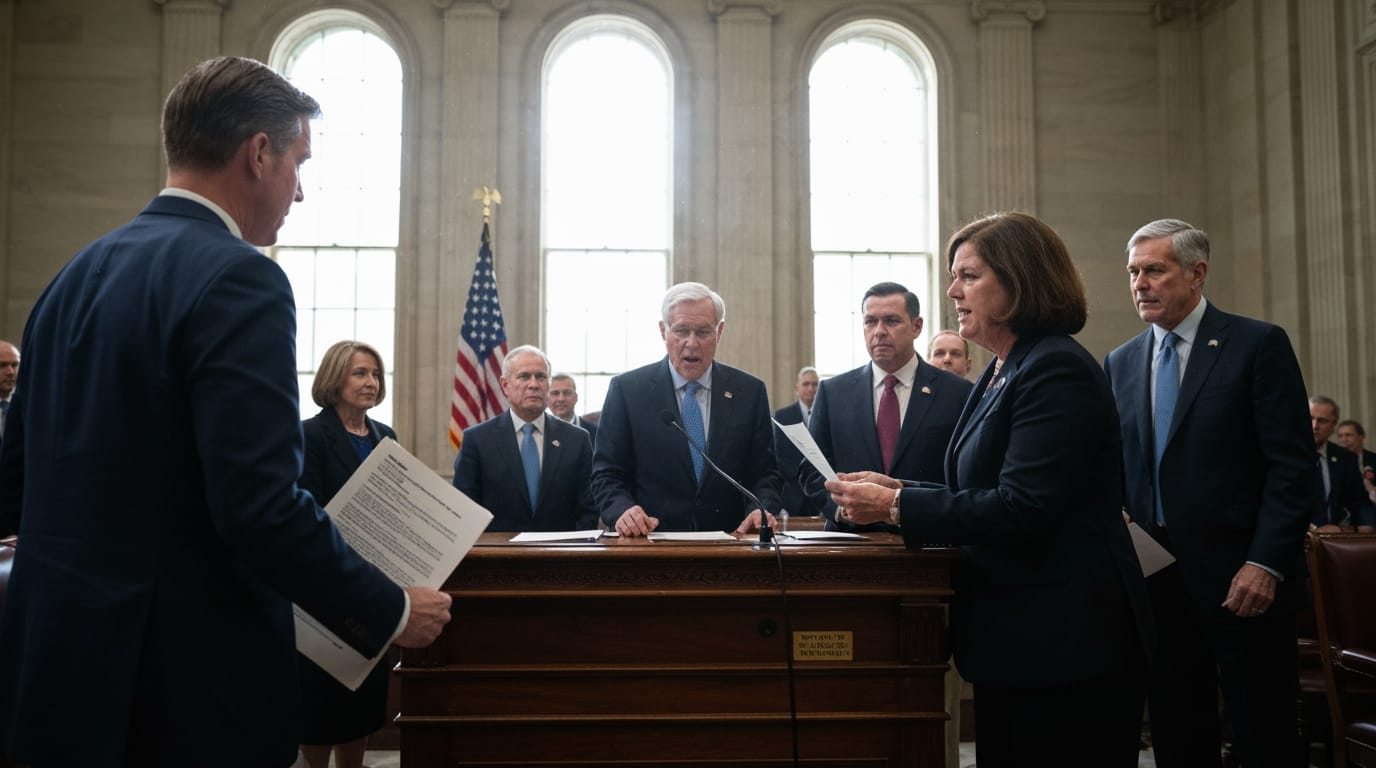
WASHINGTON D.C. – In a significant move on Wednesday, June 3, 2026, the U.S. House of Representatives passed a resolution aimed at curtailing President Donald Trump's authority to wage war against Iran. The vote, a striking 215-208, saw four Republicans cross party lines to join Democrats in a direct challenge to the President's unilateral military actions, underscoring escalating bipartisan concern over the three-month-long conflict. This resolution calls for the withdrawal of U.S. forces from hostilities in Iran unless specifically authorized by Congress, marking the first time this year such a measure has successfully cleared the House.
The vote arrives amidst growing frustration on Capitol Hill regarding the conflict, which commenced on February 28, 2026, without formal congressional approval. Lawmakers on both sides of the aisle have expressed unease over the constitutional implications of prolonged military engagement absent a declaration of war or specific authorization for the use of military force. While largely symbolic, the House's action sends a powerful message about the legislative branch's intent to reassert its constitutional prerogatives over war-making powers.
House Delivers Bipartisan Rebuke to White House
The resolution, introduced by Representative Gregory Meeks (D-N.Y.), the ranking member of the House Foreign Affairs Committee, passed with a narrow but decisive margin. The 215-208 tally included critical support from four Republican representatives: Thomas Massie of Kentucky, Brian Fitzpatrick of Pennsylvania, Warren Davidson of Ohio, and Tom Barrett of Michigan. Their defection from the party line provided the necessary votes for the resolution's passage, highlighting a rare moment of bipartisan unity on a contentious foreign policy issue.
This vote represents a significant shift from previous attempts this year, as similar resolutions had failed by slim margins or were even pulled from the floor by Republican leadership to avoid defeat. House Speaker Mike Johnson had previously canceled a scheduled vote in May, reportedly due to concerns that Republican absences might lead to its passage. However, renewed efforts and increasing pressure from constituents and within Congress ultimately led to this week's successful vote. Representative Fitzpatrick, one of the Republicans who voted in favor, reportedly stated that the 60-day mark imposed by the War Powers Act significantly influenced his decision, emphasizing the need to either follow or change the law.
Constitutional Battle: The War Powers Act at 90 Days
Central to the debate is the War Powers Resolution of 1973, a federal law enacted to ensure that both the Congress and the President are involved in decisions to send U.S. armed forces into hostilities. The Act mandates that a President must notify Congress within 48 hours of introducing U.S. forces into hostilities and generally prohibits armed forces from remaining in such conflicts for more than 60 days—with a possible 30-day extension for withdrawal—without a declaration of war or specific congressional authorization.
The military operation in Iran, dubbed "Operation Epic Fury" by the Trump administration, began on February 28, 2026, meaning it has now extended beyond the 90-day threshold. Critics argue that the administration has clearly violated the spirit, if not the letter, of the War Powers Act by continuing hostilities without seeking formal congressional approval. The White House, however, has maintained that the War Powers Act is unconstitutional and that the President, as Commander-in-Chief, possesses the inherent authority to conduct military operations necessary for national security. Furthermore, the administration has controversially argued that hostilities have been "terminated" or are "not a big deal" due to a temporary ceasefire initiated in April, even amidst reports of continued exchanges of fire and a naval blockade.
Shifting Sands in Congressional Support
The successful passage of the resolution in the House reflects a gradual but noticeable shift in congressional sentiment, particularly among some Republicans. While earlier attempts to rein in presidential war powers had faltered, the prolonged nature of the Iran conflict and its increasing costs appear to have eroded some of the initial unified support for the administration's policy. In May, the Senate also advanced a similar resolution in a procedural vote, with four Republican senators—Susan Collins of Maine, Lisa Murkowski of Alaska, Rand Paul of Kentucky, and Bill Cassidy of Louisiana—joining Democrats. Senator Cassidy notably cited concerns from his constituents and the administration's lack of clarity on the operation as reasons for his support.
Despite these legislative efforts, the path to legally binding restrictions on the President's actions remains arduous. The resolution passed by the House is a "concurrent resolution," meaning it does not require the President's signature to take effect and, crucially, does not carry the full force of law, even if it were to pass the Senate. The White House has already dismissed the House's vote, stating that such a resolution "will not reach the president's desk for signature" and that concurrent resolutions are constitutionally problematic. Should a version with legal authority pass both chambers, a presidential veto is considered highly likely, requiring a two-thirds majority in both the House and Senate to override—a threshold that neither chamber has yet demonstrated it can meet.
The War's Toll and Future Uncertainties
The conflict in Iran has extracted a heavy toll, with reports indicating over 3,400 deaths in Iran and the loss of at least 13 U.S. soldiers. The economic repercussions have also been felt domestically, with rising gasoline prices being a significant concern for many Americans. Representative Gregory Meeks highlighted these impacts, stating that "the people are tired of suffering because of his war of choice -- suffering at the gas pump, suffering at the supermarkets."
The House's vote, while not immediately ending the conflict, intensifies political pressure on the Trump administration to clarify its strategy and seek congressional input. It reflects a growing sentiment that Congress must reclaim its constitutional role in matters of war and peace. The debate over the Iran conflict continues to serve as a stark reminder of the enduring constitutional tension between the executive and legislative branches concerning military intervention. While the immediate legal impact of the resolution may be limited, its political weight signals a significant pushback against unilateral presidential action and calls for a more collaborative approach to foreign policy. The ultimate trajectory of U.S. involvement in Iran, and the balance of war powers, remains a subject of intense scrutiny and ongoing contestation.


