Hungarian Parliament Fortifies Presidential Post Amidst Heated Election Campaign
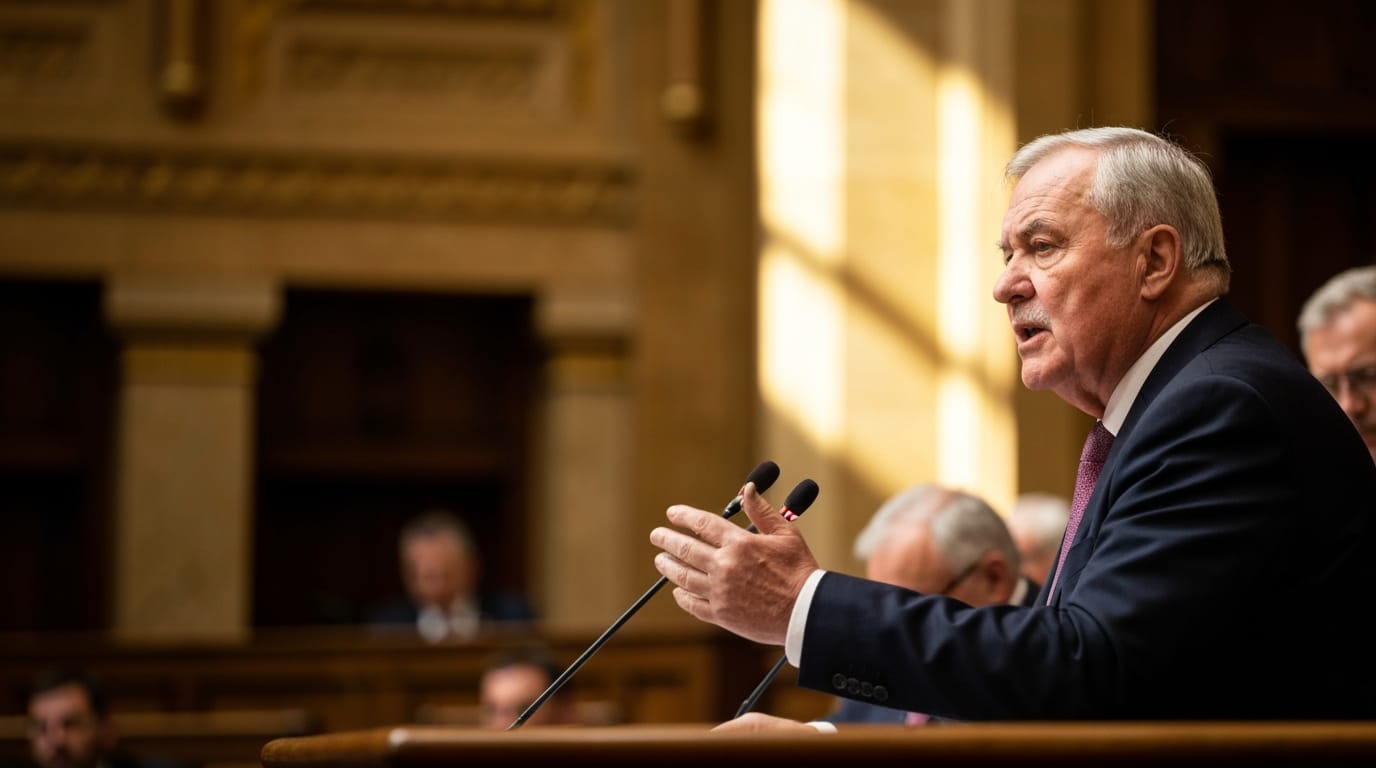
BUDAPEST – Hungary’s parliament, dominated by Prime Minister Viktor Orbán’s ruling Fidesz party, approved a controversial bill on Wednesday that significantly strengthens the protections afforded to the country’s president, making it substantially more difficult to remove the head of state from office. The legislative maneuver, occurring just four months before crucial national elections in April, has ignited a fierce debate, with critics from the opposition Tisza party condemning it as a cynical attempt to cement the government's influence and preempt potential political shifts.
The newly enacted legislation revises the process for declaring a president unable to perform their duties, a change that fundamentally alters the existing checks and balances within Hungary's political framework. Previously, a simple majority vote in parliament was sufficient to initiate such a declaration. Under the new law, however, any parliamentary decision to remove the president must now undergo review by the Constitutional Court, which gains the power to reject the measure entirely. This amendment, passed with 134 votes in favor, 49 against, and two abstentions, effectively grants the Constitutional Court the ultimate say in matters of presidential removal, requiring a two-thirds majority for any future alterations to these provisions.
Shifting the Balance of Power
The timing and nature of this bill are particularly noteworthy given the composition of the Constitutional Court and the broader political climate. The Constitutional Court is currently led by Péter Polt, a former chief prosecutor and a known ally of Prime Minister Orbán, who was appointed to his 12-year term earlier this year. This alignment raises concerns among opposition figures about the court's impartiality in reviewing any future attempts to remove a president appointed by the ruling party.
While the Hungarian presidency is largely considered a ceremonial role, the office is not devoid of strategic importance. The president, elected by parliament for a five-year term and eligible for one re-election, possesses key powers, including the ability to veto laws or refer them to the Constitutional Court for review. These powers, though seemingly limited, can serve as a significant check on the legislative agenda of the government, especially if the president chooses to exercise them against the ruling majority.
The incumbent president, Tamás Sulyok, assumed office in February 2024 following the resignation of his predecessor. Sulyok, himself a former head of the Constitutional Court, is widely regarded as an ally of Prime Minister Orbán, and his term is scheduled to run until 2030. Orbán's chief of staff, Gergely Gulyás, defended the new legislation by stating it addresses a "gap in [the president's] own legal status that could give rise to potential abuse," implying a need for greater protection of the presidential institution.
A Broader Pattern of Centralization
This latest legislative action is not an isolated incident but rather fits into a well-established pattern of power consolidation by Prime Minister Orbán and his Fidesz party since they returned to power in 2010. Over the past decade and a half, the Fidesz government has systematically implemented constitutional and legal changes that have significantly centralized control and reshaped Hungary's institutional landscape.
Prior amendments have included alterations to the electoral law, which critics argue favor the ruling party and diminish the competitiveness of elections. The judiciary has also seen its independence challenged through various reforms, such as the 14th constitutional amendment in April 2025, which introduced changes aimed at influencing the selection of the Prosecutor General and easing the path for government loyalists into judicial roles. Even academic research fell under greater governmental control with a bill signed by the president in 2019. Furthermore, the establishment of entities like the Sovereignty Protection Office, tasked with combating broadly defined "foreign influence," has been criticized for stifling civil society and independent media.
A significant earlier change occurred in 2011 with the adoption of Hungary's current constitution, which limited the Constitutional Court's power to annul laws passed by a two-thirds parliamentary majority. This historical context is crucial, as it underscores the long-term strategy of reducing checks on governmental power, thereby allowing the ruling party with its supermajority to enact legislation with minimal effective opposition. Critics contend that such systemic changes have eroded Hungary's democratic institutions and the rule of law.
Electoral Stakes and Opposition Response
The timing of this bill, coming just months before national elections, amplifies its political significance. The opposition Tisza party, led by Péter Magyar, has emerged as a formidable challenger to Fidesz, with recent polls indicating a double-digit lead among decided voters. Magyar has openly pledged to reverse Orbán's consolidation of power if his party secures an electoral victory.
The Tisza party responded sharply to the new presidential bill, describing it as "further proof" that the Orbán government is apprehensive about the upcoming elections and fears a potential loss of its majority. From the opposition's perspective, the legislation is a pre-emptive measure designed to insulate a Fidesz-aligned president, enabling them to potentially obstruct a future opposition-led government's legislative initiatives or delay critical appointments, even if Fidesz were to lose its parliamentary majority.
The implications of this move are far-reaching. By making it harder to remove a sitting president, particularly one aligned with the ruling party, the bill introduces a potential mechanism for continued influence even after a hypothetical change in government. A president with powers to refer laws to a constitutionally sympathetic court could significantly impede the agenda of a new administration. This dynamic could lead to prolonged political stalemate and further entrench the Fidesz party's legacy irrespective of electoral outcomes.
Conclusion
Hungary's recent parliamentary decision to reinforce the president's post represents a critical development in the country's ongoing political evolution. Passed by Orbán's Fidesz party just ahead of crucial elections, the bill fundamentally alters the mechanism for presidential removal, shifting significant power to a Constitutional Court headed by a government ally. While the government frames this as a necessary legal refinement, the opposition views it as a strategic move to safeguard Fidesz's influence and potentially undermine a future government. This legislative action underscores a broader trend of power centralization in Hungary, raising profound questions about the future of democratic governance, the rule of law, and the balance of power in the nation's political landscape. Its long-term effects will undoubtedly continue to shape Hungary's domestic and international standing, particularly as the upcoming elections loom large.


