Hungary's Lake Velence Faces Existential Crisis as Waters Recede to Historic Lows

GARDONY, Hungary – Lake Velence, Hungary's third-largest natural lake and a cherished recreational haven, is teetering on the brink of an unprecedented ecological collapse as its waters continue to recede to historic lows. The once-bustling beaches lie largely deserted, and the economic lifeblood of lakeside communities faces severe disruption, a stark testament to the dual pressures of climate change and decades of flawed water management practices. With water levels dropping to critical depths, experts warn of profound environmental and economic repercussions that could permanently alter the landscape and livelihood of the region.
The Vanishing Waters: A Lake in Distress
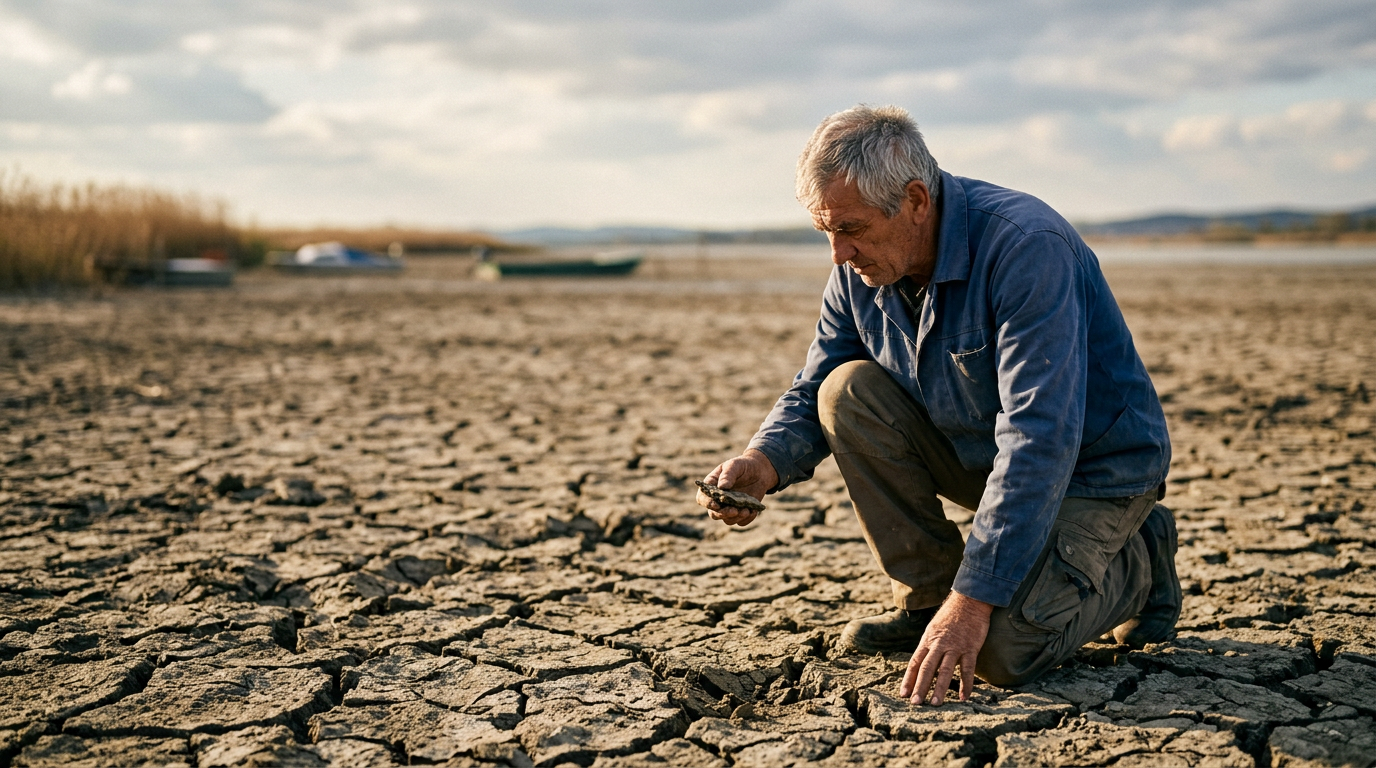
The visible signs of Lake Velence's crisis are undeniable and increasingly dramatic. Shallow inlets where children once played under sunshades have transformed into weed-covered patches of dry land, revealing cracked and muddied expanses where water once flowed. In late July 2026, measurements at Gardony registered a water level of just 41 centimeters (16 inches), marking the lowest point since record-keeping began in 1931. Forecasts suggest the lake's depth could further diminish to 30 centimeters by late summer, surpassing the previous record low of 53 centimeters set during the severe 2022 drought. This alarming decline has forced lakeside leisure companies to suspend sightseeing cruises, and the region's angling sector faces its worst year in decades. The potential for the lake to fragment into isolated pools, separated by dry land, looms as an urgent threat, prompting officials to consider emergency interventions.
Unraveling the Causes: Climate, Policy, and Human Footprint
The dire situation at Lake Velence is a complex interplay of natural and anthropogenic factors. Climate change stands as a primary driver, manifesting in recurring droughts that plague Central and Eastern Europe, including Hungary. These prolonged periods of minimal rainfall, coupled with increased evaporation during hotter summers, have severely impacted the lake's natural replenishment. Hungary has experienced significant rainfall deficits over recent years, with the country accumulating a year's worth of rainfall deficit over the past five years.
Beyond climate, decades of suboptimal water management policies are also heavily implicated. Environmental activists highlight a historical focus on draining water from the landscape rather than retaining it, including the conversion of wetlands for agricultural purposes. Hydrogeologists note Lake Velence's inherent vulnerability due to its shallowness and connection to local groundwater networks, explaining its historical tendency to dry out, as seen most recently in 1866. More recent human activities have exacerbated this vulnerability; a surge in new residents to the region has led to increased groundwater abstraction through wells dug for garden irrigation and swimming pools, further depleting the water sources that feed the lake.
A Ripple Effect: Ecological and Economic Consequences
The shrinking of Lake Velence carries profound implications for both its fragile ecosystem and the local economy. Environmentally, the low water levels place the lake's ecosystem in an extremely vulnerable state, with experts warning that an adverse weather event could trigger a complete collapse. The reduced volume of water, which becomes warmer and shallower, leads to a decrease in oxygen levels, posing a significant threat to aquatic life. Already, incidents of large-scale fish deaths due to oxygen deprivation have been reported, prompting considerations for salvage fishing operations to protect remaining populations. The lake is also a vital habitat for many water birds, whose survival is jeopardized by the continued shrinkage.
Economically, the impact on tourism, a cornerstone of the region's prosperity, is devastating. The deserted beaches and limitations on water activities like boating and swimming have led to a sharp decline in holidaymakers. Local businesses, many dependent on the summer tourist season, face severe hardship, with some contemplating relocation. While cyclists still traverse the 33-kilometer route around the lake, their activity alone cannot sustain an entire industry built around water-based recreation. The crisis underscores the interconnectedness of environmental health and economic stability in water-dependent regions.
Charting a Course Forward: Government Response and Sustainable Solutions
In response to the escalating crisis, the Hungarian government, under its new pro-EU administration, has prioritized the lake's restoration. A newly established Ministry of the Living Environment is leading efforts, recognizing the broader challenges posed by climate change and persistent droughts across Hungary.
Immediate actions include emergency dredging operations aimed at preserving the remaining water, preventing the lake from fragmenting into isolated pools, and protecting fish stocks. Officials are also considering creating ecological corridors by cutting through dry sections to facilitate wildlife movement between existing water bodies. For the longer term, the government has unveiled a 12-point action plan focusing on comprehensive water retention measures and new legislation. This strategy emphasizes retaining more winter and spring precipitation within the lake's catchment area, moving away from past policies that facilitated water drainage. The plan involves significant investments in water infrastructure, including the reconstruction of the Patka and Zamoly reservoirs, crucial for increasing water collection during rainy periods and feeding the lake.
However, certain proposed solutions have been ruled out. Replenishing the lake with karst water has been deemed unviable due to its minimal impact (estimated at only one centimeter of water level increase) and the potential strain on valuable drinking water reserves. Similarly, large-scale water transfers from the Danube River are not currently considered a realistic solution due to the extensive infrastructure required, potential evaporation losses from open canals, and the critical need to maintain Danube water levels for cooling the Paks Nuclear Power Plant. Experts also caution that artificial interventions, such as introducing water from external sources, could alter the ecological balance of the naturally alkaline lake. Instead, there is a growing consensus on the necessity for a fundamental shift in public attitudes toward water management, advocating for increased rainwater harvesting and more sustainable water consumption practices.
A Precarious Future
Lake Velence's plight serves as a microcosm of the global water crisis, intensified by a changing climate. While government plans and expert recommendations aim to mitigate the immediate threats and foster long-term resilience, the lake's future remains precarious. Without sustained rainfall and a fundamental shift towards integrated, sustainable water management that balances human needs with ecological imperatives, the iconic Lake Velence risks becoming a mere shadow of its former self, a stark reminder of humanity's impact on natural resources. The ongoing efforts represent a critical juncture for the region, determining whether this beloved Hungarian lake can endure the profound challenges of the 21st century.
Related Articles


Mounting Frustration Grips Russia as Economic Hardship and War's Toll Deepen
Moscow, Russia – A palpable shift in public sentiment is emerging across Russia, with growing frustration among citizens fueled by a confluence of economic pressures, increasing internet restrictions, and the undeniable...


Germany's Strategic Calculus: Ukraine Aid is an Investment in European Security, Not Charity
Berlin – The ongoing provision of substantial aid to Ukraine by Germany and its allies is increasingly being framed not as an act of altruism, but as a crucial investment in European security and stability. This...