India and Europe Forge Ambitious Path to Clean Energy Autonomy, Eyeing Diversified Supply Chains Beyond China
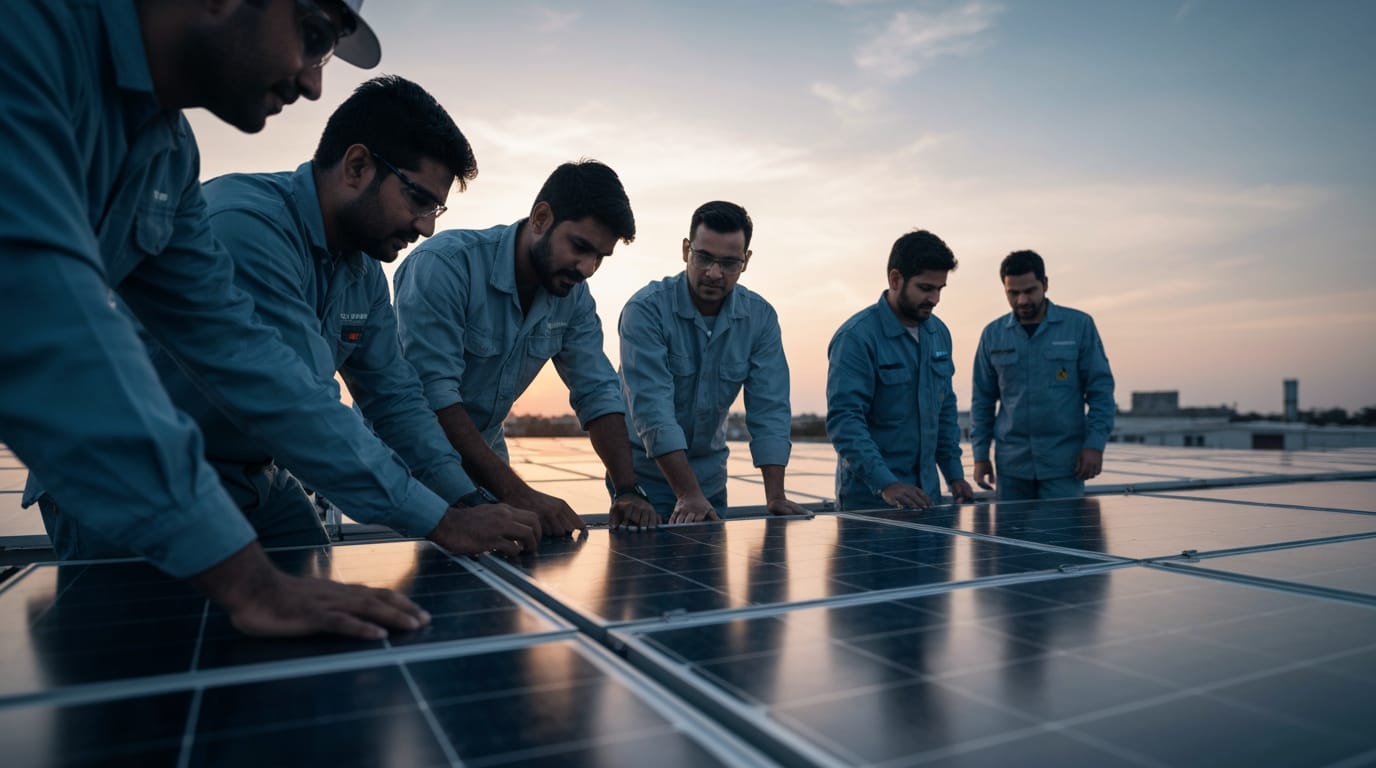
In a significant geopolitical and economic recalibration, India and Europe are intensifying efforts to construct resilient clean energy supply chains, aiming to reduce their substantial reliance on China. This strategic pivot is driven by concerns over supply chain vulnerabilities, economic security, and the urgent imperative to accelerate the global clean energy transition amidst a complex international landscape. The collaboration seeks to harness India's burgeoning manufacturing capabilities and Europe's advanced technological prowess and investment capacity, marking a potential paradigm shift in the global renewable energy ecosystem.
The Enduring Shadow: China's Dominance in Clean Energy Manufacturing
For years, China has solidified its position as the undisputed global leader in the manufacturing of critical clean energy technologies. The nation controls at least 60% of the world's manufacturing capacity for most mass-produced clean energy technologies, including solar photovoltaic (PV) systems, wind turbines, and batteries. For solar PV alone, China's market share is even more pronounced, dominating over 90% of the world's manufacturing capacity for components like polysilicon, wafers, cells, and modules. This dominance extends deeply into the critical raw materials sector, with China refining 90% of rare earth elements and 60-70% of lithium and cobalt, essential for batteries and other high-tech applications.
This overwhelming concentration of manufacturing and processing capacity creates significant strategic vulnerabilities for nations globally. The International Energy Agency (IEA) has highlighted that China's extensive control exposes other countries to supply chain shocks in key sectors. Both Europe and India have experienced the repercussions of this dependency, facing challenges ranging from price fluctuations to potential geopolitical leverage, underscoring the urgent need for diversification. For instance, 95% of solar panels installed in the European Union originate from China, and Chinese wind turbine manufacturers have captured a significant 40% of the Indian market.
India's Green Ascent: Aspiration to Global Manufacturing Hub
India is rapidly emerging as a formidable contender in the clean energy manufacturing space, driven by ambitious domestic targets and strategic policy interventions. The nation has set a target of achieving 500 GW of non-fossil fuel electricity capacity by 2030 and aims for net-zero emissions by 2070. This vision is underpinned by a robust push for domestic manufacturing across the renewable energy value chain.
A cornerstone of India's strategy is the Production Linked Incentive (PLI) scheme for high-efficiency solar PV manufacturing, which has significantly propelled the expansion of local capacities. By mid-2025, India's operational manufacturing capacity for solar modules reached approximately 120 GW, with solar cell capacity at around 29 GW, a sharp increase from near-zero domestic cell production just a few years prior. Major investments, such as approximately $15.5 billion in solar PV manufacturing and $2.7 billion in Advanced Chemistry Cell (ACC) battery manufacturing, are further solidifying India's position. Companies are building integrated manufacturing facilities from polysilicon and wafers to cells and panels, aiming for self-sufficiency and positioning India as a global exporter of renewable energy technologies. This rapid expansion is poised to reduce India's import dependence and stabilize costs, strengthening both its domestic energy security and its role in global clean energy supply chains.
Europe's Strategic Imperative: Securing the Green Transition
For Europe, the drive to diversify clean energy supply chains is deeply intertwined with its quest for energy security and strategic autonomy, especially accentuated by recent geopolitical turbulences. The REPowerEU plan, launched in response to the 2022 energy crisis, explicitly aims to diversify energy supplies and massively increase domestic clean energy production. The European Union's "Clean Industrial Deal" further outlines concrete actions to accelerate electrification, complete the internal energy market, and reduce reliance on imported fossil fuels, recognizing that decarbonization is now a matter of economic security and industrial competitiveness.
Europe is actively working to reduce its critical raw material dependencies through initiatives like the Critical Raw Materials Act. This legislation sets ambitious targets for 2030, aiming for 10% domestic extraction, 40% processing, and 25% recycling of critical raw materials, while also stipulating that no more than 65% of the EU's annual needs for any critical raw material should come from a single third country. These measures reflect a clear commitment to fostering a more resilient and geographically diverse supply chain for the continent's green transition.
Forging a New Path: Synergies, Challenges, and Pathways Forward
The convergence of India's manufacturing ambitions and Europe's strategic imperative creates a fertile ground for collaboration. Both entities share a common interest in building resilient, competitive, and diversified clean technology supply chains. Their aspirations are often complementary, with Europe's need for diversification in solar supply chains aligning well with India's goal of self-sufficiency and export potential in the sector.
Key areas identified for intensified cooperation include green hydrogen, critical minerals, and advanced manufacturing. India's burgeoning green hydrogen production capacity aligns with Europe's increasing demand, exemplified by initiatives like the clean hydrogen and low-carbon fuel corridor connecting India's green fuel production with Northwestern Europe via Rotterdam. Furthermore, collaboration on critical mineral processing and mining projects, potentially involving third countries like Australia and South Africa, could help secure essential inputs for both regions. European technology, expertise in grid integration, and financial instruments, combined with India's scale, manufacturing base, and human resources, present a powerful synergy.
However, the path to a de- الصينified clean energy supply chain is fraught with challenges. Significant investment is required to bridge technological gaps, develop robust infrastructure, and overcome regulatory hurdles. Competition from cheaper, state-subsidized Chinese products remains a persistent concern, making it difficult for nascent industries in India and Europe to scale up. India, for instance, faces bottlenecks in transmission infrastructure and energy storage, critical for integrating large volumes of renewable energy reliably into the grid.
To address these challenges, both sides are exploring mechanisms such as interoperable certification systems for low-carbon products, aligning public procurement standards to foster demand for sustainable technologies, and establishing industrial decarbonization corridors. Long-term off-take agreements, particularly in sectors like green hydrogen and low-carbon steel, could provide the necessary demand certainty to unlock substantial investments. European financial institutions also have a crucial role in de-risking projects through blended finance, guarantees, and currency-risk mitigation mechanisms, thereby lowering the cost of capital for Indian transition investments.
The endeavor by India and Europe to build a clean energy supply chain independent of China represents a monumental undertaking. It is a strategic move born out of shared vulnerabilities and a mutual vision for a sustainable and secure energy future. While significant obstacles remain, the collaborative efforts to leverage complementary strengths, innovate financing models, and foster robust industrial ecosystems hold the potential to reshape the global clean energy landscape, ushering in an era of diversified and resilient green growth.


