Laos Grapples with the Enduring Scars of a Secret War
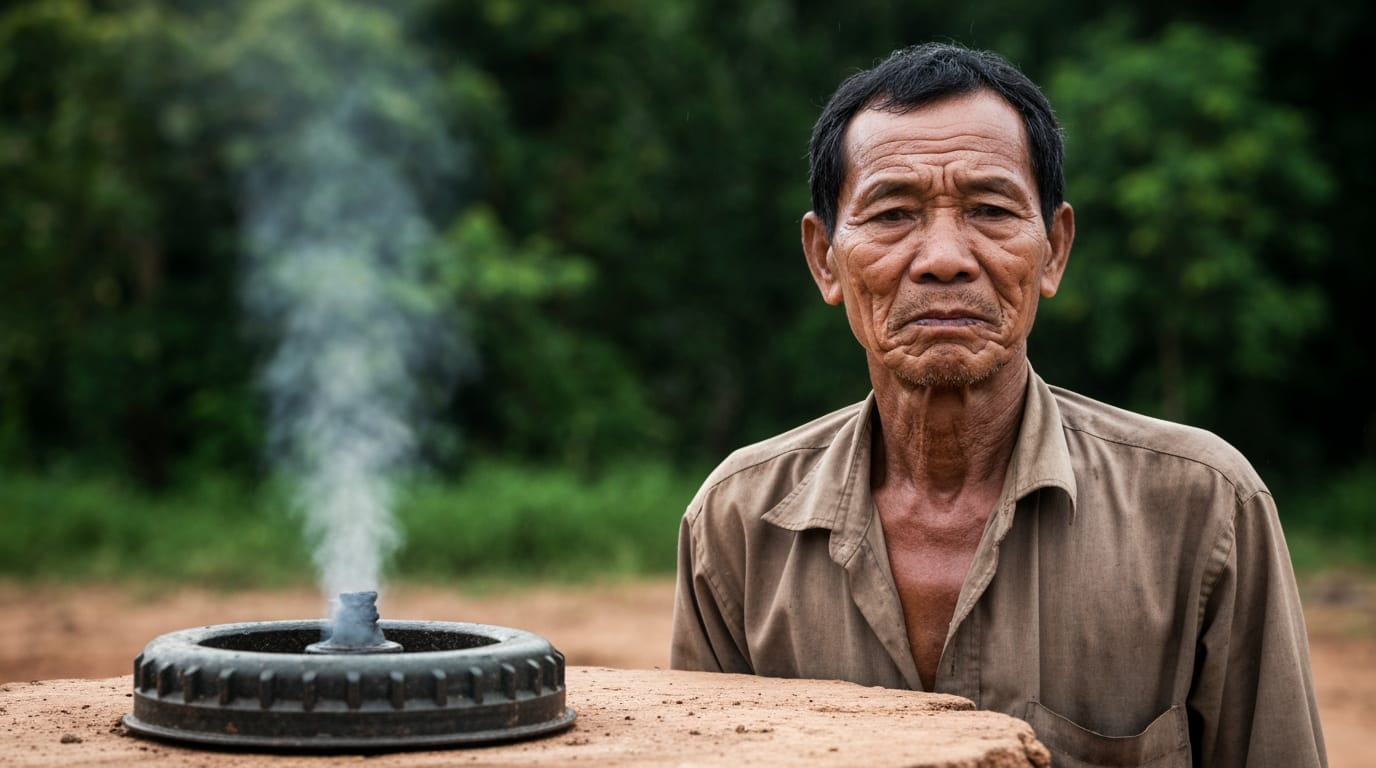
Fifty years after the official end of the conflict in Southeast Asia, the people of Laos continue to confront a silent and deadly enemy buried beneath their soil: unexploded ordnance (UXO). Laos bears the grim distinction of being the most heavily bombed country per capita in history, a legacy of the "Secret War" waged from 1964 to 1973. This hidden peril not only claims lives but profoundly obstructs the nation's development, turning once-fertile lands into treacherous fields and impeding progress at every turn.
A Deluge of Destructive Ordnance
Between 1964 and 1973, the United States conducted an extensive bombing campaign over Laos, aiming to disrupt North Vietnamese supply routes along the Ho Chi Minh Trail. During this period, over 2 million tons of ordnance were dropped on the country across 580,000 bombing missions. This sustained assault amounted to a plane dropping its payload approximately every eight minutes, around the clock, for nine years. A significant portion of this weaponry consisted of cluster bombs, which disperse hundreds of smaller submunitions, or "bombies," over wide areas. An estimated 270 million cluster munitions were deployed, with a staggering 30%—around 80 million individual bomblets—failing to detonate upon impact. These dormant explosives remain scattered across all 18 provinces of Laos, with the eastern provinces, particularly Xiengkhuang, experiencing the heaviest contamination.
The Enduring Human and Economic Toll
The presence of UXO has resulted in a devastating human cost. An estimated 50,000 Laotians have been killed or injured by these devices, with approximately 20,000 casualties occurring since the war officially ended in 1975. Children are disproportionately affected, accounting for between 40% and over 60% of all UXO victims. Accidents frequently occur during daily activities such as farming, foraging for food, or simply playing. Many survivors endure life-altering injuries, including the loss of limbs or eyesight, necessitating extensive medical and rehabilitative support.
Beyond the immediate threat to life and limb, UXO presents a formidable barrier to Laos' socio-economic development. Over 70% of the Lao population relies on agriculture for their livelihoods, but vast stretches of arable land remain unusable due to contamination, leading to food shortages and exacerbating poverty. Research indicates a significant correlation between UXO presence and poverty levels, highlighting how contaminated areas suffer from decreased human capital accumulation and hindered economic growth. The danger also restricts critical infrastructure development, delaying the construction of roads, schools, hospitals, and tourism facilities essential for national progress.
Decades of Clearance Efforts and Persistent Challenges
Recognizing the pervasive threat, the Lao government established the National Unexploded Ordnance Programme (UXO Lao) in 1996 to lead clearance efforts. Supported by a consortium of international partners, including the United Nations Development Programme (UNDP), Mines Advisory Group (MAG), and The HALO Trust, UXO Lao has made significant strides. By February 2026, UXO Lao staff had deactivated over 2 million ordnance items and cleared more than 100,000 hectares of land. Between 2013 and 2025, The HALO Trust alone destroyed nearly 130,000 explosives and cleared an area equivalent to 50,000 football pitches.
Despite these dedicated efforts, the scale of the problem remains immense. Estimates suggest that, at the current pace, it could take anywhere from 100 to 1,000 years to fully clear the country of UXO. Clearance operations are technically complex, dangerous, and resource-intensive. Challenges include the sheer volume of contamination, re-contamination of previously cleared areas due to heavy rains and flooding that unearth buried devices, and the continuous need for substantial international funding. Risk education programs are crucial to mitigating casualties, with organizations actively teaching communities, especially children, how to identify and report dangerous objects. Laos has also shown its commitment by integrating UXO action into its national development planning through strategies like the "Safe Path Forward" and establishing a unique National Sustainable Development Goal (SDG 18): "Lives Safe from UXO."
The Path Forward: International Commitment and Lasting Hope
The commitment of the international community remains vital for Laos to overcome this enduring legacy of conflict. Sustained financial and technical support is essential for accelerating clearance efforts, developing new technologies, and implementing comprehensive victim assistance programs. The United States, having increased its funding, has pledged support for a national survey to identify hazardous areas more precisely. Laos was also the second nation to sign and ratify the Convention on Cluster Munitions in 2008, underscoring its dedication to a future free from these weapons.
While the scars of the past are deep, the resilience of the Lao people offers a profound sense of hope. Despite the overwhelming adversity, communities continue to work tirelessly alongside international partners, transforming contaminated land into safe spaces for farming, housing, and development. The journey to a UXO-free Laos is long and arduous, yet the collective will to build a safer, more prosperous future for generations to come remains undeterred.


