India Balances East-West Divide as Putin Arrives for Crucial Talks Amidst US Pressure
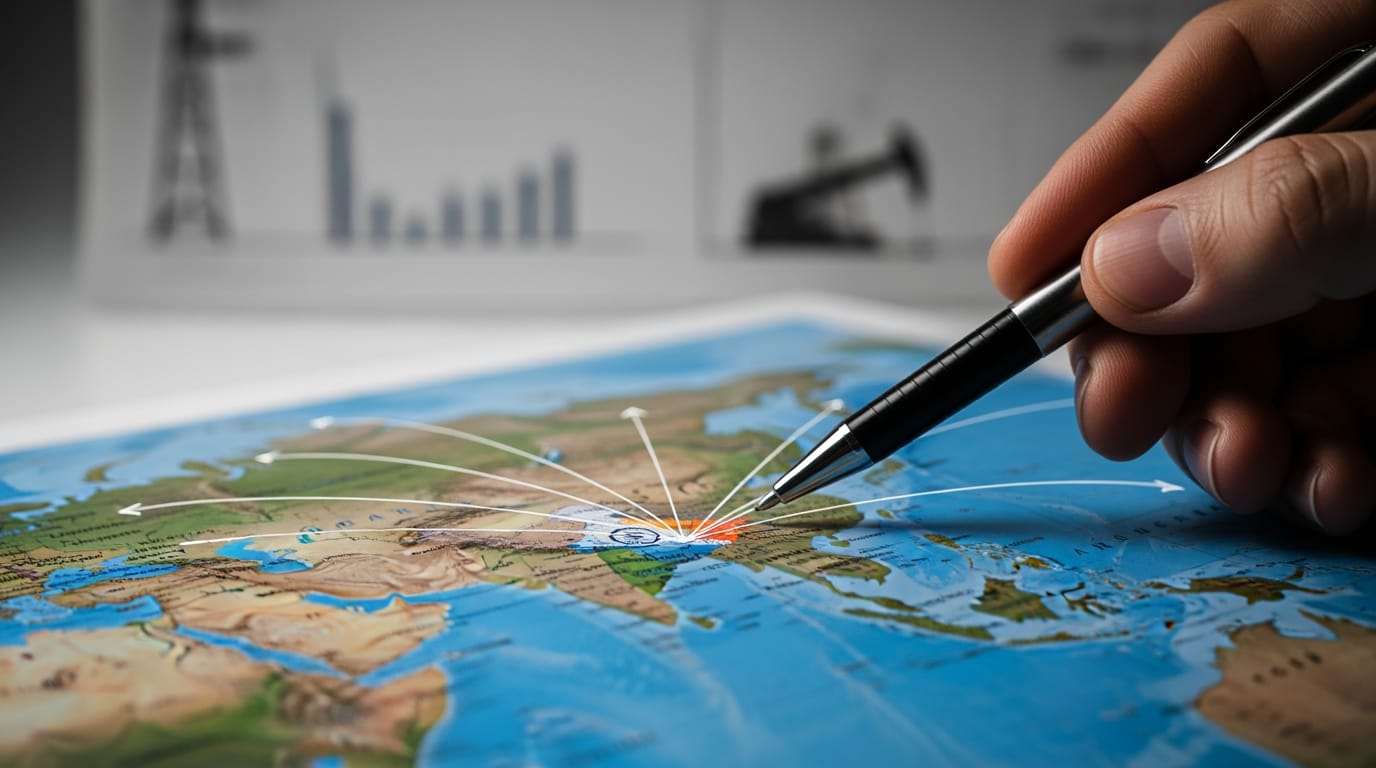
NEW DELHI – Russian President Vladimir Putin arrived in India this week for the 23rd India-Russia Annual Summit, engaging in high-stakes discussions with Prime Minister Narendra Modi on trade, energy, and defense cooperation. The visit unfolds against a backdrop of intensified geopolitical complexities, with the United States escalating pressure on New Delhi over its continued economic and military ties with Moscow. The summit underscores India's steadfast commitment to its strategic autonomy, even as it navigates a delicate balance between longstanding alliances and burgeoning Western partnerships.
President Putin's two-day visit, marking his first trip to India since the full-scale invasion of Ukraine, commenced on Thursday, December 4, with a personal welcome from Prime Minister Modi and a private dinner, signaling the depth of the bilateral relationship. Formal summit-level talks are scheduled at Hyderabad House, where the leaders are expected to delve into a comprehensive agenda aimed at reinforcing their "special and privileged strategic partnership."
Navigating Geopolitical Crosscurrents: The US Factor
The timing of the summit is particularly significant, as India faces mounting economic repercussions from the United States. In August, the US, under President Donald Trump, imposed a substantial 50% tariff on Indian goods, explicitly linking the measure to New Delhi's substantial purchases of discounted Russian crude oil. Washington argues that these imports inadvertently fund Russia's military efforts in Ukraine, prompting a series of retaliatory economic actions. This pressure campaign, including recent US sanctions on major Russian oil entities such as Rosneft and Lukoil effective November 21, aims to compel India to reduce its reliance on Russian energy and military hardware.
Despite these punitive measures and a perceived strain on US-India relations, New Delhi has consistently championed its policy of strategic autonomy. Indian officials maintain that the nation's foreign policy decisions are guided by its own national interests, refusing to be swayed by external dictates. This stance is crucial for India, which seeks to maintain a multi-aligned foreign policy approach in an increasingly fragmented global order, engaging with various powers without becoming entangled in rigid alliances.
During discussions, Prime Minister Modi reportedly reiterated India's consistent call for an early cessation of hostilities in Ukraine, emphasizing the need for diplomacy and dialogue to achieve a durable peace settlement. This position reflects India's attempt to act as a bridge between conflicting global interests, even as it sustains vital ties with Moscow.
Energy Security and Shifting Trade Dynamics
Energy cooperation remains a cornerstone of the India-Russia relationship. Following the onset of the Ukraine conflict, India significantly ramped up its imports of discounted Russian crude oil, which soared from less than 1% of its total crude purchases to nearly 36% in 2024, making Russia a primary supplier. This provided India with billions in savings and offered Russia a crucial alternative market amidst Western sanctions.
However, recent data indicates a shift. India's imports of Russian crude experienced a sharp decline of 38% in October 2025 in value terms and 31% in volume compared to the previous year, with a further reduction anticipated for December. This dip follows the implementation of new US sanctions targeting major Russian oil exporters, prompting Indian refiners to stock up ahead of deadlines and now explore alternative sources from the Middle East, Latin America, and North America. Despite the decrease, Russian oil still accounts for a significant portion, approximately 32%, of India's total oil imports. Russian President Putin, during his visit, reassured India of uninterrupted fuel supplies, stressing Russia's commitment to powering India's energy needs.
Beyond oil, both nations are pushing to broaden their economic engagement. The leaders are expected to unveil a "Vision 2030" document aimed at developing strategic areas of economic cooperation. Bilateral trade reached a record $68.7 billion in the fiscal year 2024-25, though heavily skewed towards Russian exports. The ambitious target is to achieve $100 billion in annual bilateral trade by 2030 and $50 billion in mutual investments by 2025, involving sectors like pharmaceuticals, chemicals, steel, and even joint ventures in areas like fertilizer plants and mining.
Deepening Defense Ties and Technology Collaboration
Defense cooperation forms another critical pillar of the enduring partnership. Russia remains India's largest arms supplier, contributing approximately 36% of its arms imports and equipping over 60% of India's existing military arsenal. Prior to the summit, Indian Defense Minister Rajnath Singh and his Russian counterpart Andrei Belousov co-chaired the 22nd session of the India-Russia Inter-Governmental Commission on Military and Technical Cooperation, discussing enhanced collaboration in niche military technologies and industrial cooperation.
Key discussions during the summit are centered on expediting the delivery of remaining S-400 air defense missile systems, with India having received three of five contracted units and seeking additional acquisitions. Talks also include potential co-production of advanced Su-57 stealth fighter jets, alongside upgrades for existing Sukhoi-30MKI fighters and advancements for the BrahMos missile system, which is a joint venture between the two nations. Russia's commitment to supporting India's self-reliance in defense production through technology transfer is a significant aspect of these negotiations.
A Complex Future Amidst Global Shifts
The Modi-Putin summit culminates in an environment where India continues to walk a geopolitical tightrope, balancing its historical strategic partnership with Russia against growing economic and diplomatic engagements with Western nations. The explicit pushback against US tariffs and sanctions by both leaders underscores their determination to preserve their bilateral ties.
As the world grapples with shifting power dynamics, India's pursuit of strategic autonomy serves as a testament to its aspiration for a larger, independent role on the global stage. The outcomes of this summit, particularly the planned agreements in trade, energy, and defense, will undoubtedly shape not only the future trajectory of India-Russia relations but also India's complex balancing act in a multipolar world. The discussions aim to fortify a relationship that both nations see as essential, demonstrating resilience in the face of persistent external pressures.


