India-Bangladesh Relations Plunge into Crisis Amidst Reciprocal Visa Freeze
New Delhi/Dhaka – A deepening diplomatic rift between India and Bangladesh has led to an unprecedented suspension of visa services by both nations, effectively freezing cross-border movement and exacerbating an already strained bilateral relationship. The tit-for-tat measure, unfolding rapidly in December 2025, has left thousands of citizens stranded, disrupted vital healthcare access, and inflicted significant economic damage on border regions, signaling a critical downturn in ties once hailed as a "golden era."
The escalating crisis stems from a complex interplay of internal political upheaval in Bangladesh, concerns over minority safety, and retaliatory diplomatic actions. What began as India's cautious scaling back of visa services following the ouster of former Prime Minister Sheikh Hasina in August 2024 has now devolved into a full-blown diplomatic standoff, marked by mutual accusations and a near-total cessation of normal people-to-people exchanges.
Genesis of the Diplomatic Chill
The current downturn in relations finds its roots in the dramatic political shifts witnessed in Bangladesh in August 2024. Following the collapse of Sheikh Hasina's government amidst widespread protests, the former prime minister sought refuge in New Delhi, a move perceived by the newly formed interim government in Dhaka as Indian interference. In the immediate aftermath, India initiated a significant reduction in visa issuance to Bangladeshi nationals, citing security concerns and incidents of vandalism targeting its visa offices across Bangladesh. Daily visa grants, which previously averaged around 8,000, plummeted to approximately 1,000, primarily limited to urgent medical and student categories.
The situation further deteriorated in December 2025, fueled by several contentious events. The killing of youth leader Sharif Osman Hadi on December 12 and Hindu man Dipu Chandra Das on December 18 in Bangladesh ignited widespread protests, particularly among Hindutva groups in India. These groups staged demonstrations outside Bangladesh's diplomatic missions in India, including in New Delhi, demanding justice for Das and expressing strong concerns over the safety of minorities in Bangladesh.
In response to a security incident where protesters reportedly attempted to storm its Assistant High Commission in Chittagong, India temporarily suspended visa operations at that center on December 21. This action prompted immediate retaliation from Dhaka. By December 22-23, Bangladesh announced the suspension of all consular and visa services at its High Commission in New Delhi and Assistant High Commission in Agartala, citing "unavoidable circumstances" and security concerns following protests targeting its diplomatic facilities in India. India subsequently closed additional visa centers in Khulna and Rajshahi.
Both nations have since engaged in a series of mutual summonings of their respective envoys, underscoring the severity of the diplomatic rupture. India has consistently voiced its concerns over the safety of minorities in Bangladesh and the security of its diplomatic missions, while Bangladesh has largely dismissed these concerns as internal matters and cautioned against interference.
Human Toll and Economic Fallout
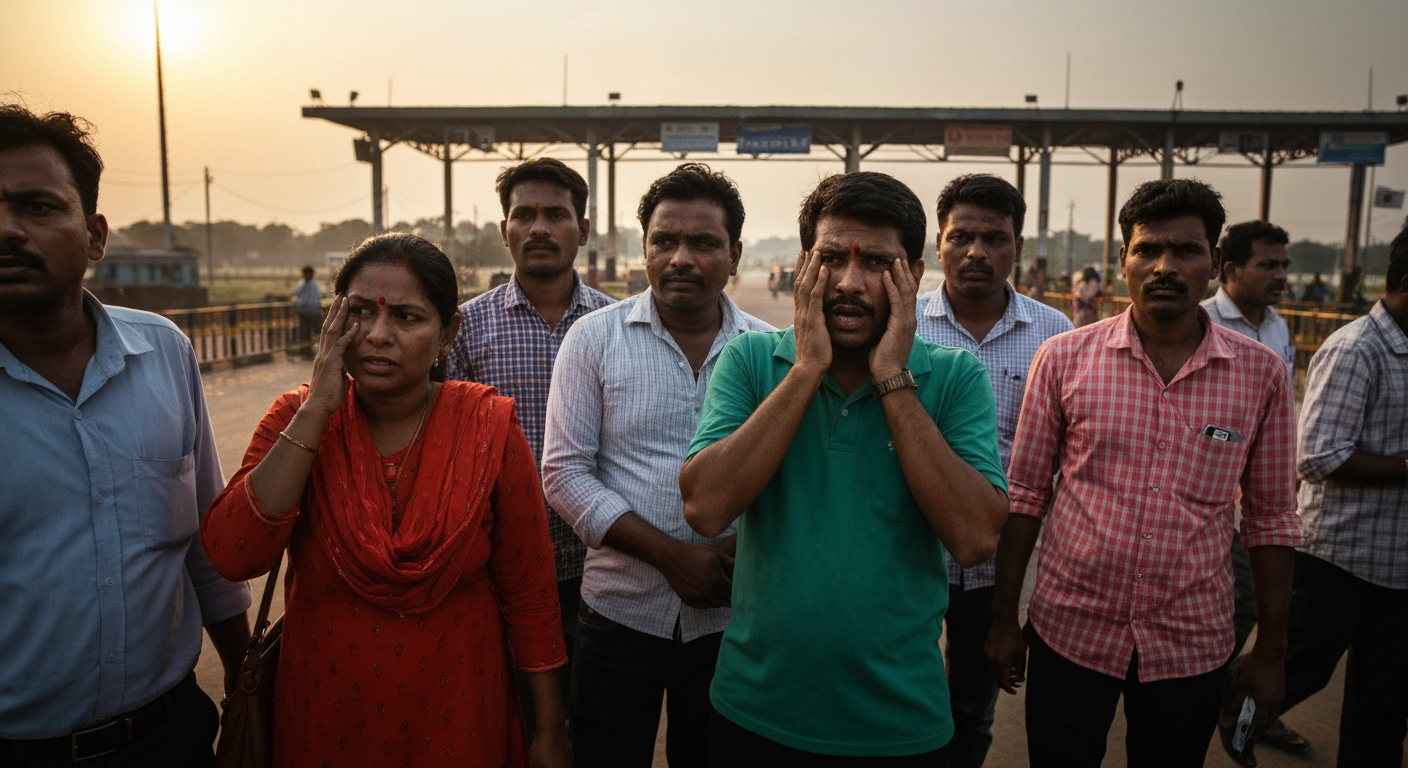
The visa freeze has imposed a severe human cost, particularly on Bangladeshi citizens reliant on India for essential services. Thousands have found themselves stranded, unable to travel for medical treatment, education, or family visits. India, a long-favored destination for affordable and specialized healthcare for many Bangladeshis, now remains largely inaccessible. Daily online visa slots for medical and student categories across Indian visa centers in Bangladesh have drastically reduced, impacting critical patients whose health deteriorates while they await visas.
Beyond healthcare, the cessation of routine visa services has paralyzed cross-border tourism, academic exchanges, and business travel, effectively severing long-standing people-to-people connections. This has had a ripple effect on transportation infrastructure; railway services connecting Dhaka to Kolkata, Khulna to Kolkata, and Dhaka to Siliguri have either ceased or seen drastic reductions. Direct passenger bus services have also come to a halt.
Economically, the impact is equally stark. Border regions, heavily dependent on cross-border trade and travel, are reporting significant losses. The Benapole International Checkpost, a vital land port, has seen a sharp decline in passenger numbers from 7,000-9,000 daily to 1,500-2,000, resulting in a halving of travel tax revenue. Businesses catering to travelers, such as money changers, bus operators, and visa assistance services, are struggling, with some facing potential bankruptcy. The demand for Indian rupees in Bangladeshi currency exchange markets has plummeted, reflecting the drastic reduction in cross-border transactions. Furthermore, Bangladesh's credit card spending in India has dropped significantly, pushing India from the top to the third position for outbound spending by Bangladeshis. This disruption has inadvertently boosted outbound tourism from Bangladesh to alternative South and Southeast Asian destinations.
Bilateral Tensions and Future Outlook
The current diplomatic impasse has transformed the once "golden era" of India-Bangladesh relations into a period of profound uncertainty. Both countries have expressed deep suspicion and mistrust. Bangladesh's foreign ministry summoned the Indian High Commissioner to protest alleged attacks on its diplomatic facilities and what it termed "misinformation" spread by Indian media. Conversely, India's Ministry of External Affairs has summoned Bangladesh's High Commissioner to convey strong concerns regarding the safety of minorities and its diplomatic personnel.
Analysts suggest that India's long-standing support for the former Awami League government under Sheikh Hasina, and its perceived distancing from the interim government led by Muhammad Yunus, are key factors influencing the current trajectory. The interim leader, Yunus, is seen as pursuing a policy realignment away from New Delhi.
As of late December 2025, neither nation has provided a timeline for the resumption of full visa services, creating an environment of continued uncertainty. International observers, including the Russian Ambassador, have urged de-escalation, highlighting the potential for regional repercussions. An International Crisis Group (ICG) report recently advised India to consider reversing visa restrictions as part of a "charm offensive" to the incoming Bangladeshi government, stressing the importance of strengthening relations across Bangladesh's political spectrum.
With Bangladesh's national elections scheduled for February 2026, many analysts view this as a crucial opportunity to reset the strained bilateral ties. The path forward will likely require both nations to de-escalate rhetoric, address mutual security concerns, and restore the vital people-to-people connections that have historically underpinned their relationship. The current visa freeze serves as a stark reminder of the fragile nature of diplomatic relations and the far-reaching consequences when they falter.
Sources
- outlookbusiness.com
- pakistantoday.com.pk
- pressenza.com
- aa.com.tr
- prothomalo.com
- thelogicalindian.com
- traveltradejournal.com
- tribuneindia.com
- bigstorynetwork.com
- tbsnews.net
- thefinancetoday.net
- asianews.network
- thehindu.com
- nationalheraldindia.com
- visionias.in
- newsonair.gov.in
- indianexpress.com
- thefinancialexpress.com.bd
- prothomalo.com
- tbsnews.net
Related Articles


Mounting Frustration Grips Russia as Economic Hardship and War's Toll Deepen
Moscow, Russia – A palpable shift in public sentiment is emerging across Russia, with growing frustration among citizens fueled by a confluence of economic pressures, increasing internet restrictions, and the undeniable...

Germany's Strategic Calculus: Ukraine Aid is an Investment in European Security, Not Charity
Berlin – The ongoing provision of substantial aid to Ukraine by Germany and its allies is increasingly being framed not as an act of altruism, but as a crucial investment in European security and stability. This...