India Braces for Drought as El Niño Threatens Critical Monsoon Rains
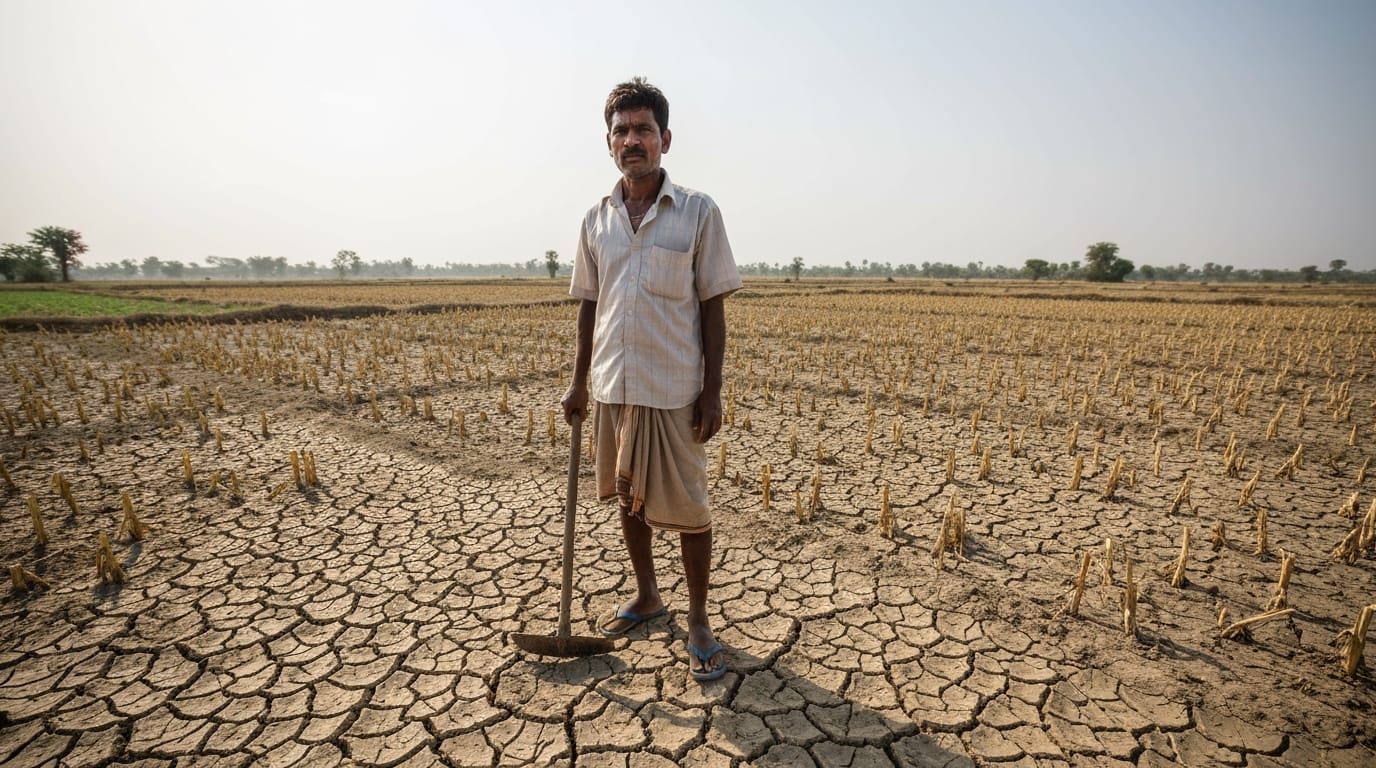
New Delhi, India – India is confronting a significant drought threat as the El Niño climate pattern intensifies, portending a potentially weaker monsoon season crucial for the nation's agriculture, economy, and water security. With forecasts indicating a high probability of below-normal rainfall, concerns are mounting over agricultural output, food inflation, and the livelihoods of millions dependent on seasonal rains. The situation is particularly precarious given existing climate extremes and global economic stresses, amplifying the urgency for robust preparedness and mitigation strategies.
The Looming Shadow of El Niño
The El Niño Southern Oscillation (ENSO) cycle, a climate phenomenon characterized by anomalous warming of sea surface temperatures in the central and eastern equatorial Pacific Ocean, is directly linked to disruptions in global atmospheric circulation. This warming typically weakens the trade winds that normally push warm Pacific waters westward, consequently impacting weather systems across the globe, including the vital Indian monsoon. Historically, at least half of all El Niño years have been associated with deficient monsoonal rainfall, leading to drought conditions across India. Notable severe droughts in 2002 and 2015, for instance, coincided with strong El Niño events, underscoring this perilous connection.
As of June 2026, El Niño conditions are already present and are anticipated to strengthen further through the southwest monsoon season. The World Meteorological Organization (WMO) projects an 80% likelihood of El Niño developing between June and August, increasing to a 90% chance thereafter. Some expert analyses point to a 70% probability of below-normal rainfall across the region. Scientists are also discussing the possibility of a "super El Niño," warning that the planet's increased warmth amplifies temperature extremes and rainfall variability, making the current threat even more significant than in previous El Niño cycles. The implications for India are profound, as a warm tropical Pacific can weaken the monsoon, intensify rainfall breaks, exacerbate heat, and strain water reservoirs.
India's Monsoon Lifeline: A Fragile Dependency
The southwest monsoon, typically active from June to September, is India's agricultural lifeline, accounting for about 70% of its annual rainfall. This seasonal downpour nourishes crops, replenishes water sources, and brings relief from arid conditions. The agricultural sector forms the backbone of the Indian economy, contributing approximately 15% to the Gross Domestic Product (GDP) and employing around 45% of the workforce. An estimated 60% of the Indian population relies on the monsoon for their livelihoods, with 58% of total employment stemming from agriculture.
A substantial portion of India's cultivated land, over 50%, remains rain-fed, making it acutely vulnerable to variations in monsoon performance. Key kharif (summer) crops such as rice, pulses, oilseeds, maize, and cotton are heavily dependent on timely and adequate rainfall during their sowing and growth periods. A delayed onset or prolonged dry spells can disrupt planting schedules, deplete soil moisture, and ultimately lead to reduced crop yields. Beyond agriculture, the monsoon is vital for India's water security, recharging reservoirs, rivers, and groundwater systems, which are critical for drinking water, sanitation, and hydropower generation.
Proactive Measures and Preparedness
Recognizing the severe implications of a deficient monsoon, the Indian government has initiated a series of preparedness and mitigation strategies. The Department of Agriculture and Farmers Welfare (DA&FW), in coordination with the India Meteorological Department (IMD), continuously monitors the progress of the Southwest Monsoon to identify and respond to rainfall deficits. An El Niño monitoring cell and a dedicated crop weather watch group are actively tracking rainfall patterns, sowing progress, crop conditions, and the availability of essential agricultural inputs in real-time.
District Agriculture Contingency Plans (DACPs) have been developed for vulnerable districts, outlining measures such as crop diversification, alternative sowing strategies, water conservation techniques, and efficient irrigation practices. States have been advised to keep these plans operational for immediate implementation if rainfall conditions deteriorate. Efforts are underway to maximize water conservation through the use of ponds, reservoirs, farm ponds, and check dams, while prioritizing water conservation projects under rural development programs. Farmers are also being encouraged to adopt short-duration and low-water-consuming crop varieties, and to diversify into pulses, oilseeds, and millets, which are more resilient to moisture stress. To bolster farmers' resilience against weather-related shocks, the government is focusing on strengthening crop insurance schemes like the Pradhan Mantri Fasal Bima Yojana (PMFBY) and expanding access to Kisan Credit Cards (KCC). Financial aid is also available through the State Disaster Response Fund (SDRF) and the National Disaster Response Fund (NDRF).
Human and Economic Toll on Rural India
The potential for a weak monsoon casts a long shadow over rural India, threatening the livelihoods and well-being of millions of farming households. A deficient monsoon can trigger crop losses, force distress sales of agricultural produce, and significantly reduce rural incomes. Data indicates that 87% of India's districts and 93% of its population are moderately to highly vulnerable to droughts, highlighting the widespread potential for impact.
Failed harvests and food scarcity can lead to increased hunger, malnutrition, and heightened vulnerability among the poorest sections of society. In times of drought, agricultural households are often compelled to seek low-paying casual labor or even sell valuable assets like livestock at reduced prices, further exacerbating their economic hardship. The educational prospects of children in affected families can also suffer as households struggle to cope with income loss. The 2023 monsoon, which saw a 6% deficit nationally and significantly lower rainfall in 31% of the country, resulted in reduced sowing of pulses and oilseeds and a 6.1% decline in foodgrain production. A more severe event, such as the 2002 drought, saw foodgrain production plummet by 18% and agricultural GDP contract by nearly 7%.
Broader Economic Ripple Effects
The implications of a weak monsoon extend far beyond the agricultural sector, posing significant challenges to India's broader economy. Lower agricultural output typically translates into higher food prices, which are a major component of overall retail inflation. Following the weak monsoon in 2023, food inflation soared to 11.5% in July of that year. Such inflationary pressures can constrain the Reserve Bank of India's (RBI) ability to cut interest rates, potentially impacting borrowing costs across the economy. A sustained increase in inflation, particularly if it breaches the RBI's target, could even prompt a rate hike.
Furthermore, reduced rural incomes lead to a dampening of consumer demand, which in turn impacts sectors like fast-moving consumer goods (FMCG) and services. Analysts estimate that a 10% rainfall deficit could risk a 1% contraction in crop Gross Value Added (GVA), with historical data showing that every 1% shortfall in monsoon rainfall correlates with a 40 basis points sacrifice in agricultural GVA growth. The energy sector is also vulnerable, as deficient monsoons can reduce river flows and reservoir levels, impacting hydropower generation.
In the face of an evolving El Niño and increasingly erratic weather patterns amplified by climate change, India stands at a critical juncture. The nation's ability to navigate this challenge will depend on the efficacy of its early warning systems, the resilience of its mitigation strategies, and the collective efforts to safeguard the millions whose lives hinge on the fate of the monsoon rains. The coming months will be a test of India's preparedness and adaptability in the face of a persistent climate threat.


