India Navigates Diplomatic Minefield Over Trump's Gaza 'Board of Peace' Invitation
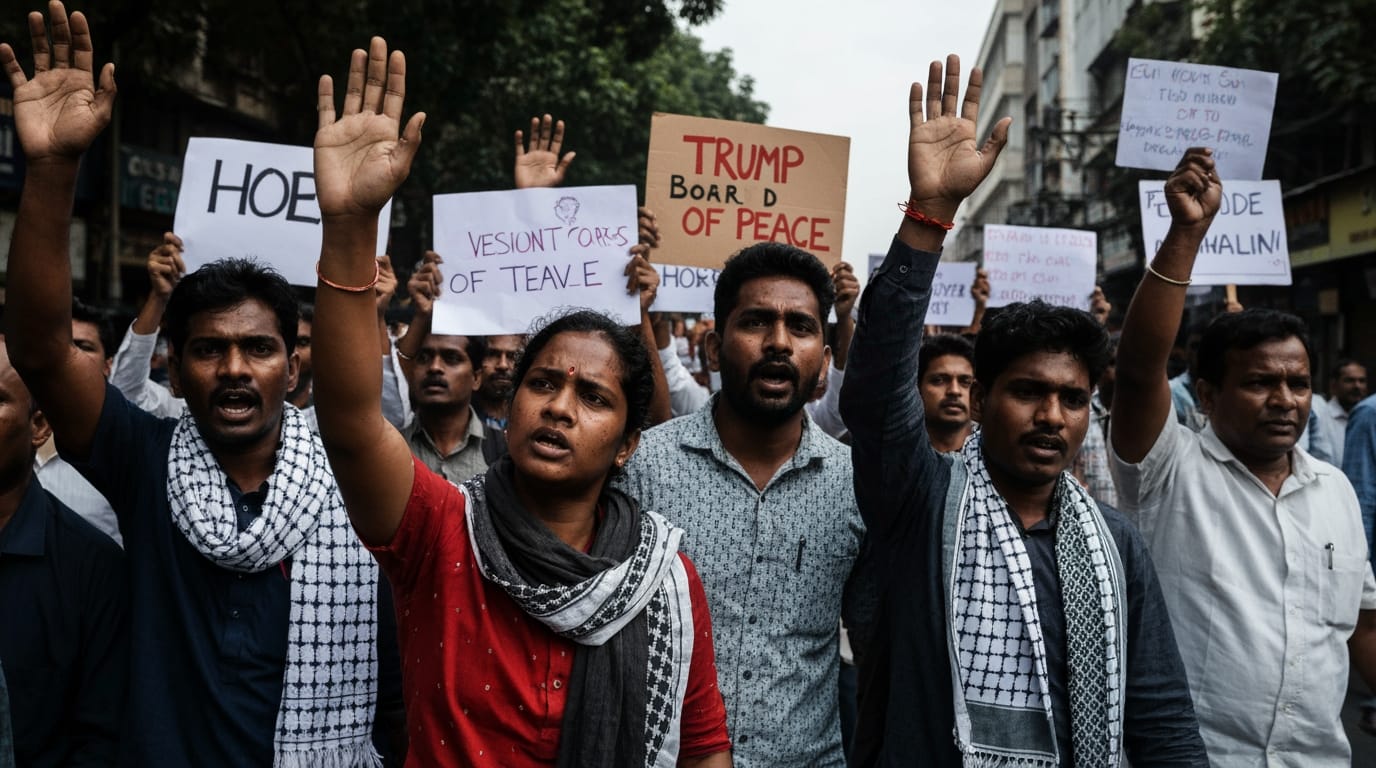
New Delhi faces a significant diplomatic quandary following an invitation from former U.S. President Donald Trump to join his newly established "Board of Peace" for Gaza. The U.S.-led initiative, designed to oversee the post-conflict governance, reconstruction, and security of the Gaza Strip, has put India in a delicate position, forcing it to weigh its longstanding foreign policy principles against evolving geopolitical alignments and strategic interests. India has reportedly abstained from formally joining the board, indicating a cautious approach to a proposal that challenges traditional multilateral frameworks and carries substantial reputational implications.
The 'Board of Peace' Proposal and India's Reluctance
The "Board of Peace," officially unveiled by Donald Trump, aims to provide a new governance structure for Gaza, moving away from existing United Nations-led mechanisms. Trump, who serves as the Board's inaugural Chairman, possesses "final authority" over its decisions, including veto power, a structure that critics argue concentrates extraordinary power in one individual. The proposal also includes a contentious "pay-to-play" model, offering permanent membership to nations that contribute approximately $1 billion in cash, a feature described by some as potentially prioritizing profit over the genuine needs of Palestinians. The initiative explicitly seeks to pressure Hamas to relinquish its governance role in the territory.
India received a direct invitation, with Prime Minister Narendra Modi among the global leaders asked to participate. However, New Delhi has not formally responded and was notably absent from the charter signing ceremony in Davos. Diplomatic sources suggest India is unlikely to participate, at least in its current form, reflecting deep concerns about the initiative's implications. This hesitation stems from several critical factors, including the absence of direct Palestinian representation in the proposed governance structure and the Board's intention to bypass established UN mechanisms.
Geopolitical Balancing Act: Principles Versus Pragmatism
India's foreign policy regarding the Israel-Palestine conflict has historically been characterized by a careful balancing act. Since its independence, India has generally expressed solidarity with the Palestinian cause, recognizing the State of Palestine in 1988 and advocating for a two-state solution that is a result of direct negotiations between Israelis and Palestinians. This stance was rooted in anti-colonial solidarity and its commitment to the Non-Aligned Movement.
However, in recent decades, India has also cultivated strong strategic and economic ties with Israel, particularly in defense, agriculture, and technology. Israel has become a significant partner, supplying India with weapons and collaborating on various fronts, including within multilateral alliances like the I2U2 group (India, Israel, UAE, and US). Simultaneously, India maintains robust relationships with Arab nations, crucial for its energy security, trade, and the welfare of its large diaspora in the Gulf. Joining a U.S.-led board that effectively sidelines Palestinian agency and diverges from UN processes could jeopardize these carefully nurtured relationships and contradict India's long-held principles.
Reputational Risks and Strategic Implications
Analysts within India and abroad have highlighted potential reputational and strategic pitfalls for New Delhi if it were to join the "Board of Peace." The Global Trade Research Initiative (GTRI) specifically noted the absence of Palestinian agency and Israel's effective veto power over security decisions without corresponding accountability as strong reasons for India to stay out. Furthermore, the Board's decision to operate outside UN-led mechanisms directly challenges principles India has consistently championed at global forums, including its push for reformed multilateralism. India has already ruled out contributing to an International Stabilisation Force for Gaza, citing its policy against deployments not mandated by the UN.
Concerns extend to the potential precedent such a board could set for external interventions in other global disputes. Indian diplomats and foreign policy experts have voiced apprehensions about the implications for issues like Kashmir, where India maintains a firm stance against internationalization. The transactional nature of the Board, with its billion-dollar price tag for permanent membership, has also been deemed "untenable" for India by some former diplomats. Accepting such terms could undermine India's strategic autonomy and its standing as a voice for the Global South.
International Landscape and Divergent Paths
The "Board of Peace" has garnered commitments from approximately 35 countries, including Saudi Arabia, the United Arab Emirates, Egypt, Turkey, and Belarus, as well as Israel and Hungary. Notably, Pakistan has accepted the invitation and formally joined the initiative, a move that starkly contrasts with India's cautious stance. The participation of Pakistan underscores the divergent paths regional powers are taking in responding to this new diplomatic architecture. European nations have expressed reservations about the board's membership and structure, while Russia is reportedly still considering its involvement.
The Board's charter describes its purpose as promoting stability, restoring governance, and securing peace in conflict-affected areas, extending its potential mandate beyond Gaza. This broader scope raises further questions about its long-term impact on global governance and the existing international order, which India has consistently sought to reform rather than bypass.
Conclusion: A Critical Juncture for Indian Diplomacy
India's decision regarding Donald Trump's "Board of Peace" for Gaza represents a pivotal moment in its foreign policy. The invitation has underscored the complexities of balancing its historical support for the Palestinian cause with its robust ties with Israel and its broader strategic partnership with the United States. While the initiative promises a role in regional stability and reconstruction, the inherent structural flaws, the absence of genuine Palestinian agency, and the challenge to established multilateral norms present significant obstacles for New Delhi. By abstaining from joining the board, India appears to be prioritizing its commitment to UN-centric solutions and strategic autonomy, carefully navigating a geopolitical landscape fraught with competing interests and potential long-term consequences for its international standing.


