India Ramps Up Domestic Drone Production, Reshaping Future Warfare Strategy
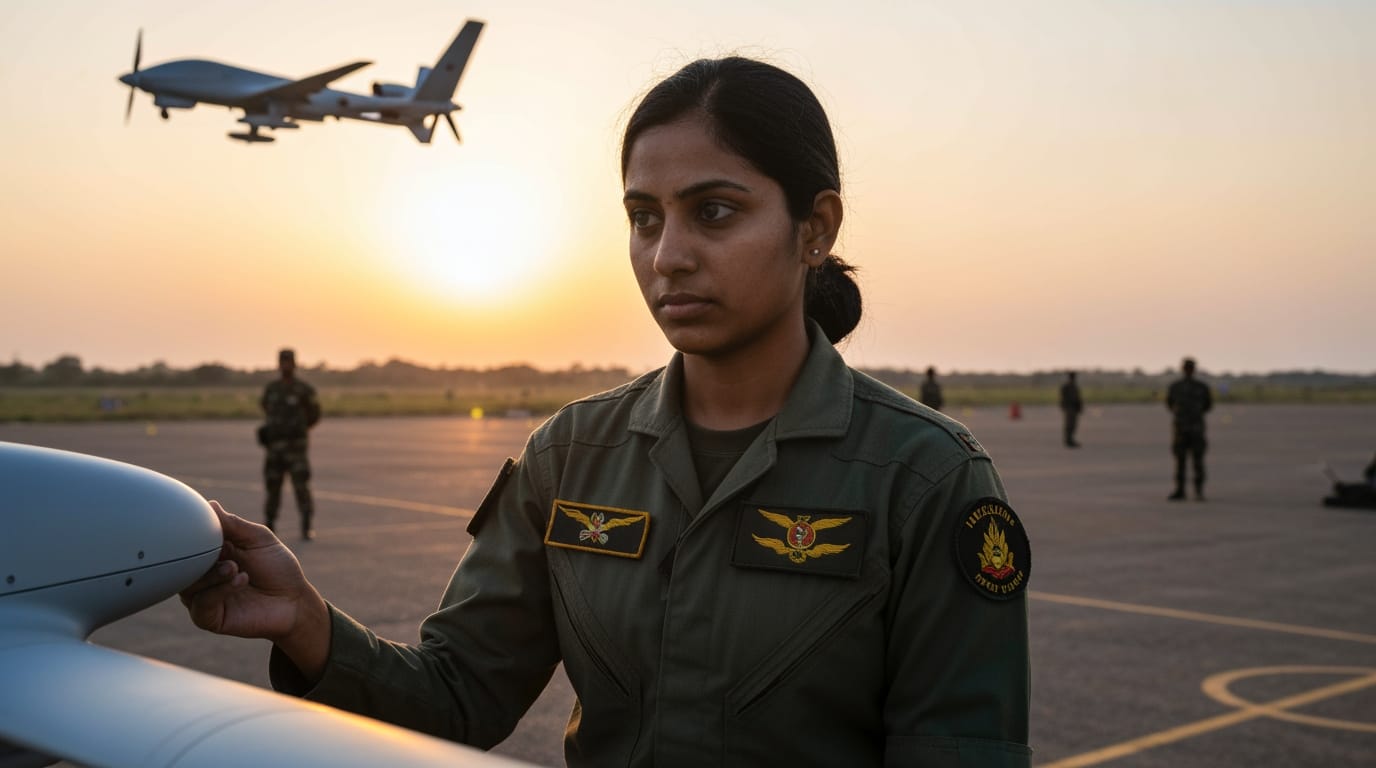
New Delhi, India – India is making an unprecedented strategic pivot towards domestic drone technology, committing billions to transform its military capabilities and achieve self-reliance in future warfare. Driven by lessons from recent conflicts and escalating geopolitical tensions, the nation is rapidly building an indigenous drone ecosystem, integrating these unmanned systems as core instruments rather than auxiliary tools for its armed forces. This aggressive push, backed by substantial government investment and policy reforms, aims to position India as a global drone superpower by 2030.
The imperative for this shift has become strikingly clear on modern battlefields worldwide. From the skies over Ukraine to the 2025 Pakistan-India conflict and India's own "Operation Sindoor," drones have demonstrated their capacity to redefine intelligence gathering, surveillance, reconnaissance (ISR), precision strikes, and even logistical support, often with enhanced cost-effectiveness and reduced risk to human life. India's military leadership now views unmanned systems as critical for strategic deterrence and operational superiority, moving towards an integrated, network-centric, and inter-service future of warfare.
A Strategic Imperative Born from Conflict
The escalating focus on drones is a direct response to a changing security landscape. The extensive deployment of unmanned aerial vehicles (UAVs) in recent global and regional conflicts has served as a stark reminder of their transformative power. During the 2025 conflict between India and Pakistan, drones were used in combat for the first time by India, signaling their central role in New Delhi's evolving defense requirements and transition to a multi-domain warfare model. Similarly, "Operation Sindoor," India's response to the Pahalgam terror attack, saw the deployment of advanced drones for critical surveillance, target acquisition, and real-time intelligence gathering, highlighting their effectiveness in dynamic operational environments.
Beyond direct engagements, the persistent surveillance needs along India's sensitive borders with China and Pakistan, coupled with increasing maritime domain awareness requirements in the Indian Ocean, have made drones an intrinsic operational necessity. These unmanned platforms offer advantages in high-altitude surveillance, loitering munitions, persistent ISR, and unmanned logistics, providing capabilities that are often cheaper, more rugged, and more redundant than traditional manned platforms. The Indian Army, for instance, is moving towards arming its infantry battalions with drone platoons for both ISR and combat purposes, aiming to create a sensor-rich, loitering-enabled, and strike-rich battlefield. The Indian Air Force, already utilizing Medium Altitude Long Endurance (MALE) tactical drones for ISR, is also considering long-range strike capabilities with planned procurements like the MQ-9B Predator.
Fueling Indigenous Innovation: The 'Make in India' Drive
To realize its ambitious drone vision, India has enacted a comprehensive strategy to foster indigenous development and reduce reliance on foreign technology. A series of government initiatives, including the liberalized Drone Rules of 2021 and the Production-Linked Incentive (PLI) scheme for drones and drone components, have been instrumental in simplifying regulatory frameworks and incentivizing local manufacturing. The government has allocated $234 million to a Drone Incentive Program, aiming to boost the production of not just drones, but also components, software, and counter-drone technologies. Furthermore, the Goods and Services Tax (GST) on drone production has been streamlined and reduced to 5% from a previous range of 18-28%, intending to create a stable, predictable, and affordable industry.
This supportive environment has led to a rapid expansion of India's drone industry, now boasting over 600 companies, with more than 100 specifically focused on defense applications. Major defense players like Hindustan Aeronautics Limited (HAL), Larsen & Toubro (L&T), and Bharat Electronics are engaged in drone development, alongside a burgeoning ecosystem of specialized start-ups such as IdeaForge, Zen Technologies, and NewSpace Research and Technologies. Notable indigenous projects include the DRDO Ghatak, a stealthy unmanned combat air vehicle (UCAV), and the DRDO Rustom family of MALE UAVs designed for surveillance and reconnaissance. India is also developing swarm drone capabilities, with NewSpace Research and Technologies having demonstrated the ALFA SWARM drone system, capable of offensive drone combat. The goal is to produce a wide and diverse range of drones, from nano quadcopters to MALE ISR platforms and kamikaze/First Person View (FPV) systems.
Training a New Generation of Drone Warriors
Beyond manufacturing, India is heavily investing in the operational integration of drones into its armed forces. This includes comprehensive training programs and doctrinal recalibrations. Nineteen new drone training centers are slated for establishment across India by January 2026, with the Border Security Force (BSF) having already opened its first drone warfare school in June 2025. These initiatives aim to make technological training a core component for all army ranks, ensuring that soldiers possess the necessary skills to operate and leverage these advanced systems.
The Indian military's doctrinal shift emphasizes an integrated, network-centric, and inter-service approach to future warfare. This means drones will not operate as standalone assets but as distributed systems embedded within larger combat networks, contributing to a "sensor-rich" battlespace. Air Chief Marshal A P Singh articulated this change, stating that drones are no longer just "eyes in the sky" but "claws in the sky," reflecting their increasing offensive capabilities and role in changing the battlespace. The focus is on robust logistics and rapid replacement pipelines to sustain drone operations, a key lesson from ongoing conflicts.
Navigating Challenges and Embracing Opportunities
Despite the significant strides, India's journey towards drone autonomy is not without hurdles. A primary challenge remains the heavy reliance on imported components, with over 60% of core parts like sensors, autopilot systems, and flight controllers sourced from abroad, particularly China. While India banned the use of Chinese components in military drones in 2023 for national security reasons, this move further complicated existing supply chains.
Technological gaps in areas such as advanced sensors, miniaturization, and seamless AI integration for truly autonomous operations persist. Furthermore, there is a recognized need for clearer military procurement plans and acquisition timelines, as uncertainty impedes large-scale investment and production by private manufacturers. Regulatory issues, including airspace management, UAV integration into national systems, and the absence of clear rules for Beyond Visual Line of Sight (BVLOS) operations, also present challenges. Cybersecurity vulnerabilities pose another critical concern, particularly given the reliance on commercial off-the-shelf components.
Nonetheless, the opportunities presented by this focus are substantial. India aims to become a worldwide drone hub by 2030, with an estimated market for drone manufacturing, including exports, projected to reach between USD 20-23 billion. The emphasis on indigenous development not only strengthens national security but also fosters economic growth, creating jobs across the technology ecosystem. Collaborative efforts, such as the co-production agreement between Larsen & Toubro and U.S.-based General Atomics for MALE drones, are also expected to bridge technological gaps.
Conclusion: A Transformed Defense Landscape
India's unwavering commitment to developing and integrating domestic drone technology marks a profound transformation in its defense strategy. By aggressively investing in indigenous manufacturing, fostering innovation, and recalibrating military doctrine and training, New Delhi is preparing its armed forces for the realities of modern, autonomous warfare. While challenges in technology, supply chains, and regulatory clarity remain, the strategic imperative is clear: drones are fundamental to India's future defense capabilities. This concerted national effort promises to usher in a new era of military self-reliance, potentially reshaping geopolitical dynamics and establishing India as a formidable player in the global drone arena.


