Indian Passport Navigates Shifting Global Mobility Landscape with Recent Slip in Rankings
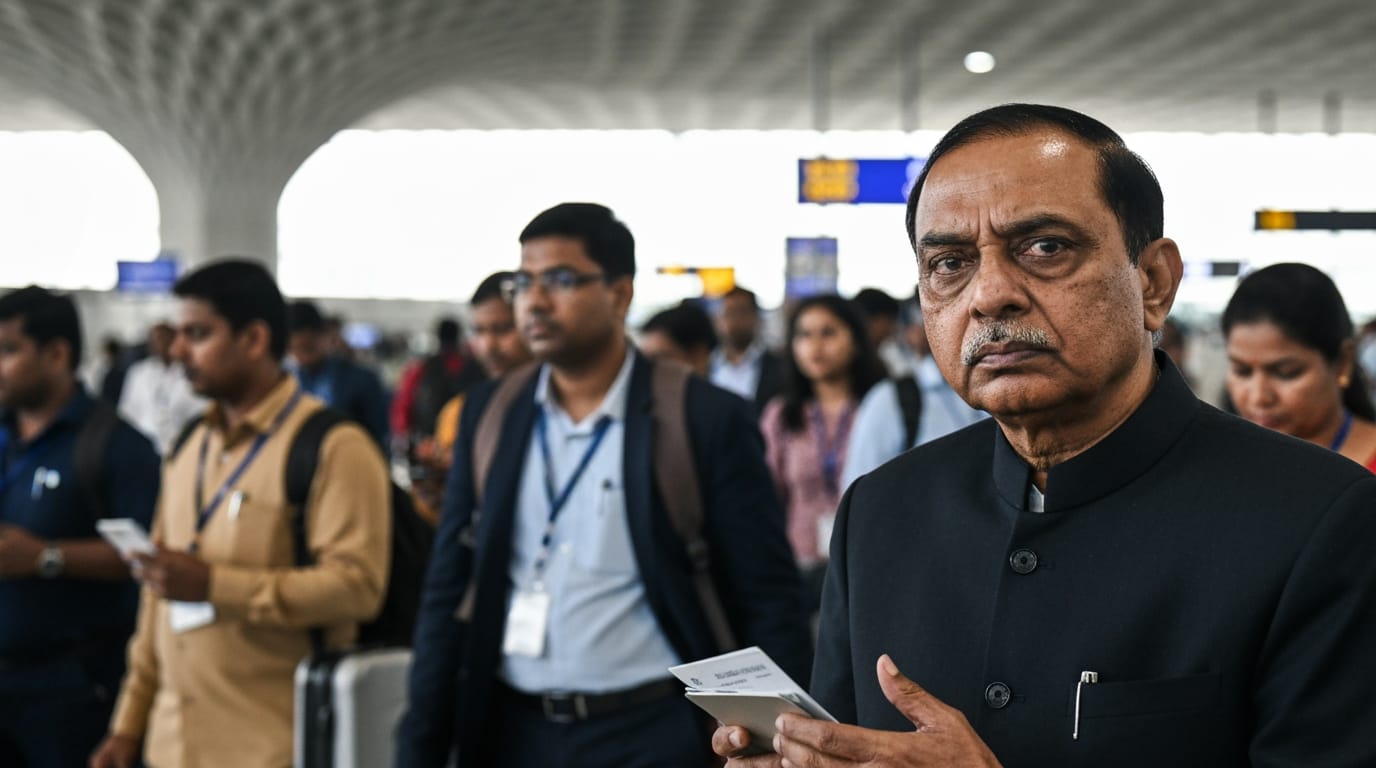
New data from prominent global passport indices reveals a mixed but generally challenging picture for Indian passport holders, who experienced a recent slip in international rankings. While one index points to a one-spot decline, another indicates a more significant drop in the past couple of months, underscoring the dynamic nature of global travel access and the complex interplay of diplomatic relations and visa policies. The adjustments highlight ongoing shifts in international mobility, impacting Indian citizens' ease of travel to various destinations worldwide.
A Decline in Global Passport Power
In the latest Global Passport Index for 2026, India's passport has reportedly slipped one position, now ranking 125th among 197 countries and territories. This marks a marginal decline from its 124th spot in the previous year. Despite this slight regression in overall ranking, the index noted that India's composite score actually reached a five-year high of 45.1, indicating improvements across various assessment parameters that go beyond mere visa-free access. This particular index assesses passports not only on the ease of international travel but also on benefits related to living, working, and investing abroad. Separately, the widely recognized Henley Passport Index, which focuses solely on the number of destinations accessible without a prior visa, placed India at the 80th position in its July 2026 update. This marks a two-spot decline from its 78th rank in May 2026 and a five-spot fall from its 75th position recorded in February of the same year.
Understanding the Metrics: Henley vs. Global Indices
The apparent discrepancy in India's ranking across different indices stems from their distinct methodologies. The Henley Passport Index, powered by data from the International Air Transport Association (IATA), evaluates passports based on the number of destinations their holders can access without a pre-departure visa, including visa-free entry, visa on arrival, and electronic travel authorization (ETA). For the July 2026 update, Indian passport holders have visa-free or visa-on-arrival access to 56 destinations according to Henley. In contrast, the Global Passport Index by Arton Capital, while also considering visa-free and visa-on-arrival options, incorporates broader factors such as mobility, taxation, global perception, and dual citizenship provisions, in addition to using the UNDP Human Development Index as a tie-breaker. According to this index, Indian citizens can travel visa-free to 26 destinations. The varied measurements highlight different aspects of passport strength, with the Henley Index focusing purely on travel freedom and the Global Passport Index providing a more holistic view of a passport's utility.
Implications for Indian Travelers and Global Standing
For the millions of Indian travelers, both business and leisure, these shifts in ranking translate directly to changes in global mobility. While the decline may seem marginal in numerical terms, it reflects the ongoing challenges Indian citizens face in securing easy access to a broader range of countries. Visa-free access is a significant convenience, saving time, expense, and the bureaucratic hurdles often associated with visa applications. The majority of the 56 destinations accessible to Indian passport holders via the Henley Index are located in Asia, Africa, the Caribbean, and the Pacific. However, major destinations such as the United States, the United Kingdom, and most European countries still require Indian citizens to obtain visas in advance. This limitation can influence travel plans, business opportunities, and even perceptions of India's global standing. A strong passport is often seen as a reflection of a country's diplomatic relationships, economic stability, and overall global influence.
A Comparative Look: Regional and Global Context
Globally, the top echelons of passport power continue to be dominated by European nations and East Asian countries. In the July 2024 Henley Passport Index, Singapore once again secured the top spot, offering visa-free entry to an impressive 195 countries. Other strong passports like those from France, Italy, Germany, Spain, and Japan also provide extensive visa-free access, typically to over 190 destinations. The United States, while still powerful, has seen its ranking fluctuate, underscoring the competitive nature of global mobility.
Within India's neighborhood, the situation presents a mixed picture. China, for instance, ranks higher on the Global Passport Index at 104th, ahead of India's 125th position. However, India fares better than several other South Asian nations, with Bangladesh ranked 166th, Nepal at 164th, and Pakistan near the bottom at 188th in the same index. This regional comparison highlights the varied levels of diplomatic and reciprocal visa agreements that shape passport strength across different countries. Experts suggest that such rankings are a direct consequence of diplomatic reciprocity and bilateral visa agreements, rather than solely reflecting a country's economic prowess or global standing.
Navigating the Future: Diplomacy and Mobility
The fluctuations in India's passport ranking are not an isolated event but part of a long-term trend characterized by both incremental gains and occasional setbacks. Over the past decade, India's passport ranking has shown gradual improvement in some indices, largely due to ongoing diplomatic engagements and the negotiation of expanded access with countries in the Gulf, Southeast Asia, and parts of Africa. However, the recent slips serve as a reminder that such progress is not linear and can be influenced by various factors, including evolving visa policies of other nations, geopolitical developments, and shifts in international relations.
Efforts to further strengthen the Indian passport would likely involve continued diplomatic engagement to secure more visa-waiver agreements, alongside initiatives to enhance passport security and digital identity systems. The goal remains to expand international travel opportunities for Indian citizens, fostering greater economic and cultural exchange. While the "power" of a passport is measured by various metrics, its ultimate value lies in the freedom and ease of movement it provides to its holders in an increasingly interconnected world.