India's Annual Flood Ordeal: A Battle Against Rising Waters and Uncertain Futures
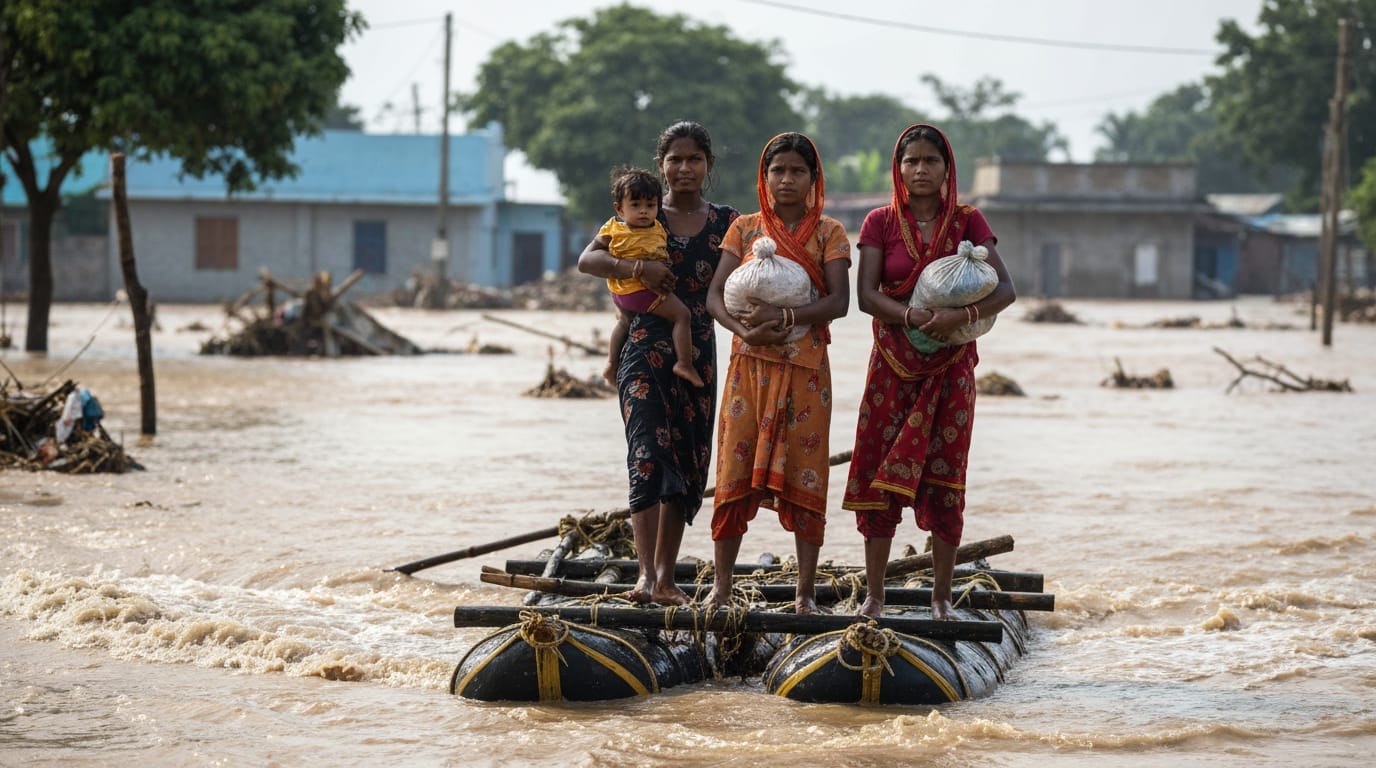
Across India's vast and varied landscape, the annual monsoon, while essential for agriculture and sustenance, frequently transforms into a harbinger of devastation. From the surging rivers of the northeast to the landslide-prone hills of the south, communities face a relentless struggle for survival as floods displace millions, erase livelihoods, and claim hundreds of lives each year. The unpredictability of these events, intensified by changing climate patterns and human activities, renders survival a desperate gamble, compelling families to rebuild their lives, often from nothing, against an ever-present threat.
The Unforgiving Grip of the Monsoons and a Changing Climate
India is one of the most disaster-prone nations globally, with water-related calamities accounting for a significant portion of mortality and economic losses. The primary driver of this annual crisis is the monsoon season, which, while crucial for the country's agrarian economy, frequently brings torrential downpours that overwhelm rivers and drainage systems. However, the nature of these rains is shifting. Once predictable, the monsoon now often delivers erratic and intense downpours over short durations, leading to flash floods that offer little warning.
Scientists point to climate warming as a major catalyst for these intensified flooding events, causing "significant deviations" in natural weather patterns. Beyond natural phenomena, human factors exacerbate the vulnerability. Rapid urbanization, unchecked infrastructure expansion, and a large populace residing in informal settlements in flood-prone areas significantly amplify the impact of extreme precipitation. Furthermore, issues such as deforestation in catchment areas and, in some cases, poor dam management can compound the problem, reducing the land's capacity to absorb water and leading to catastrophic releases.
A Cycle of Loss: Human and Economic Devastation
The human cost of India's floods is staggering. Communities along major river systems, such as the Brahmaputra in Assam, face a recurring nightmare. Indigenous groups like the Mising tribe have seen their ancestral lands eaten away by riverbank erosion, forcing families like Hemram Pegu's to relocate and rebuild their homes multiple times over a single decade. Pegu, a 52-year-old shopkeeper, recounts rebuilding his home at least eight times in ten years, each time moving further inland as the river encroaches. The sheer scale of displacement is immense; over 32 million people in Assam alone were affected by flooding between 2014 and 2021, with nearly 660 fatalities.
In other regions, the threat manifests differently. In states like Kerala, recent landslides, often triggered by heavy rains, have wiped out entire villages, claiming scores of lives. A construction boom in these ecologically sensitive regions has made them even more susceptible to such disasters. Beyond the immediate loss of life, floods destroy homes, cripple agriculture, and dismantle essential infrastructure. The fertile topsoil, once enriched by seasonal floods, is now frequently eroded, leaving behind coarse sand and debris, rendering land infertile and further imperiling the livelihoods of farmers and fishers. The economic impact is profound, pushing vulnerable households into debt and deeper poverty, with floods costing India over US$50 billion since 1990 and affecting more than 750 million people between 1980 and 2017.
Challenges in Preparedness and Response
Despite repeated tragedies, effective disaster preparedness and response remain significant challenges. Early warning systems are crucial, yet their efficacy can be undermined by the sudden, unpredictable nature of flash floods. When disaster strikes, rescue operations often struggle to reach remote areas, leaving many stranded. Recent reports from Bihar highlighted flood survivors pleading for help for relatives marooned in isolated villages, accusing authorities of insufficient aid and slow response times. Hundreds of thousands are evacuated, but millions can remain cut off, facing critical shortages of food, water, and medical aid.
The long-term socio-economic impacts, particularly from riverbank erosion and repeated displacement, are rarely assessed from a policy perspective. This oversight leaves indigenous communities and other vulnerable populations without adequate re-housing policies, livelihood restoration programs, or job training to adapt to their altered circumstances. Overcrowding in relief camps also poses health risks, necessitating rapid vaccination efforts to prevent outbreaks.
Building Resilience: Adapting to a Flood-Prone Future
Addressing India's flood crisis requires a multi-faceted approach that integrates scientific understanding with robust policy and community-level action. Investing in advanced meteorological forecasting and early warning systems, coupled with effective communication channels, is paramount to provide communities with crucial time to prepare and evacuate. Furthermore, sustainable urban planning that restricts construction in flood-prone zones and improves drainage infrastructure can significantly reduce vulnerabilities.
There is also a growing recognition of the role of nature-based solutions, or Eco-DRR (Ecosystem-based Disaster Risk Reduction), which harness the protective functions of ecosystems like forests, wetlands, and mangroves to mitigate flood impacts. These approaches not only buffer against disasters but also provide valuable ecosystem services, contributing to local resilience and cultural well-being. For indigenous communities disproportionately affected, comprehensive policies for re-housing, livelihood restoration, and job training are essential to ensure they are not left behind in the face of climate-induced displacement.
The annual dance with the monsoon will continue, but India's future depends on transforming this desperate gamble into a more predictable and manageable challenge. By understanding the intertwined roles of climate change, geographical vulnerabilities, and human actions, and by investing in both infrastructure and ecological solutions, the nation can strive to build greater resilience against the relentless power of its rising waters.


