India's 'Cockroach' Protesters Navigate Complex Legal Landscape Amidst Calls for Justice

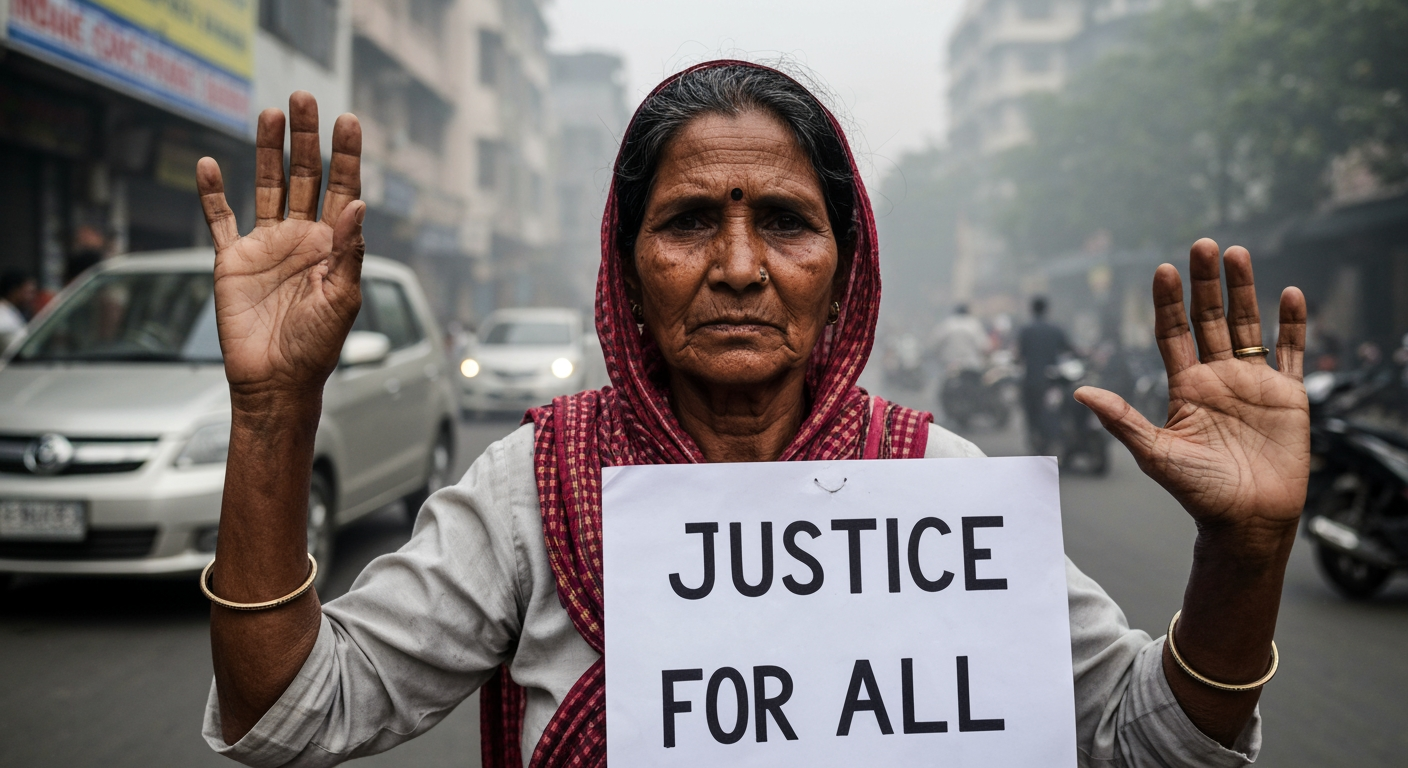
NEW DELHI – India's burgeoning youth movement, known as the "Cockroach Janta Party" (CJP), finds itself at a critical juncture, balancing the recent triumph of forcing a federal minister's resignation with the persistent challenge of ongoing legal pressure. Born from a satirical response to derogatory remarks, the CJP swiftly transformed into a potent voice for millions of disaffected young Indians, but its journey is now marked by a complex interplay of state assurances and the lingering threat of legal action.
The movement's ascent highlights a broader, concerning pattern of legal scrutiny faced by student and youth activists across the country, casting a shadow over the right to peaceful dissent in the world's largest democracy. While some local authorities have recently promised to withdraw cases against "ordinary" protesters, the shadow of more stringent laws and past precedents looms large for many, particularly those with a history of activism.
The Genesis of the 'Cockroach' Movement
The "Cockroach Janta Party" (CJP) emerged in May 2026, sparked by a remark from India's Chief Justice Surya Kant, who reportedly referred to unemployed youth and certain activists as "cockroaches" and "parasites of society." This comment inadvertently galvanized a segment of the population, leading Abhijeet Dipke, a public relations graduate, to found the CJP as an online satirical movement. The name itself, a wordplay parodying India's ruling party, quickly resonated across social media platforms, drawing millions of followers.
The satirical movement soon evolved into a nationwide protest, fueled by widespread anger over exam paper leaks and other irregularities within India's education system. Hundreds of thousands of students and young people rallied in cities like New Delhi, demanding accountability and reforms. The protests culminated in a significant victory for the movement: the resignation of Education Minister Dharmendra Pradhan on July 25, 2026, a rare concession from the government. This success was widely seen as a testament to the CJP's growing influence and its ability to mobilize a generation frustrated by a perceived lack of opportunities and institutional failures.
The Shadow of Legal Retribution
Despite the CJP's successful agitation and initial assurances from senior Bharatiya Janata Party (BJP) ministers that no punitive action would be taken against protesters, reports quickly surfaced of widespread detentions and harassment. The CJP accused the government of backtracking on its promise, with hundreds of students reportedly detained or facing police action in states including Delhi, Assam, West Bengal, and Bihar. At least 100 individuals were arrested, many on stringent, non-bailable charges.
Demonstrations in Delhi on July 20, 2026, saw police employ tear gas and batons to disperse crowds attempting to march towards parliament, leading to clashes and further detentions. Police registered 13 First Information Reports (FIRs) in connection with the student protests in Delhi, although none named specific individuals. However, law enforcement officials indicated that over 250 people were initially detained, with some reports suggesting that identification of individuals was carried out using facial recognition systems. The CJP, recognizing the financial burden on its members, established a legal fund to assist those implicated in criminal cases. Spokespersons for the movement have threatened to resume protests if all detained individuals are not released and charges are not withdrawn.
A Conditional Reprieve and Broader State Responses
In a recent development, the Delhi government announced on Thursday, July 30, 2026, that it would not pursue adverse legal action against "ordinary" CJP protesters who participated in the agitation against examination irregularities. This decision, influenced by directives from the Supreme Court emphasizing the right to peaceful protest, stipulated that cases against arrested or detained individuals would be reviewed expeditiously for their release.
However, this reprieve comes with a significant caveat: it explicitly excludes those accused of violence or individuals with prior criminal records. Santosh D. Vaidya, Principal Secretary of Delhi's Home Department, stated that the protection would not extend to "persons having criminal antecedents." This selective application of leniency has raised questions about its scope and potential impact on the broader movement. Beyond Delhi, other states such as Bihar, Maharashtra, Assam, and West Bengal have also indicated they would not pursue adverse legal action against protesters. The Supreme Court had previously highlighted the need for an impartial investigation into competing allegations surrounding the nationwide protests, asserting that the right to peaceful protest is constitutionally guaranteed.
A Precedent of Pressure: The UAPA and Earlier Activism
The legal challenges faced by the CJP are not isolated incidents but reflect a broader pattern of state response to dissent in India, particularly involving student activists. A stark example is the ongoing plight of student activists like Umar Khalid and Sharjeel Imam, who have been detained without trial for over five years in connection with the 2020 Delhi riots.
Khalid and Imam, alongside others, were arrested under the stringent Unlawful Activities (Prevention) Act (UAPA), India's primary anti-terrorism law. Critics and human rights organizations have consistently argued that the UAPA is misused to stifle dissent, allowing for prolonged detention without bail and trials that often lack substantial evidence. In January 2026, the Supreme Court denied bail to Khalid and Imam, stating they were on a "qualitatively different footing" from other co-accused who received bail. The court suggested that "terrorist acts" should not be interpreted narrowly, encompassing broader actions that disrupt the economy.
Human Rights Watch and various UN human rights experts have expressed significant concerns over these prolonged detentions, highlighting the lack of evidence, reliance on anonymous witnesses, and the perceived bias in investigations. Reports from 2020 indicated that police were filing cases against Muslim victims of the Delhi violence while not acting against ruling party leaders accused of inciting it. The criminalization of student activism, often through sedition charges or laws like the UAPA, underscores a shrinking space for academic freedom and critical voices within Indian universities.
The Future of Dissent in India
The legal pressures on India's "Cockroach" protesters and their predecessors illustrate a deeply entrenched tension between the state's authority and its citizens' right to assembly and free speech. While the recent conditional reprieve in Delhi offers a glimpse of concession, the broader landscape of legal action, particularly under laws like the UAPA, signals a continued willingness by authorities to employ stringent measures against those perceived as challenging the established order.
The CJP's ability to mobilize millions and achieve a significant political outcome demonstrates the enduring power of youth activism and social media in India. However, the subsequent legal battles serve as a potent reminder of the high stakes involved in exercising democratic rights. The ongoing legal struggles of activists, from the CJP's recent detentions to the prolonged incarceration of figures like Umar Khalid, will continue to define the parameters of dissent and civil liberties in India. The coming months will reveal whether the government's conditional gestures herald a more accommodating approach to protest or if legal challenges remain a primary tool for managing public discontent.
Related Articles


Mounting Frustration Grips Russia as Economic Hardship and War's Toll Deepen
Moscow, Russia – A palpable shift in public sentiment is emerging across Russia, with growing frustration among citizens fueled by a confluence of economic pressures, increasing internet restrictions, and the undeniable...

Germany's Strategic Calculus: Ukraine Aid is an Investment in European Security, Not Charity
Berlin – The ongoing provision of substantial aid to Ukraine by Germany and its allies is increasingly being framed not as an act of altruism, but as a crucial investment in European security and stability. This...