India's Cosmic Ambition: A Nexus of Science, Prestige, and Progress
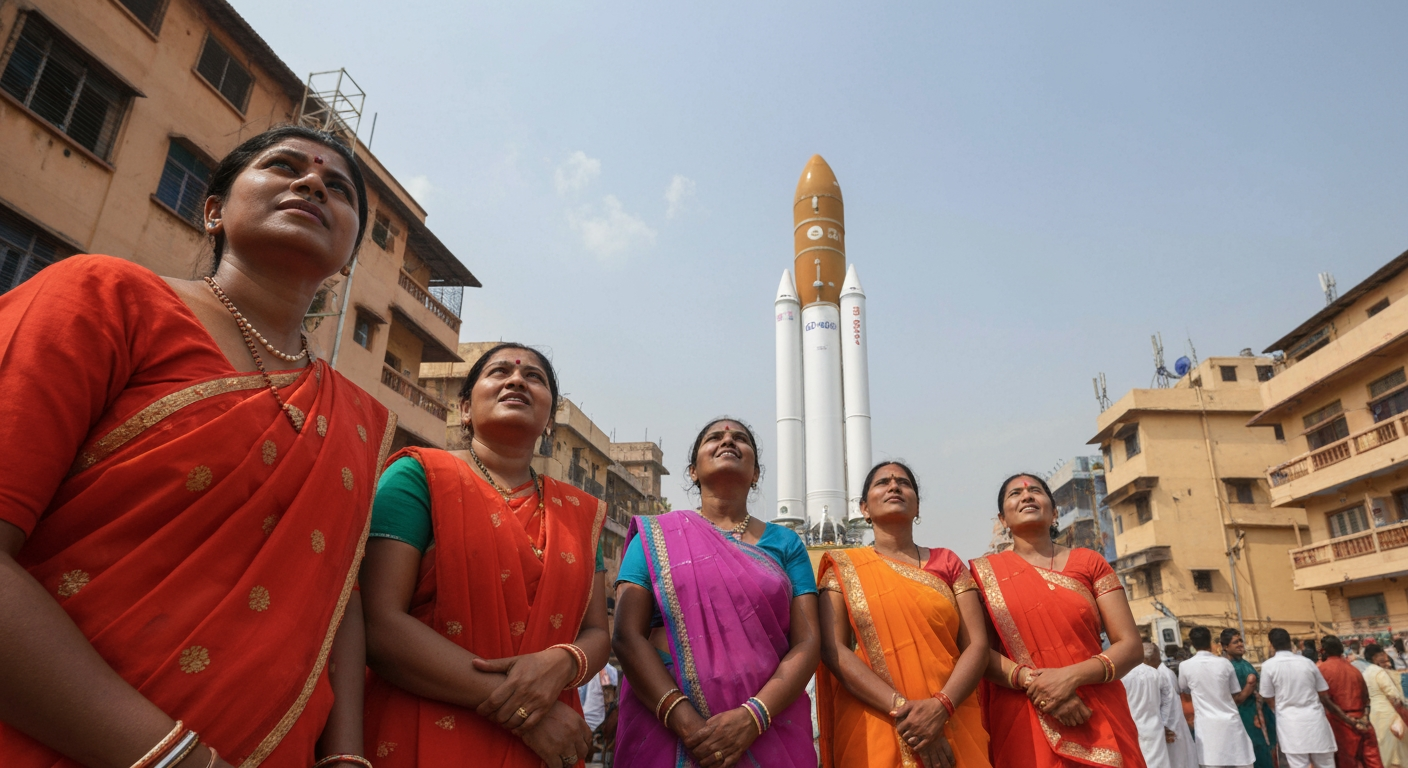
India stands at the precipice of a new era in space exploration, with its ambitious Gaganyaan mission poised to send Indian astronauts into Earth's orbit. This endeavor, a testament to decades of scientific advancement and national determination, aims to achieve independent human spaceflight, placing India among an elite group of nations. The program represents not just a scientific undertaking but a complex interplay of technological aspirations, economic imperatives, and geopolitical ambitions, prompting a deeper examination into whether its driving force is primarily science or a broader quest for national eminence.
The Gaganyaan Program: Charting a Course for Indigenous Human Spaceflight
At the heart of India's human spaceflight aspirations is the Gaganyaan program, an initiative spearheaded by the Indian Space Research Organisation (ISRO). This landmark mission envisions sending a three-member crew to a Low Earth Orbit (LEO) at an altitude of 400 kilometers for a three-day mission, followed by a safe return to Earth, specifically with a splashdown in Indian waters. The program's immediate objective is to demonstrate India's indigenous capability in human spaceflight, a critical step towards a sustained Indian human space exploration program in the long run.
The journey to this monumental achievement involves the development of several sophisticated technologies. Key among these are a human-rated version of ISRO's most reliable rocket, the Launch Vehicle Mark-3 (LVM3), capable of safely transporting humans into space. Accompanying this is the creation of an orbital module, comprising a habitable Crew Module (CM) designed to provide an Earth-like environment for the astronauts and a Service Module (SM) to support it. Crucial for crew safety are the advanced Crew Escape System (CES) for emergency abort scenarios and a Life Support System (LSS) that ensures survival in the harsh space environment. While initially targeted for 2022, the first manned mission is now anticipated in the first quarter of 2027, preceded by two unmanned test missions, one of which will carry a female humanoid robot named Vyommitra to validate systems. The total cost for the Gaganyaan program is estimated at approximately ₹20,193 crore (equivalent to about $2.4 billion), reflecting the significant investment in this national endeavor. Successfully achieving this mission will cement India's position as the fourth nation, after the United States, Russia, and China, to independently conduct human spaceflight.
The Scientific Canvas: Pushing the Boundaries of Knowledge
Beyond the technical marvel of sending humans to space, the Gaganyaan mission is underpinned by a profound scientific imperative. The microgravity environment of space offers an unparalleled laboratory for conducting experiments that are impossible on Earth. These include research in fields such as medicine, material science, and biology, with the potential for groundbreaking discoveries that could benefit humanity. Gaganyaan actively encourages and supports such microgravity research, promoting a culture of scientific inquiry within the nation.
The program is a powerful catalyst for technological development, driving innovation across various sectors. The need for advanced life support systems, navigation, guidance, and control mechanisms, re-entry technologies, and radiation shielding fosters the creation of cutting-edge solutions. These advancements are not confined to space but often have terrestrial applications, leading to spin-off benefits in areas like healthcare, agriculture, and disaster management. For instance, the Defence Research and Development Organisation (DRDO) is contributing by developing critical human-centric systems, including space-grade food, crew healthcare provisions, and radiation measurement and protection. Moreover, the mission acts as a vital platform for academic and research organizations, establishing a broader framework for collaboration between ISRO, academia, industry, and national agencies, thereby boosting research and technology development across the country. In the long term, Gaganyaan is seen as a foundational step towards more ambitious goals, including the development of an indigenous space station by 2035 and even landing Indian astronauts on the Moon by 2040.
The Geopolitical and Economic Dimensions: A Multilayered Impact
While scientific exploration forms a cornerstone, the Gaganyaan mission also carries significant geopolitical and economic implications for India. Achieving independent human spaceflight is a potent symbol of national prestige and technological prowess on the global stage. It allows India to join an exclusive club of spacefaring nations, elevating its international standing and projecting its soft power. In an increasingly competitive geopolitical landscape, space achievements serve as markers of a nation's power, status, and modernity, aligning with India's broader aspirations as a rising global power.
Economically, the space program, and Gaganyaan specifically, are significant drivers of growth and employment. The Indian space sector has contributed an estimated $60 billion to the Gross Domestic Product over the last decade, generating approximately 4.7 million direct and indirect jobs, according to a Novaspace report commissioned by ISRO. The Gaganyaan mission itself is projected to create an additional 15,000 new employment opportunities, fostering human resource development in advanced technologies. Studies also suggest a substantial multiplier effect, with every dollar generated by the space economy translating into $2.54 of indirect and induced benefits for the wider Indian economy. The mission also stimulates the private sector, with nearly 60% of its equipment expected to be sourced indigenously from Indian industries, further bolstered by recent policy changes allowing increased foreign direct investment in space services. Beyond these tangible benefits, the mission serves as a powerful inspiration for India's youth, motivating them to pursue careers in science, technology, engineering, and mathematics (STEM) fields, thereby nurturing a future generation of innovators.
Navigating the Challenges and Addressing Criticisms
Despite its ambitious scope and multifaceted benefits, the Gaganyaan mission is not without its challenges and has faced its share of scrutiny. Technically, the development of a human-rated launch vehicle and the complex life support systems required to sustain astronauts in space, along with robust crew escape mechanisms and re-entry technology, present formidable hurdles. The meticulous testing and validation required for safety and reliability are time-consuming, contributing to delays; the mission's initial 2022 target was pushed back due to the COVID-19 pandemic and the inherent complexities of developing such advanced technologies.
The substantial financial investment in human spaceflight has also drawn criticism, with some arguing that resources could be better allocated to pressing social development issues such as sanitation, healthcare, and education. However, proponents counter that the long-term benefits in technological advancement, economic growth, and inspiring innovation outweigh the initial costs, viewing it as a necessary long-term investment in the nation's future. Safety remains paramount, requiring extremely high reliability standards, such as the 99.8% target for the launch escape system. Furthermore, India initially faced challenges in establishing dedicated astronaut training facilities, necessitating collaboration with international agencies for comprehensive training, though efforts are underway to develop indigenous capabilities.
Conclusion: A Dual-Engine Drive Towards the Cosmos
India's quest to send its people into space via the Gaganyaan mission is a powerful demonstration of national resolve. It is propelled by a dual-engine drive: the insatiable human curiosity inherent in scientific exploration and the strategic imperative to assert its standing on the global stage. While the scientific objectives promise groundbreaking research and technological spin-offs, the mission also serves as a potent symbol of national pride, a catalyst for economic growth, and a significant tool in India's geopolitical diplomacy. The challenges are formidable, but the nation's methodical approach and commitment underscore its determination to overcome them. As India prepares for its inaugural human spaceflight, it solidifies its position as a major space power, signaling to the world that its cosmic ambitions are deeply intertwined with its vision for a prosperous and influential future.
Related Articles


Skull Bone Marrow Reveals Hidden 'Immune Hubs,' Reshaping Brain Defense Paradigm
ST. LOUIS, MO – In a discovery poised to fundamentally alter our understanding of brain immunity, scientists at Washington University School of Medicine in St. Louis have identified previously unrecognized lymph...


Unpacking the Link: How Dietary Fats Influence Colorectal Cancer Risk
Colorectal cancer, a significant global health concern, is increasingly linked to modern dietary habits, with particular attention turning to the role of fatty foods. While the relationship is complex and nuanced,...