India's Digital Discourse Under Scrutiny Amid Escalating Middle East Tensions
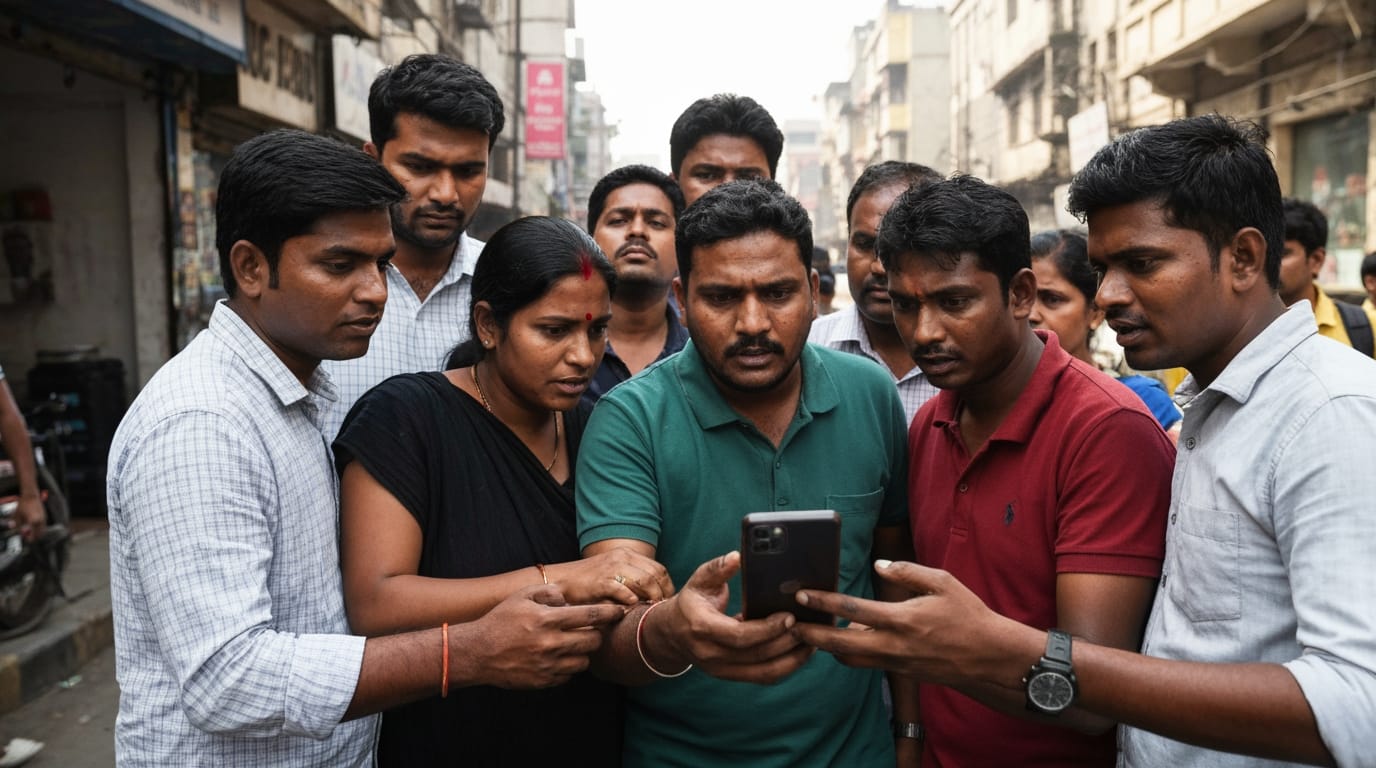
NEW DELHI – India is witnessing a significant escalation in social media censorship and internet restrictions, a trend that appears increasingly intertwined with geopolitical turbulence, particularly the ongoing conflict in the Middle East involving Iran, the United States, and Israel. This period of heightened international instability is coinciding with a more assertive stance by Indian authorities in regulating online content, raising concerns among digital rights advocates about the future of free expression in the world’s largest democracy.
The nation, a critical global player with substantial economic and strategic interests in West Asia, finds its digital landscape navigating a complex interplay of domestic content control mechanisms and the ripple effects of a volatile international environment. Reports indicate a notable increase in content removal orders and internet shutdowns, which critics argue is creating a chilling effect on online dissent and critical discourse.
The Expanding Web of Digital Control in India
India has a long-standing history of internet shutdowns and content regulation, but recent years have seen these measures intensify. The country has consistently ranked among the highest globally for internet shutdowns, a trend that continued into 2024. In 2024 alone, India recorded 84 internet shutdowns, making it the highest among democratic nations, though slightly down from 116 in 2023. These disruptions were often in response to protests (41 shutdowns in 2024), communal violence (23 shutdowns in 2024), and even government job placement examinations. Jammu and Kashmir, Manipur, and Haryana were particularly affected regions.
Beyond internet blackouts, the Indian government has steadily fortified its regulatory framework for online content. The Information Technology (Intermediary Guidelines and Digital Media Ethics Code) Rules, 2021, and subsequent amendments in 2022 and 2023, have significantly expanded government control over content moderation decisions made by social media platforms. These rules mandate intermediaries with over 5 million users to appoint India-resident compliance officers and establish grievance redressal mechanisms. A critical amendment in 2023 established a Fact Check Unit, empowering the government to label content about its business as false or misleading, requiring platforms to remove such content or face legal repercussions, including the loss of safe harbor protection.
Further tightening this grip, new regulations introduced in February 2026 demand social media companies remove "unlawful content" within three hours of notification, a drastic reduction from the previous 36-hour timeline. This move, which applies to platforms like Meta, YouTube, and X (formerly Twitter), poses significant compliance challenges and reinforces India's aggressive approach to online content regulation. The Ministry of Electronics and Information Technology (MeitY) reported blocking 36,838 URLs between January 2018 and October 2023, with X experiencing the highest number of blocks. The launch of the Sahyog portal in October 2024 further decentralized censorship powers, allowing district-level officers and various government agencies to issue takedown requests under Section 79 of the IT Act, effectively creating a parallel censorship mechanism. This bypasses some of the safeguards associated with Section 69A of the IT Act, which had been upheld by the Supreme Court based on its procedural protections for reasoned orders and judicial review.
Geopolitical Tensions and Digital Vulnerabilities
The escalating conflict in the Middle East, particularly involving Iran, the United States, and Israel, is contributing a new layer of complexity to India's digital security and information environment. Multiple reports from early 2026 describe an "Iran-US-Israel war" or "U.S.–Israel war on Iran" that commenced around February 28, 2026, and has since intensified. This conflict has direct implications for India due to its deep economic ties to the Middle East, including significant energy imports and a large Indian diaspora in Gulf states.
Beyond energy security, the geopolitical situation in the Strait of Hormuz presents a critical vulnerability for India's internet infrastructure. A dense network of submarine fiber-optic cables carrying a substantial portion of global internet traffic, including pathways linking India to Europe, traverses this narrow waterway. Any disruption, whether from direct targeting, naval maneuvers, or accidents, could severely impact India's internet connectivity and digital economy. The potential for deliberate cable sabotage is increasingly viewed as an instrument of hybrid warfare, moving from theoretical to operationally plausible as tensions rise. India's dependence on foreign-controlled cable infrastructure represents a strategic vulnerability.
Interplay of Domestic Policy and Foreign Affairs
The backdrop of this international crisis appears to be influencing, or at least coinciding with, domestic pressures on online speech related to foreign policy. Recent reports suggest a "digital exile" for activists and journalists whose social media accounts were blocked for criticizing the Indian government's West Asia policies and other domestic issues. This indicates a potential linkage where geopolitical events provide additional impetus or justification for intensified online censorship.
While India has traditionally pursued a policy of strategic equilibrium in the Middle East, maintaining relations with Israel, Iran, and Arab states, the current conflict is testing this approach. The need to project stability and manage information during such sensitive times could be a contributing factor to the heightened scrutiny of online narratives. India's large diaspora in the Gulf, estimated at nearly nine million, further complicates the situation, as social media can amplify unverified claims and cause anxiety among families. Some commentators suggest that domestic social media often amplifies unverified claims during Middle East crises, creating challenges for Indian diplomacy.
However, New Delhi has also shown diplomatic acumen, securing safe passage for its vessels through the Strait of Hormuz from Iran despite its close ties with Israel and the U.S., demonstrating its ability to balance competing interests. This success highlights the critical need for a stable information environment to support such delicate diplomatic maneuvers.
Implications for Freedom of Expression and Digital Rights
The cumulative effect of increasing social media censorship and internet shutdowns raises serious concerns about freedom of expression and digital rights in India. Critics argue that the expansive powers granted to the government under the IT Rules, coupled with the lack of transparency in content blocking orders, can lead to arbitrary or politically motivated censorship. The confidentiality clause (Rule 16) within the 2009 Blocking Rules is particularly contentious, as it allows the government to withhold reasons for blocking from affected parties, undermining their ability to challenge such actions in court.
Organisations like the Internet Freedom Foundation criticize the trend as "secret and inaccessible censorship," which undermines judicial precedents that upheld Section 69A on the basis of procedural safeguards. The ability of a government-appointed Fact Check Unit to determine the veracity of online content about "government business" is seen as a direct infringement on free speech and a mechanism to suppress dissent.
For journalists and activists, the environment is becoming increasingly perilous. Those who document hate crimes or express critical views of the government face higher risks of having their accounts blocked or being targeted by legal action. The blocking of accounts belonging to human rights organizations documenting hate speech on platforms like X further illustrates the suppression of narratives inconvenient to the government. The move toward decentralizing blocking powers to multiple ministries could create a regime of arbitrary censorship, allowing any department to silence critics without specialized oversight.
Conclusion
India's digital landscape is at a critical juncture, shaped by robust domestic regulatory ambition and the volatile currents of international geopolitics. The intensified social media censorship and internet restrictions, while often justified by authorities on grounds of national security, public order, and preventing misinformation, are increasingly seen as tools that curtail fundamental freedoms. The ongoing conflict in the Middle East involving Iran, the U.S., and Israel, with its direct and indirect impacts on India's internet infrastructure and foreign policy considerations, adds another complex dimension to this already fraught environment.
As India seeks to navigate this intricate web of challenges, balancing national interests with constitutional guarantees of free expression remains a paramount concern. The effectiveness and legitimacy of its digital governance model will depend on ensuring transparency, accountability, and robust avenues for redressal, safeguarding the democratic principles that underpin its vibrant public discourse even amidst escalating global uncertainties.


