India's Parliament Welcomes First Openly Queer Member, Marking Historic Milestone for LGBTQ+ Rights
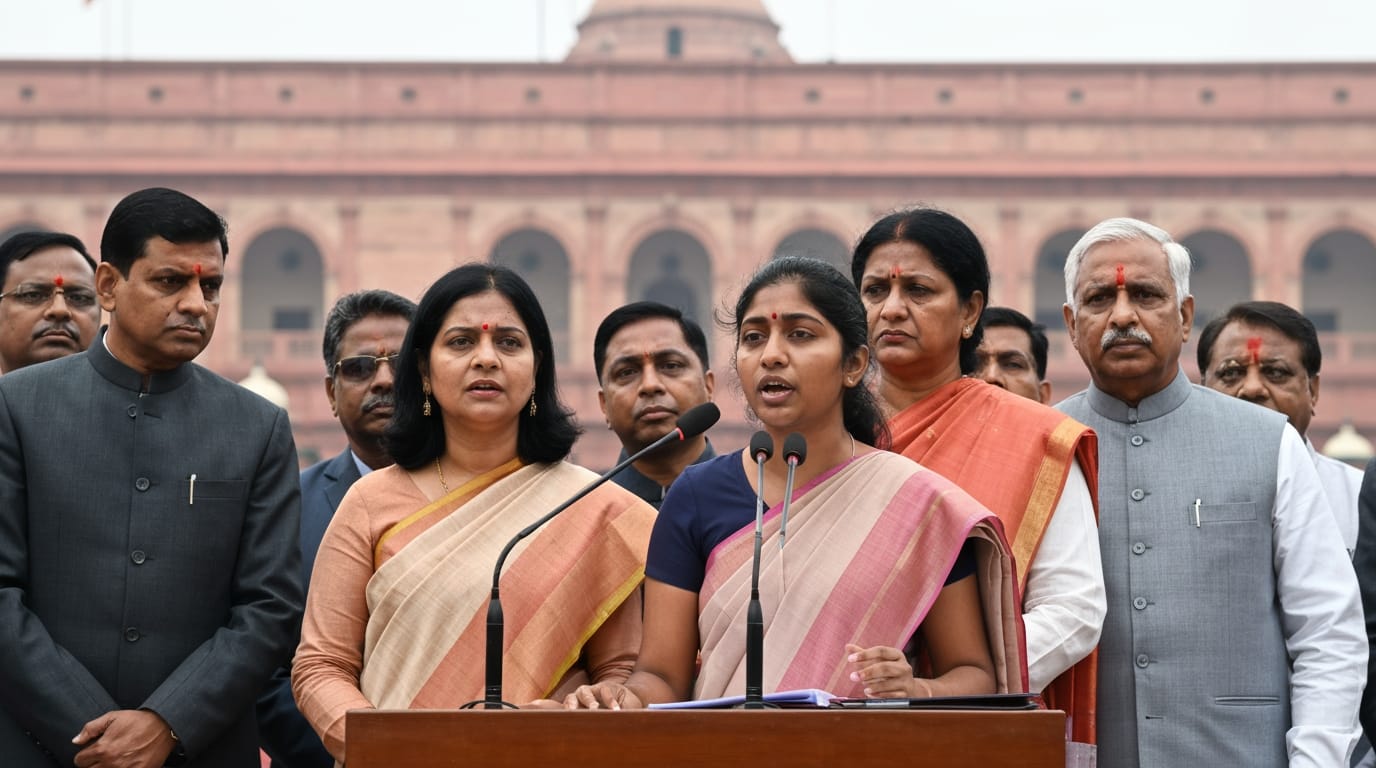
NEW DELHI, India – In a landmark moment for inclusive democracy, India's Parliament has seated its first openly queer member, Senior Advocate Menaka Guruswamy, in the Rajya Sabha. Guruswamy's election, unopposed on March 9, 2026, as a nominee of the Trinamool Congress (TMC) from West Bengal, heralds a new era of representation and hope for the LGBTQ+ community in the world's largest democracy. This historic entry into the legislative arena by a prominent figure who played a pivotal role in decriminalizing homosexuality in India signifies a crucial step beyond judicial victories towards political participation and policy-making for LGBTQ+ citizens.
A Historic Entry into the Legislative Arena
The election of Menaka Guruswamy to the Rajya Sabha, the upper house of India's Parliament, is a significant event that transcends mere political appointment. As India's first openly queer Member of Parliament, her presence marks a tangible shift in the country's political landscape. Guruswamy, a distinguished legal luminary, was nominated by West Bengal Chief Minister Mamata Banerjee's Trinamool Congress, demonstrating a political party's readiness to champion diversity at the highest levels of governance. Her journey to Parliament follows a remarkable career defined by legal advocacy, most notably her instrumental role in the 2018 Supreme Court verdict that struck down Section 377 of the Indian Penal Code, effectively decriminalizing consensual same-sex relations. This transition from courtroom champion to legislator underscores a growing recognition of LGBTQ+ identities within India's public sphere.
The Decades-Long Fight for LGBTQ+ Rights in India
Guruswamy's entry into Parliament is built upon a long and arduous struggle for LGBTQ+ rights in India, largely propelled by judicial interventions rather than legislative action. For over a century and a half, Section 377, a colonial-era law dating back to 1861, criminalized "carnal intercourse against the order of nature," severely impacting the lives of queer individuals. Despite early activism, such as the 1994 filing of the first petition challenging Section 377 by the AIDS Bhedbhav Virodhi Andolan, legal progress remained slow.
A significant turning point came in 2009 when the Delhi High Court decriminalized homosexual activity, a decision that was unfortunately reversed by the Supreme Court in 2013. This setback fueled renewed activism, leading to the landmark 2018 Supreme Court judgment in Navtej Singh Johar v. Union of India, which unanimously ruled Section 377 unconstitutional, affirming the fundamental rights to autonomy, intimacy, and identity for LGBTQ+ individuals. Prior to this, the 2014 National Legal Services Authority (NALSA) v. Union of India judgment had recognized transgender individuals as a third gender with constitutional rights. While these judicial pronouncements provided crucial legal protections, they highlighted a gap in legislative willingness to proactively address LGBTQ+ rights. Private member bills, such as those introduced by MP Supriya Sule in 2022 to legalize same-sex marriage, have sought to bridge this gap, but none have yet advanced to become law.
Menaka Guruswamy: A Legal Stalwart and Public Figure
Menaka Guruswamy's distinguished career as a Senior Advocate at the Supreme Court of India has seen her at the forefront of several critical constitutional cases. Educated at prestigious institutions including Oxford University, Harvard Law School, and the National Law School of India, her academic and legal prowess is widely recognized. She has served as visiting faculty at Yale Law School and New York University School of Law, and was a B.R. Ambedkar Research Scholar at Columbia Law School.
Beyond her academic and professional accolades, Guruswamy is known for her public advocacy and her identity as an openly queer individual. Her partnership with fellow lawyer Arundhati Katju, with whom she argued the Section 377 case, has made them prominent figures in the LGBTQ+ rights movement, symbolizing hope and visibility. Her inclusion in Foreign Policy magazine's list of 100 most influential Global Thinkers in 2019, alongside Katju, further cemented her international recognition. Guruswamy's multifaceted contributions extend to advising international bodies like the United Nations Development Fund and UNICEF on human rights law. Her unwavering commitment to constitutional values of equality and non-discrimination has been a guiding principle throughout her career.
Implications for Representation and Future Policy
Guruswamy's presence in the Rajya Sabha is expected to have significant implications for LGBTQ+ representation and policy-making in India. Her election marks a transition from relying solely on judicial pronouncements to having an active voice within the legislative branch. This provides an unprecedented opportunity to influence discussions on issues directly affecting the LGBTQ+ community, such as marriage equality, adoption rights, and comprehensive anti-discrimination laws. While the Supreme Court decriminalized homosexuality, it also left the onus of legalizing same-sex marriage to Parliament or state legislatures. Guruswamy's legislative role could catalyze efforts to address these outstanding legal gaps.
Her election sends a powerful message of inclusion and diversity to a community that has historically faced marginalization and social stigma. Activists and community members are watching closely, with hopes that her experience and perspective will lead to more nuanced and empathetic legislation. Her role is seen as a potential catalyst for ensuring that the constitutional values of equality and non-discrimination are translated into tangible legal protections and societal acceptance for all LGBTQ+ citizens.
The Road Ahead
While Menaka Guruswamy's election is a monumental step forward, the journey towards full equality for LGBTQ+ individuals in India remains ongoing. Challenges persist, including the lack of legal recognition for same-sex marriages and civil unions, and the ongoing fight against societal discrimination. Activists continue to push for inclusive policies that address the diverse needs of the community, ranging from healthcare access to protection against workplace discrimination.
Guruswamy's historic entry into Parliament provides a beacon of hope and a powerful platform. It signifies that the fight for LGBTQ+ rights in India is evolving, moving from the courts into the very halls of power where laws are made. Her presence will undoubtedly elevate the discourse, bringing lived experiences and expert legal perspectives directly into the legislative process, and paving the way for a more equitable and inclusive future for all Indians.


